Last updated November 17, 2026
Free written scope consultation - allowances, timeline, and change-order rules on paper before a single trade is scheduled
The Complete Driveway & Pavers Guide for Fremont Homeowners
Fremont’s expansive clay soil exerts enough upward pressure during wet season to shift a paver driveway 1 – 2 inches if the base course is under-compacted. That kind of movement rarely shows up in the first year. It surfaces about 18 months after install, long after most contractor warranties have run out, and by then the fix means pulling up pavers and starting the base over. Most driveway failures in Fremont trace back to decisions made before the first paver was set, so this guide walks every decision point in sequence: soil, base depth, material, cost, permits, and the inspections worth standing outside for. You’ll finish with dollar ranges and specs you can hold a contractor to.
Quick Answer
A paver driveway in Fremont typically runs $18 – $32 per square foot installed, and the number that matters most isn’t the paver, it’s the base: Fremont’s Zone D expansive clay usually needs a 6 – 8 inch compacted aggregate base, not the 4-inch base used on sandy coastal soil. Skip that depth or skip the compaction test and the driveway can shift within two wet seasons. Get the base right and a paver driveway lasts decades.
Styles & brands we work with
- Kitchen remodeling
- Bathroom remodeling
- Home additions & ADU
- Roofing
- Windows & doors
- Driveway & pavers
- Fence
Table of Contents
- Why Fremont’s Clay Soil Decides Everything
- Base Depth Requirements: Zone D Clay vs. Coastal Soil
- Concrete Pavers vs. Clay Brick vs. Natural Stone
- What a Paver Driveway Costs in Fremont
- Stormwater Rules, Permeable Pavers, and Permits
- Change Orders: What a Legitimate Clause Looks Like
- The Three Inspection Checkpoints You Can Verify
- How to Vet a Paver Contractor
Why Fremont’s Clay Soil Decides Everything
Fremont sits on some of the most active expansive clay in the Bay Area. In the flatlands around Irvington and Centerville, the clay holds winter moisture and swells; by late summer it shrinks back and cracks. A driveway is a rigid plane sitting on a soil that moves twice a year, and the base course exists to absorb that movement so the pavers above don’t have to.
Property in the Mission Hills and Niles foothills adds a second variable: slope. Water that sheets off a hillside lot has to be directed away from the driveway edge, or the sub-base saturates and the compacted layers lose their density. We’ve seen Fremont driveways that looked perfect in October and showed a 1-inch lip at the garage apron by February, because the uphill drainage was never cut in.
The practical takeaway: any paver quote for a Fremont address should name the base depth, the aggregate type (¾-inch crushed rock with fines is standard), and the compaction method. If a quote says “proper base preparation” but no depth and no test, it’s not a spec, it’s a slogan. Under Clause 1 of the Haven Standard, our written price names those details before anyone starts, because the base is where driveway budgets actually get decided.
Base Depth Requirements: Zone D Clay vs. Coastal Soil
Here’s where Fremont drives diverge from the generic advice online. Most national paver guides call for a 4-inch compacted base, which is fine on sandy loam or decomposed granite. Zone D expansive clay is a different material, and 4 inches often isn’t enough to bridge seasonal movement.
- Coastal sandy loam: 4 inches compacted aggregate is usually adequate.
- Fremont flatland clay (Irvington, Centerville, Glenmoor): 6 – 8 inches compacted in 2-inch lifts.
- Foothill lots with slope and drainage pressure (Niles, Mission Hills): 8 inches plus a defined drainage path.
- Driveways taking heavy vehicles (RVs, trucks): add 2 inches and confirm with a compaction test.
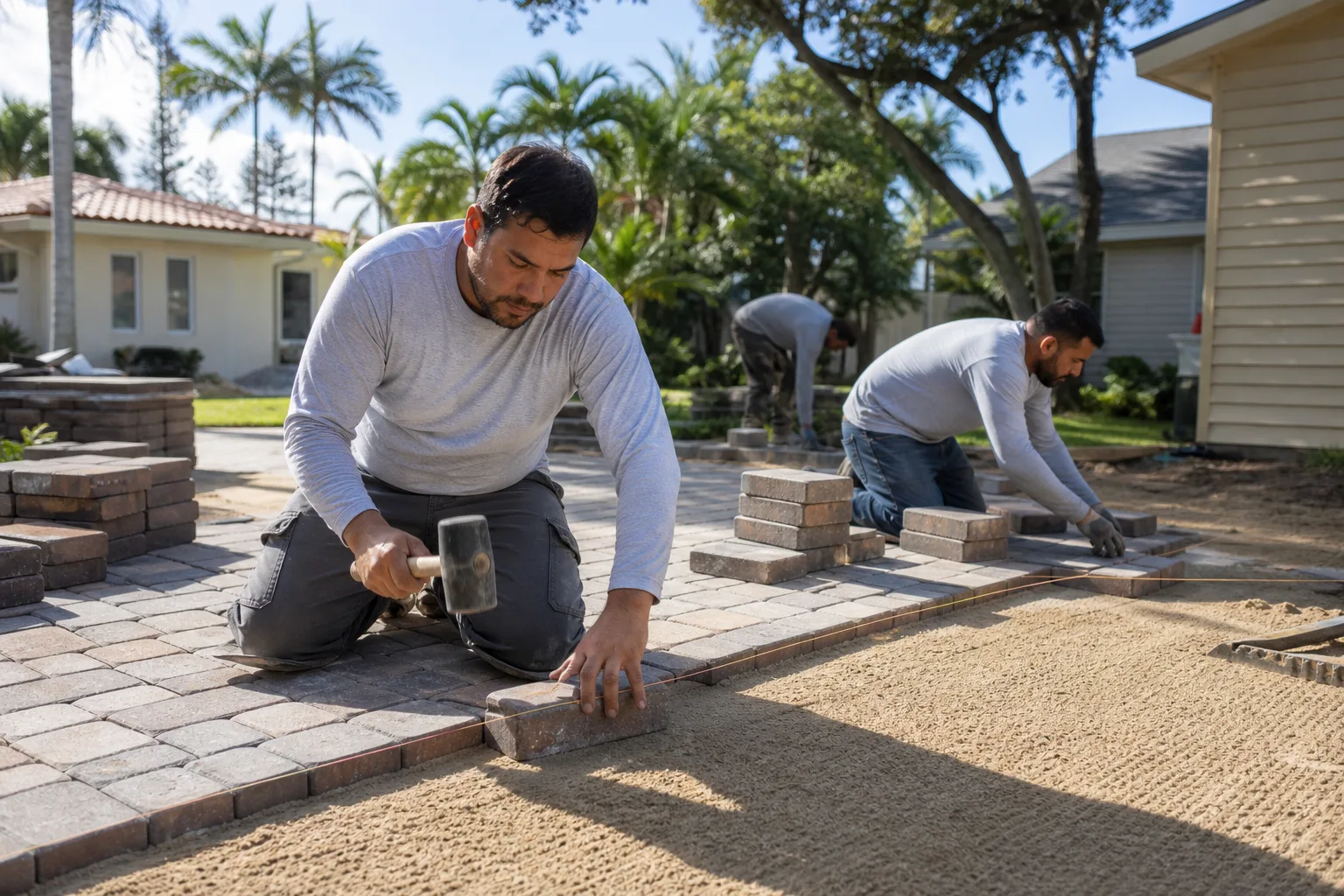
Compaction matters as much as depth. Each 2-inch lift should be plate-compacted to roughly 95% density before the next layer goes down, and a legitimate crew will run a density test or at minimum document the lift count with photos. That’s the kind of documented photo record we include as standard on every visit, because once pavers go down, the base becomes invisible and unverifiable.
If you’re planning a wider project that includes a new fence line or an ADU where the driveway meets the setback, the grading sequence matters, and it’s worth coordinating. A Home Additions & ADU project in Fremont that shares a driveway edge needs the paver base and the foundation drainage designed together, not one after the other.
Concrete Pavers vs. Clay Brick vs. Natural Stone
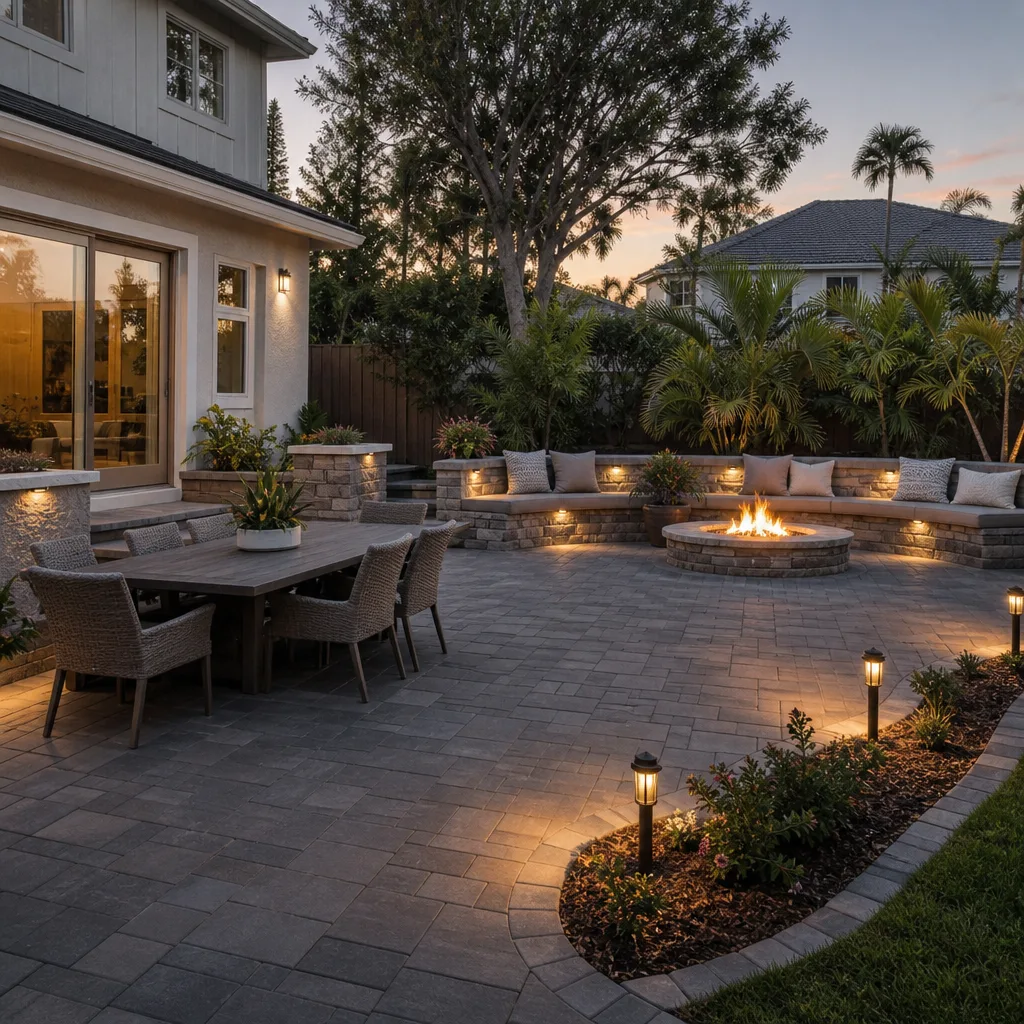
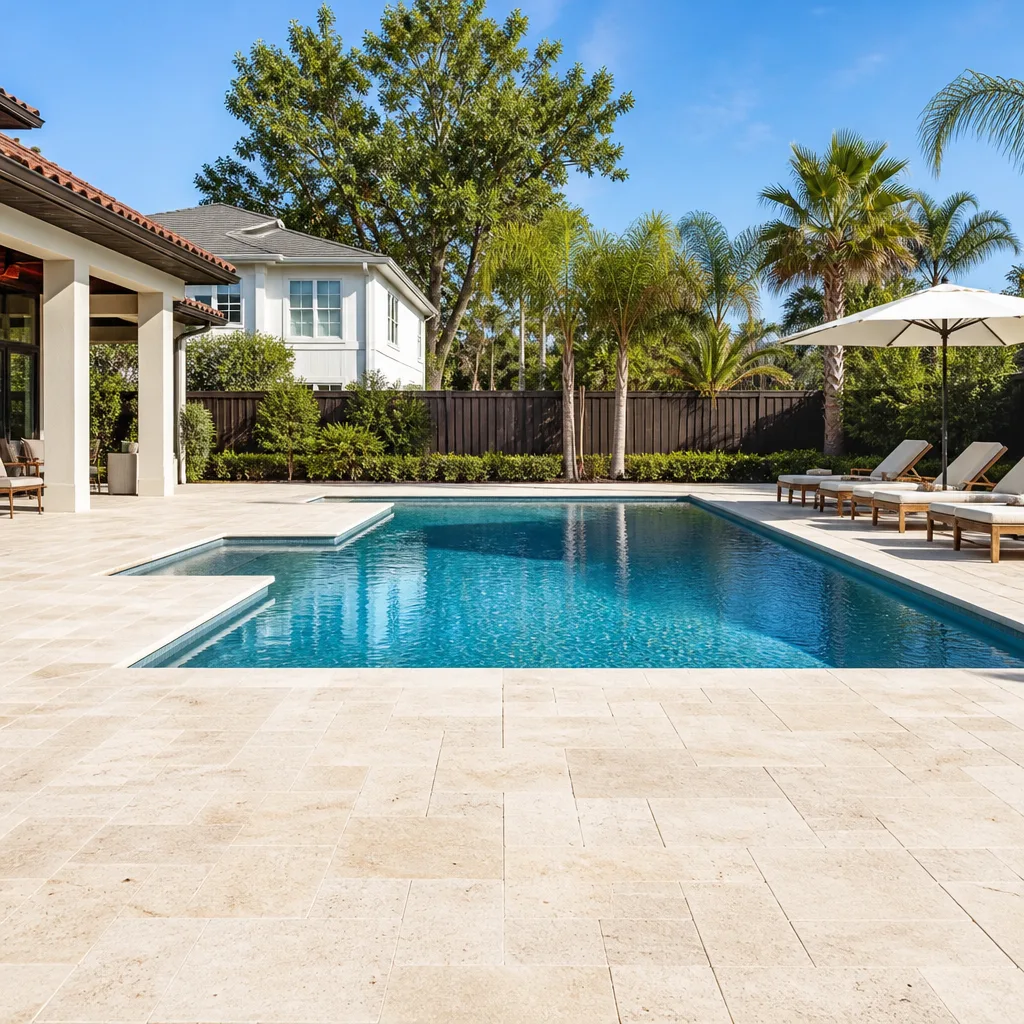
Three material families dominate Fremont driveways, and each behaves differently on clay. Concrete pavers (Belgard, Mutual Materials, Techo-Bloc) are the workhorse choice: consistent dimensions, a joint sand system that flexes with minor soil movement, and a wide price band. Clay brick is the classic look, denser and heavier, but less forgiving if the base does shift, since bricks are less flexible at the joint. Natural stone (bluestone, travertine, granite) looks the best and costs the most, and its weight means the base has to be right the first time.
For most Fremont homes, concrete pavers hit the best balance of cost, repairability, and tolerance for clay movement. If a single paver cracks or a utility line needs digging up, a paver driveway can be lifted and relaid in that section; poured concrete cannot. That repairability is a real long-term number, not a marketing point.
Joint sand is the detail people skip. Polymeric sand locks the joints and resists washout; plain sand on a sloped Fremont lot will wash out within a couple of seasons. Name the sand type in the quote.
What a Paver Driveway Costs in Fremont
Fremont pricing runs higher than the national average because of base depth, permit handling, and the labor of working clay. Here’s a realistic installed range as of 2024, all-in (base, pavers, edge restraint, sand, cleanup):
| Material | Installed $/sq ft | Notes |
|---|---|---|
| Concrete pavers (Belgard, Mutual Materials) | $18 – $26 | Workhorse choice; repairable, flexible joints |
| Clay brick | $22 – $30 | Denser; needs solid base, less forgiving |
| Natural stone (bluestone, travertine) | $28 – $45+ | Premium look; heaviest base demand |
| Permeable paver system | $24 – $34 | Open-graded base; stormwater credit possible |
Line-item drivers that move the number most: base depth (each added inch is real labor), demolition and haul-off of the old surface ($2 – $4/sq ft), edge restraint and drainage correction, and permit fees. A typical two-car Fremont driveway of 600 square feet lands around $11,000 – $16,000 in concrete pavers, with the base and drainage accounting for a meaningful chunk of that.
When you compare quotes, compare the base spec first and the paver price second. A quote that’s $3,000 cheaper is often a 4-inch base on clay soil, and the failure cost lands on you 18 months later. Our Driveway & Pavers service in Fremont quotes the base depth, the aggregate type, and the sand in writing before work starts, so the two numbers are actually comparable.
Stormwater Rules, Permeable Pavers, and Permits
Fremont enforces stormwater requirements that affect driveway projects, and permeable pavers can earn credit under those rules if the system is designed and documented correctly. The key is that permeable pavers aren’t just pavers with gaps: the entire base is open-graded stone with a defined storage layer and often a drain path, and that spec has to be documented for the permit file.
What the city typically wants to see before permit issuance for a driveway replacement or new driveway:
- A site plan showing the driveway footprint, slope, and where water drains off the pavement.
- Base and paver spec sheets, including whether the system is permeable or conventional.
- Drainage calculations if the driveway is on a slope or near a storm drain connection.
- Setback confirmation from the property line and any utility easements.
Permit requirements shift, and the specifics depend on your lot and the scope of work, so confirm current requirements with the city before finalizing. A legitimate paver contractor will pull the permits and confirm the stormwater documentation as part of the job, not hand it back to you. Ask up front who’s handling it.
Change Orders: What a Legitimate Clause Looks Like
Paver projects are the most common place for post-demo surprises, because the moment the old surface comes up, the contractor can claim the base conditions are worse than expected and the price changes. Some of that is real. Much of it is inflated. The contract clause that protects you is a written change order that must be signed before any additional work proceeds.
A legitimate change-order clause includes:
- The specific condition found, described plainly (“4 inches of unstable subgrade beneath the old concrete at the garage apron”).
- The physical fix, with quantities (“remove 40 sq ft of unsuitable soil, replace with ¾-inch aggregate, compact in 2-inch lifts”).
- A dollar amount for that specific change, not a lump “additional work” line.
- A signature line, and a clear statement that no work proceeds until it’s signed.
Line items most commonly inflated after demo: “additional base material” without quantities, “extra compaction” that should be in the base price, and “drainage correction” that was foreseeable from the site plan. Those are the lines to challenge. Under our discipline, no change proceeds without a signed change order, which is how projects finish within a few percent of the number agreed at signing.
The Three Inspection Checkpoints You Can Verify
You don’t need to be a contractor to catch the big issues. Three checkpoints, all visible if you’re on site at the right moment, tell you whether the driveway will hold.
- Sub-base compaction. Ask to see the base lifted and compacted before pavers go down. Each 2-inch lift should be plate-compacted, and the surface should feel rock-hard underfoot, not spongy. A crew that won’t let you look at the base is a red flag.
- Edge restraint fastening. The edge restraint (the border that holds the pavers against lateral movement) should be set in concrete and spiked, not just butted against the pavers. On a sloped Fremont lot, weak edges let the field pavers creep downhill.
- Joint sand type. Confirm polymeric sand was used, especially on any slope, and that it was installed dry, swept in, and watered per the manufacturer’s spec. Plain sand on a sloped lot is a failure waiting for the first rain.
Document each checkpoint with a photo. The photo record is your evidence if a problem shows up two winters later, and it’s the difference between a warranty claim that gets honored and one that gets argued. We include a documented photo record on every visit as a standard deliverable, because the base is the one part of the job that disappears once the pavers go down.
How to Vet a Paver Contractor
The Fremont market has plenty of pavers crews and a lot of them are good. The vetting question isn’t whether they can install pavers, it’s whether they’ll build the base for clay soil and document it. Read the three-star reviews first: that’s where customers describe what went wrong, and base failures show up there more often than anywhere else.
Ask five questions before signing anything:
- What’s the base depth and aggregate spec for my soil, and will you test compaction?
- Will you pull the permits and handle the stormwater documentation?
- What does the change-order process look like, and will I see quantities?
- What’s the written warranty, and does it cover base failure?
- Will I get a photo record of the base before pavers go down?
If the project touches a shared property line, coordinate the paver base with any Fence Installation in Fremont at the same time; the fence posts and the driveway edge share the same soil and drainage, and doing them together is cheaper than doing them twice. For the bigger picture of how a documented, written-price-first process works across every trade, see the Rowan Construction Group Fremont home page.
Common Mistakes to Avoid
- Accepting a 4-inch base on Fremont clay. That’s the coastal spec. On Zone D expansive clay it’s the leading cause of heaving and 1 – 2 inch shifts within two wet seasons.
- Skipping the compaction test or the lift count. Depth means nothing if each layer isn’t compacted to density. Ask for the documentation.
- Using plain sand on a slope. On Niles and Mission Hills lots, plain joint sand washes out; polymeric sand is the baseline, not an upgrade.
- Letting the hillside drain onto the driveway. Water sheet from an uphill lot saturates the sub-base. Cut a defined drainage path before pavers go down.
- Signing a vague change-order clause. “Additional work as needed” is an open checkbook. Demand condition, quantities, and a dollar figure per change.
- Comparing quotes on paver price only. The cheapest quote is often the thinnest base. Compare the base spec, permit handling, and warranty before the paver price.
- Forgetting the permit and stormwater file. Permeable systems and drainage documentation need to be in the permit file before issuance, not scrambled together after the fact.
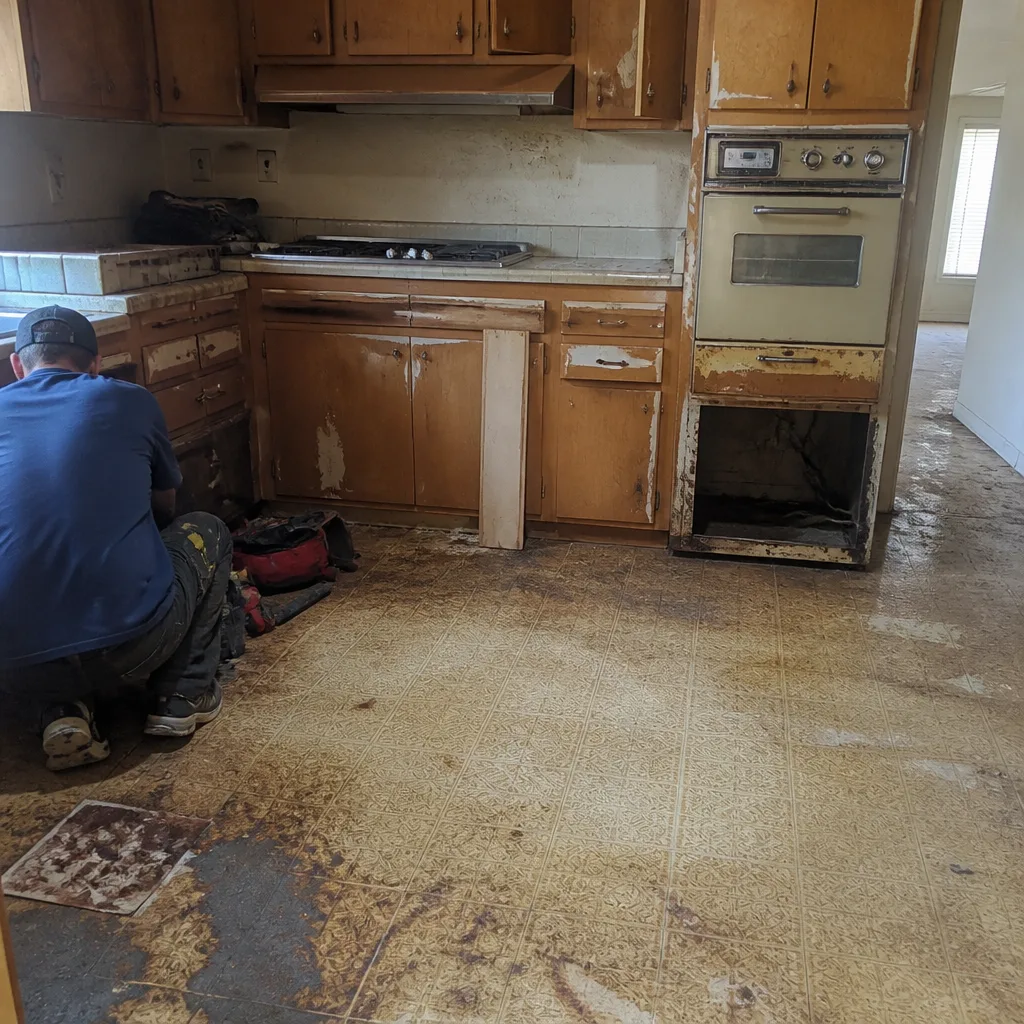
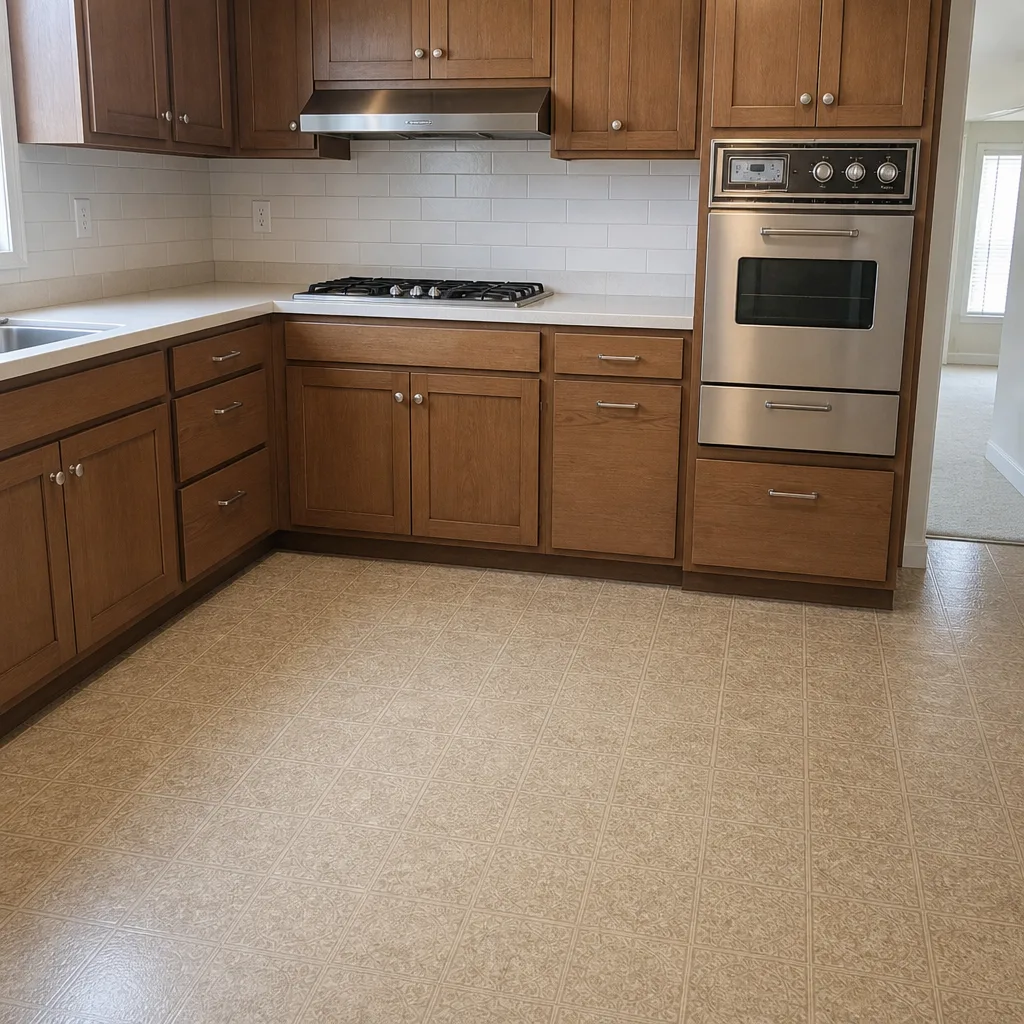
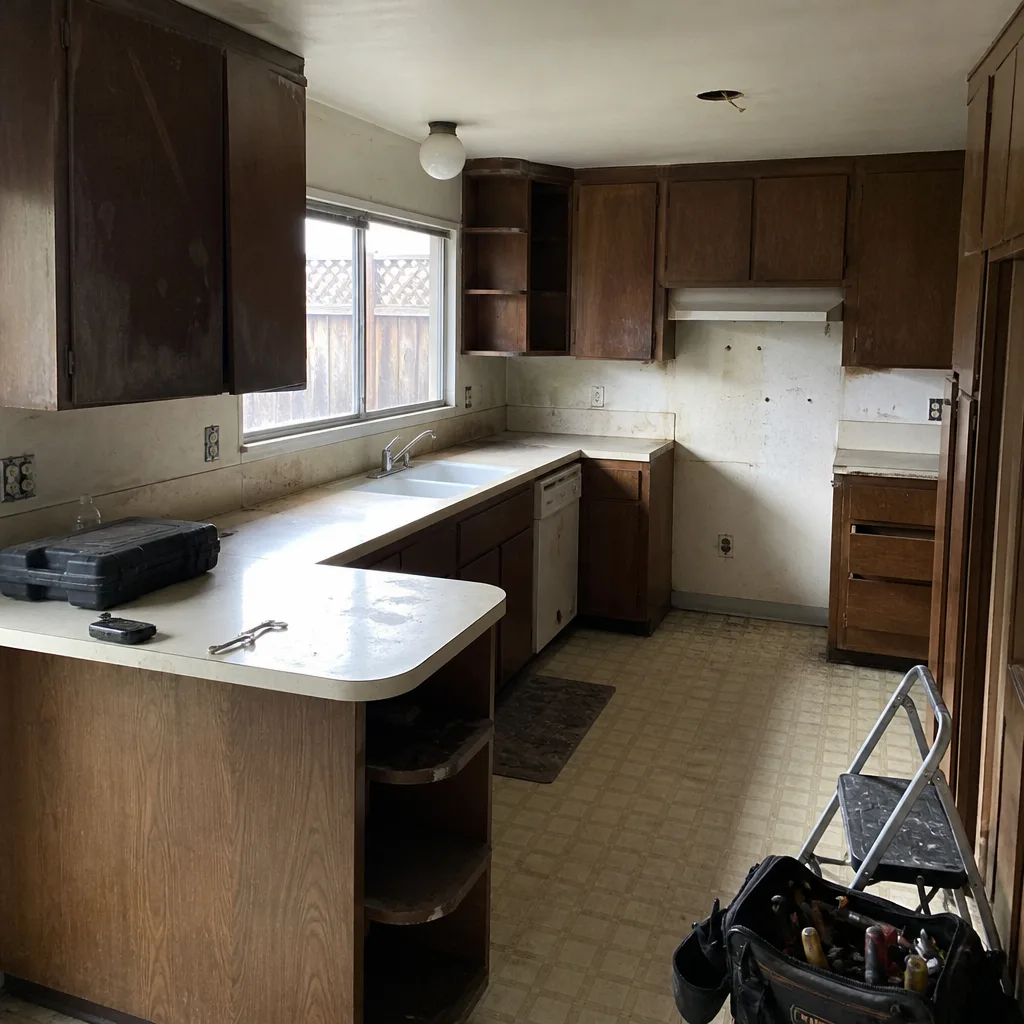
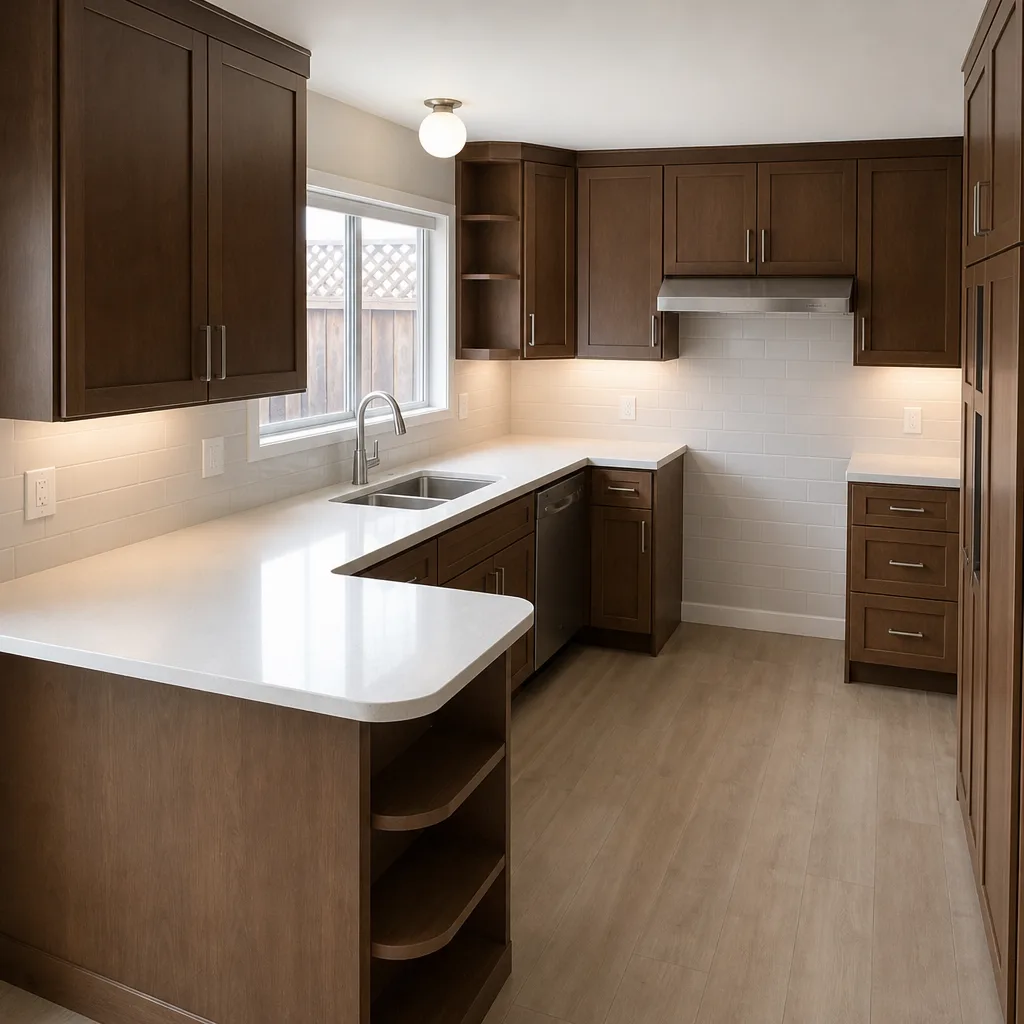
See the difference
 Before
 After
 Before
 After
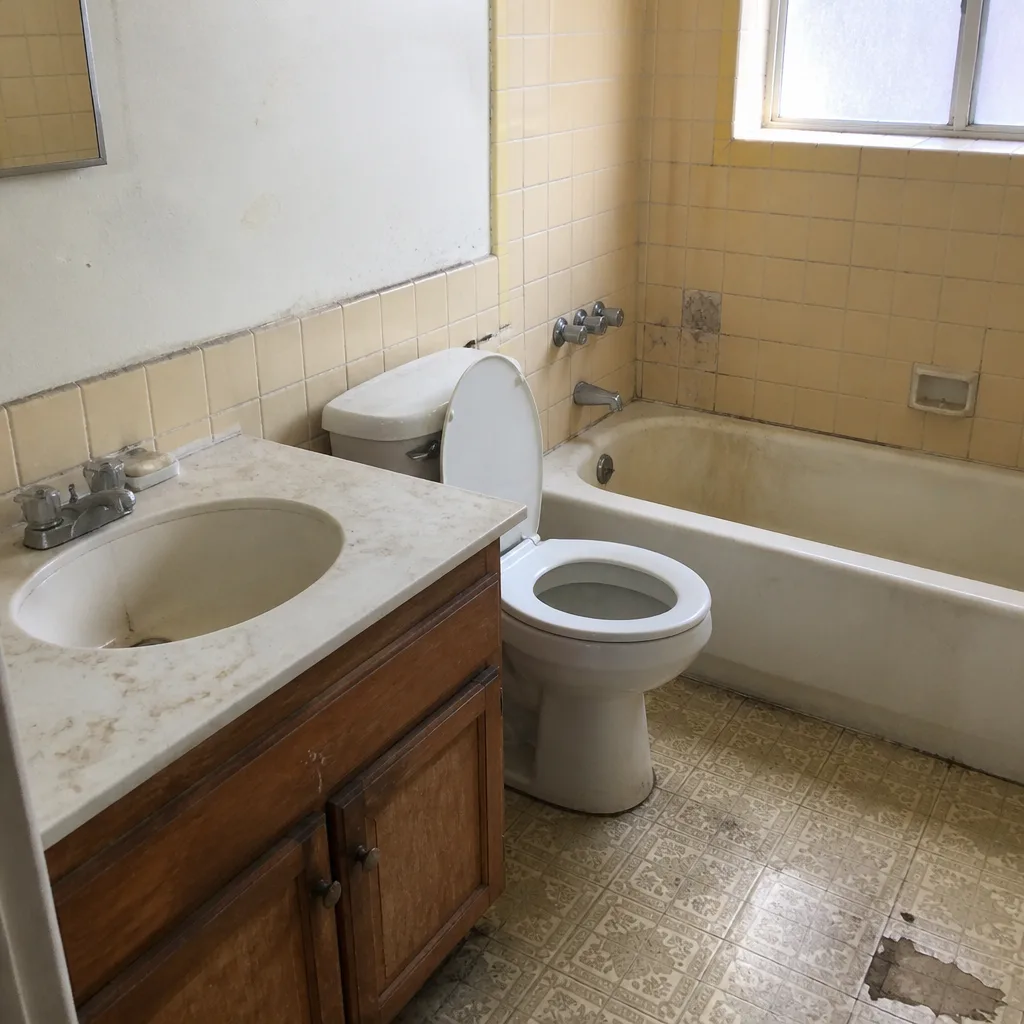 Before
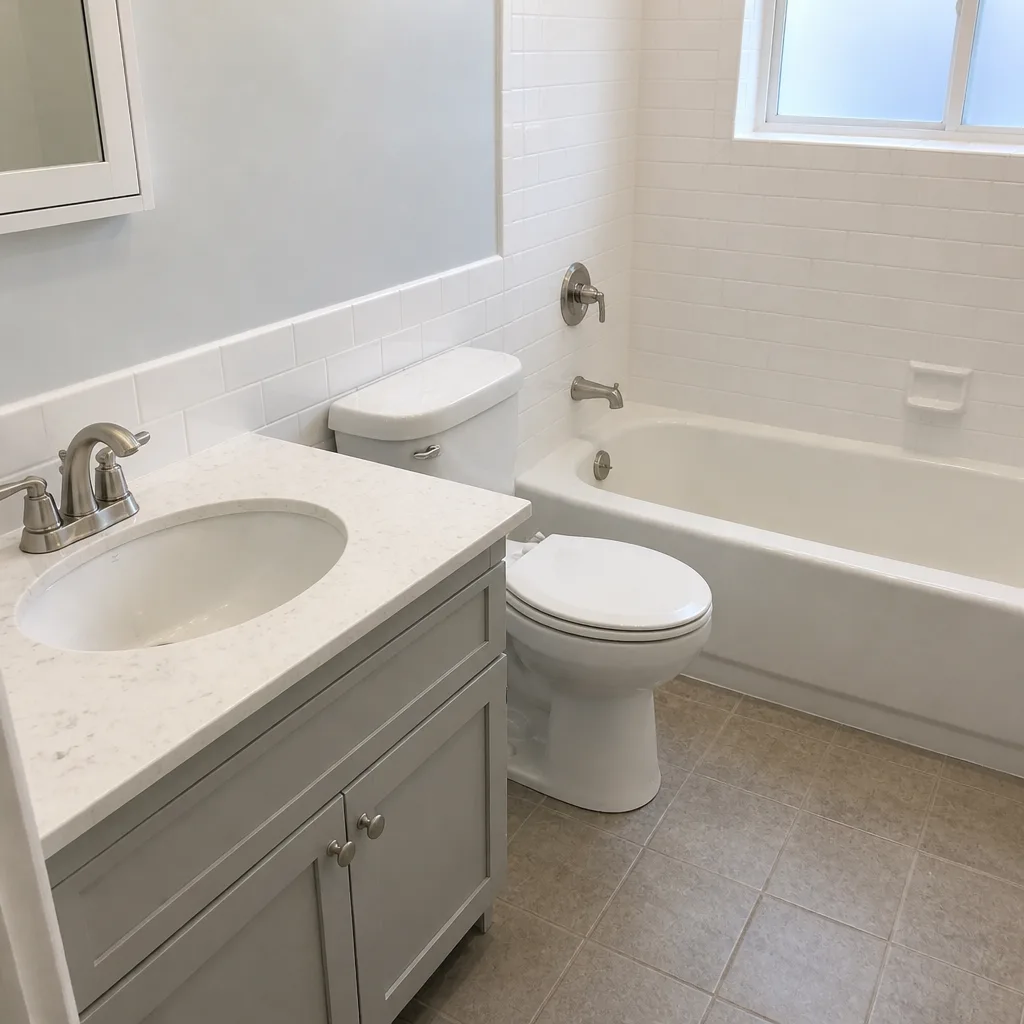 After
When to Call a Professional
Call a professional if your existing driveway shows a lip at the garage apron, cracks running diagonally across a poured slab, or pavers that rock underfoot, because those are base failures and they don’t fix themselves. Call if a paver area is more than 50 square feet, if the lot slopes, if the driveway shares a property line or drainage path, or if the job requires a permit and stormwater documentation. Those are the conditions where a documented base and a written change-order process save real money. Rowan Construction Group Fremont offers free estimates in Fremont, a flat written price with a written scope before any work starts, and a Free Second Opinion on any written estimate you already have. Call (866) 797-6171 to schedule your free estimate.
Frequently Asked Questions
Concrete pavers in Fremont typically run $18 – $26 per square foot installed, clay brick $22 – $30, and natural stone $28 – $45 or more, all-in with base, sand, edge restraint, and cleanup. A 600-square-foot two-car driveway usually lands around $11,000 – $16,000 in concrete pavers, with base depth and drainage driving most of the variation. Call (866) 797-6171 for a flat written price on your specific driveway; estimates are free.
Fremont sits on Zone D expansive clay that swells in wet season and shrinks in dry season, so a 6 – 8 inch compacted base is usually needed instead of the 4-inch base used on coastal sandy soil. A 4-inch base on clay often fails within 18 months. The written quote should name the base depth and the compaction method for your address, not a general recommendation.
Permeable pavers aren’t always required, but they can earn stormwater credit under Fremont’s rules and are worth considering for driveways near storm drain connections or on larger impervious footprints. The open-graded base and drainage documentation have to be designed and submitted for the permit. Confirm current requirements with the city, and make sure your contractor is handling the permit file rather than handing it back to you.
It only changes if a written change order is signed first, with the specific condition found, the physical fix, and the dollar amount spelled out. On paver jobs, the common post-demo surprises are “additional base material” and “extra compaction” without quantities. A legitimate contract requires a signed change order before any additional work proceeds, and the project should finish within a few percent of the agreed number.
Yes. Permits and the stormwater documentation that Fremont requires are part of the job, not a separate errand for the homeowner. Get the permit handling named in the written scope so there’s no surprise later, and ask who’s responsible if the plan reviewer comes back with a question. Call (866) 797-6171 with your address and we’ll walk the permit scope with you.
Base failure from under-compaction or insufficient depth on clay soil, showing up as a 1 – 2 inch lip at the garage apron or pavers rocking in the field about 18 months after install. The fix is a documented base built in compacted 2-inch lifts, with polymeric sand at the joints and a properly spiked edge restraint. If your driveway already shows these signs, get an assessment before the next wet season; call (866) 797-6171 for a free estimate.
The Bottom Line
A paver driveway in Fremont is decided at the base. Zone D clay needs a 6 – 8 inch compacted base, 2-inch lifts, a compaction check, and polymeric sand, and those details belong in the written quote, not in a verbal promise. Concrete pavers run $18 – $26 per square foot installed and offer the best balance of cost and repairability on clay. Demand a written change order with quantities before any post-demo work, verify the three inspection checkpoints, and keep the photo record. Get those right and the driveway outlasts the warranty by decades.
Ready to price a driveway the right way? Call (866) 797-6171 to schedule your free estimate with Rowan Construction Group Fremont. You’ll get a flat written price with a written scope and warranty, a Free Second Opinion on any estimate you already have, the 365-Day Done Right Promise backing the work, and a documented photo record from the first visit to the last. No work starts until the price is in writing.
Written by the team at Rowan Construction Group Fremont.