Last updated November 17, 2026

Free written scope consultation - allowances, timeline, and change-order rules on paper before a single trade is scheduled
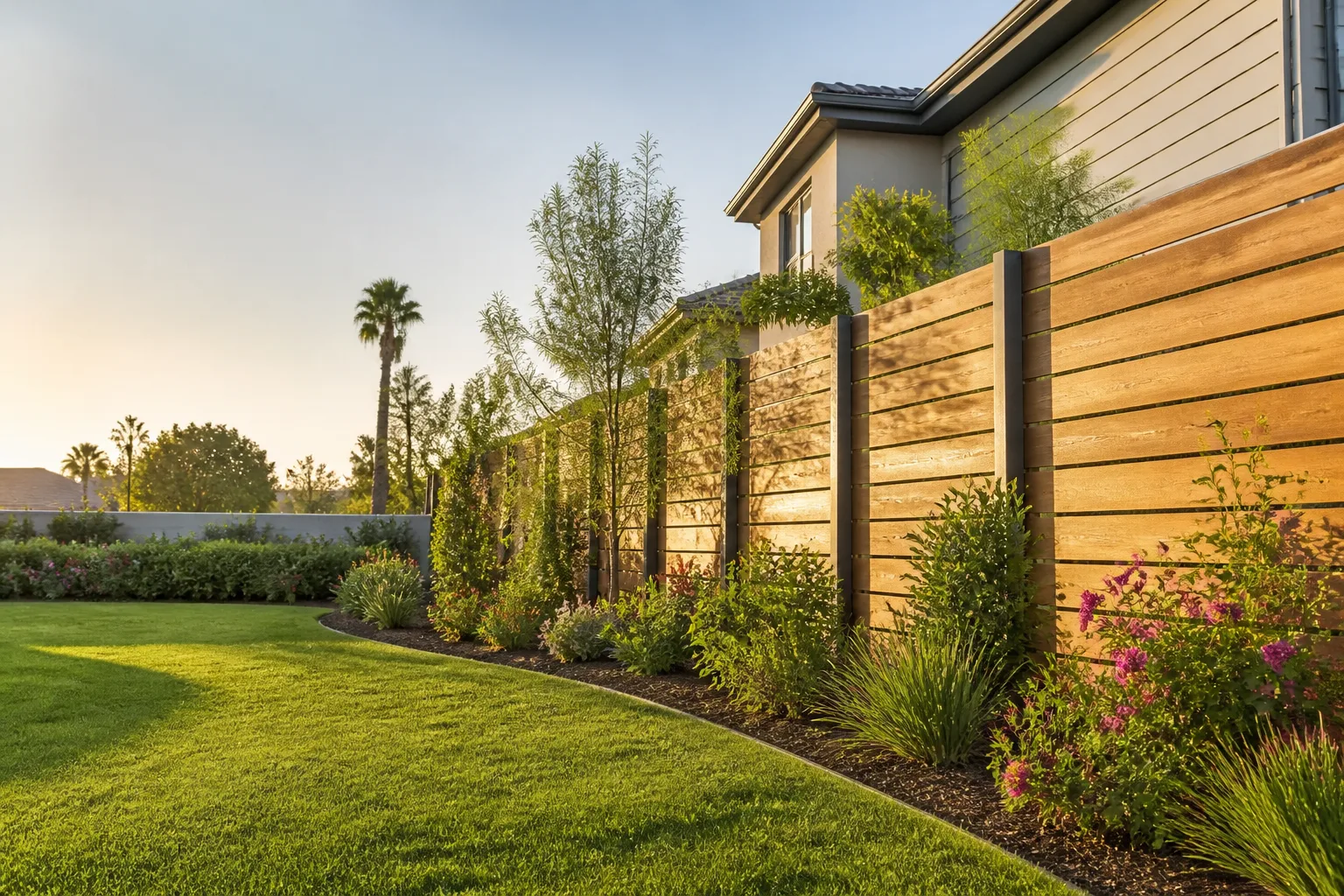
The Complete Fence Installation Guide for Fremont Homeowners
Fremont’s municipal code requires a building permit for any fence over 3 feet in the front yard and over 6 feet anywhere on the property. Most homeowners learn this from an inspector after the fence is already standing, and that discovery carries a mandatory tear-down and rebuild. We’ve watched it happen in Centerville and in the Warm Springs hills alike. This guide walks through the three decisions that have to happen before a single post hole is dug: the permit, the property survey, and the neighbor agreement. Get those right and the rest of a Fremont fence project is straightforward.
Quick Answer
Fence installation in Fremont typically runs $38 to $95 per linear foot installed, depending on material, and a standard 150-foot rear-yard fence usually lands between $6,500 and $12,500. A building permit is required above 3 feet in the front yard and above 6 feet anywhere on the lot, and footings must be sized for Fremont’s wind exposure category. The permit, the survey, and the neighbor cost-sharing agreement are construction steps, not paperwork you get to later.
Styles & brands we work with
- Kitchen remodeling
- Bathroom remodeling
- Home additions & ADU
- Roofing
- Windows & doors
- Driveway & pavers
- Fence
Table of Contents
- Fremont fence permit requirements by height and location
- Post depth and footings for Fremont’s wind exposure
- Material cost and lifespan comparison
- The neighbor notification and California Civil Code Section 841
- How to read a property survey for fence placement
- Front, side, and rear yard: what changes by zone
- Common mistakes to avoid
- Frequently asked questions
Fremont Fence Permit Requirements by Height and Location
The single most expensive mistake in a Fremont fence project is skipping the permit. The city treats fence permits as a zoning compliance check first and a structural check second. What you can build, and how high, depends entirely on which zone the fence sits in.
Fremont’s development code separates fences into three location zones, and the height limit changes in each:
- Front yard (between the house and the street): 3 feet maximum without a permit; anything taller requires a permit and, in most cases, a sight-distance review at driveway and corner locations.
- Side yard (along the property line beside the house): 6 feet maximum by right; taller requires a permit and plan-check review.
- Rear yard (behind the rear wall of the house): 6 feet maximum by right; 7 feet is commonly approvable with a permit, and anything above that typically triggers full plan-check.
Two things determine whether your fence qualifies for over-the-counter approval or gets routed to plan-check review. The first is height above the zone limit. The second is whether the fence sits in a sight-distance triangle at a corner or driveway. Standard 6-foot wood or vinyl fences in the rear or side yard, drawn to code, usually clear the counter. Corner-lot fences, tall front-yard fences, and anything in a hillside or geologic hazard zone go to plan-check. Permit fees in Fremont run in the range of a few hundred dollars for a residential fence, and the fee is tied to valuation, so a longer fence costs more to permit. Nobody should quote you a fence price that leaves the permit out.
Post Depth and Footings for Fremont’s Wind Exposure
Fremont sits near the boundary between ASCE 7 wind exposure category B and category C. Exposure B is suburban terrain with buildings and trees breaking the wind; exposure C is open terrain with scattered obstructions. Because much of Fremont opens toward the bay and the hills, a lot of local lots behave closer to exposure C than a contractor from the Central Valley would assume. That matters for post depth.
In practice, that means:
- Post depth below grade: a minimum of 24 inches for a 6-foot fence, and 30 to 36 inches on exposed lots facing the bay or sitting on a hilltop. Inland California contractors routinely set 18-inch posts. Those posts lean within a few seasons in Fremont wind.
- Footing diameter: 10 to 12 inches of concrete around the post, not a handful poured into a narrow auger hole. The concrete resists the lateral load the wind puts on the fence panel.
- Post material: pressure-treated ground-contact rated lumber, or a galvanized steel post set in concrete. A steel post system such as Master Halco’s post-and-panel line resists wind load better than wood and won’t rot at the ground line.
- Drainage: crown the concrete slightly above grade so water runs off. Fremont’s winter rain saturates clay soils, and a post pocket that holds water rots the post from the bottom up.
We’ve seen fence failures in the Warm Springs and Mission San Jose hills that trace back to 18-inch posts set in dry-mix concrete with no drainage. The panel survives the first winter and fails in the second.
Material Cost and Lifespan in Fremont’s Climate
Fremont’s climate is mild and coastal-adjacent: foggy mornings, dry summers, and a wet winter. That combination is gentle on wood compared to the Sierra foothills and hard on anything that traps moisture. Here is how the common fence materials compare on installed cost per linear foot and expected lifespan in a Fremont yard.
- Pressure-treated pine (Wolmanized or equivalent): $38 to $52 per linear foot installed. Lifespan of 15 to 20 years with ground-contact rated posts. The value option, and the one most Fremont homeowners choose for a rear-yard privacy fence.
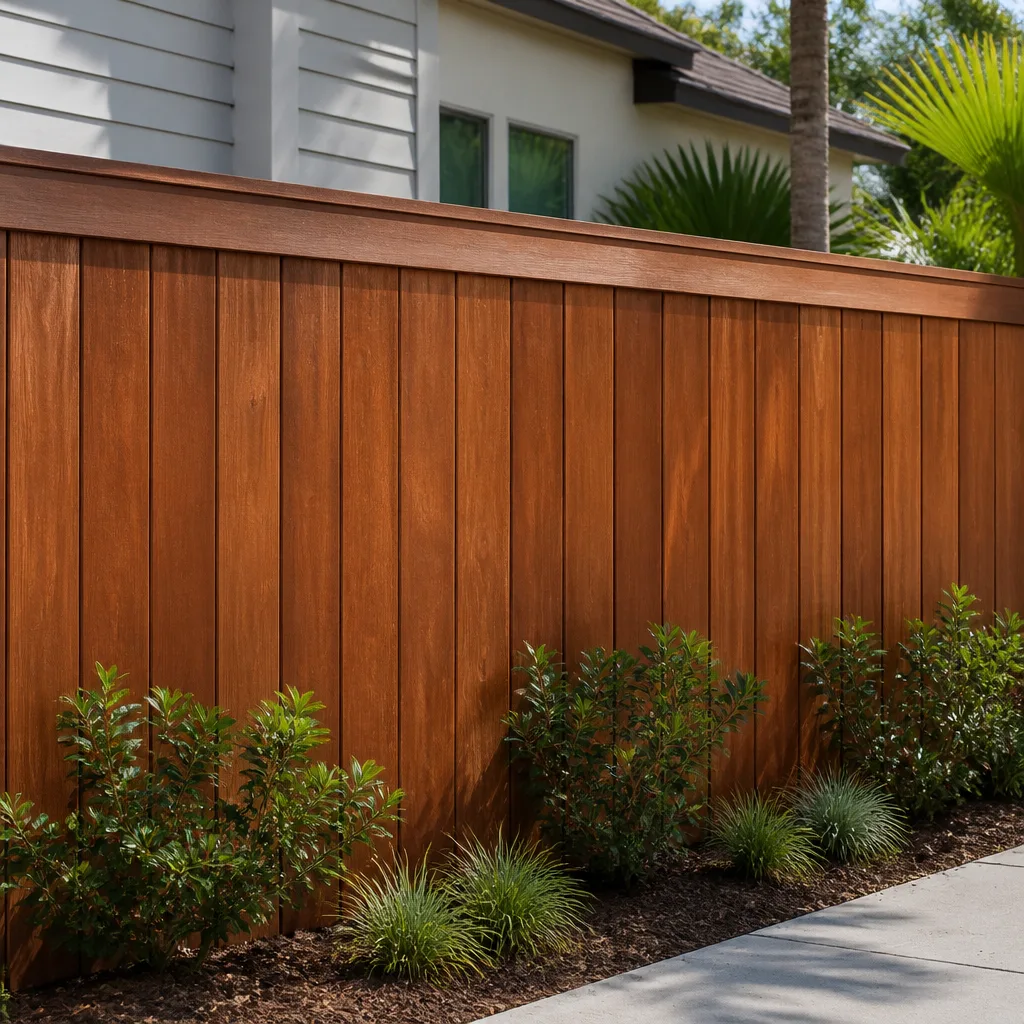
- Western red cedar: $55 to $75 per linear foot installed. Lifespan of 20 to 25 years. Cedar resists rot and insects naturally, but it needs a sealer every few years in the bay climate to keep its color.
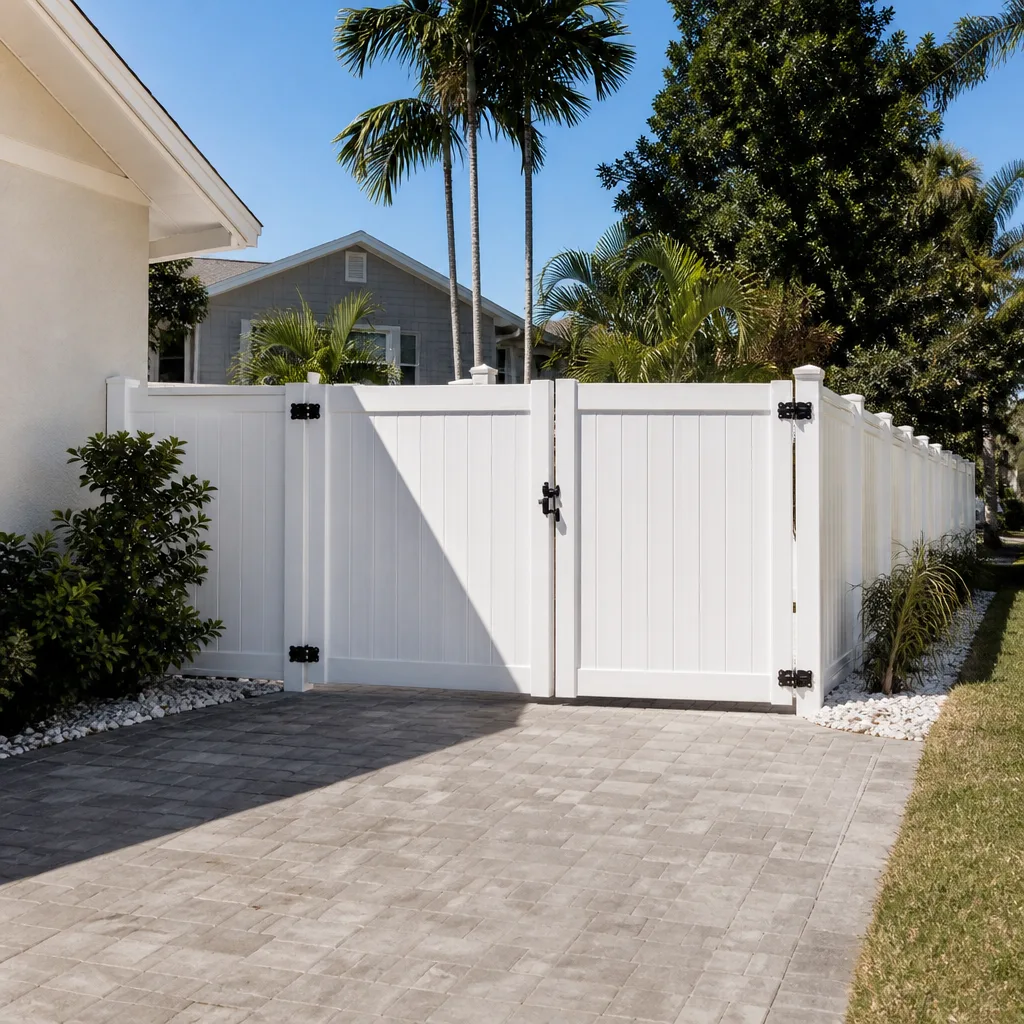
- Vinyl (Bufftech or similar): $62 to $85 per linear foot installed. Lifespan of 25 to 30 years with minimal maintenance. Vinyl holds up well to Fremont fog and doesn’t rot, but it can go chalky in direct sun and it flexes under wind load, so post spacing matters.
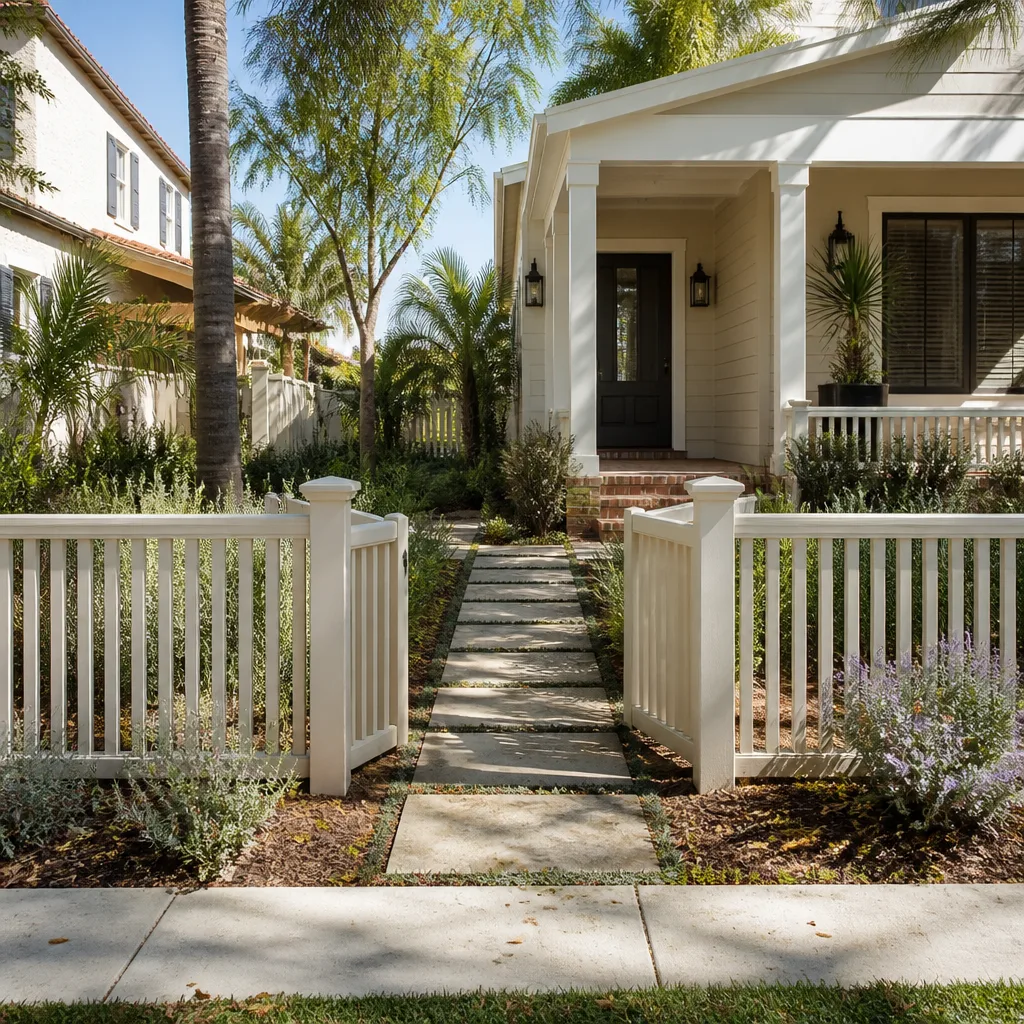
- Ornamental aluminum (Ameristar or Jerith): $70 to $95 per linear foot installed. Lifespan of 30-plus years. The choice for front-yard fences where you want visibility and code compliance at 3 feet. Powder-coated aluminum resists rust in the coastal air.
Lifespan figures assume proper footings. A cedar fence on undersized posts fails at year eight regardless of the wood.
The Neighbor Notification and California Civil Code Section 841
California Civil Code Section 841 governs shared boundary fences. It sets out when a neighbor is responsible for a share of the cost, and the short version is this: if the fence benefits both properties and the cost is reasonable, a neighbor can be asked to contribute. The statute also lets a homeowner build a fence on their own side of the line and pay for it alone. The law doesn’t force a neighbor to split the cost. It sets the framework for asking.
The notification should happen in writing before the fence is built, not after. A written cost-sharing agreement should include:
- The property line as described in a survey, and which side of the line the fence will sit on.
- The fence height, material, and style, so there’s no dispute later about what was agreed.
- The total installed cost, the share each party will pay, and the payment timing.
- Who owns and maintains the fence, and how future repairs are split.
- The date, both signatures, and a note that the agreement runs with the property.
File the signed agreement with your deed records so it survives a sale. We’ve seen Fremont homeowners get a verbal yes, build the fence, and then face a dispute when the neighbor sells. A written agreement is the one document that ends the argument.
How to Read a Property Survey for Fence Placement
A property survey shows two different lines, and mixing them up is one of the most common causes of a fence dispute in Fremont. The deed boundary line is the legal edge of your lot as recorded. The fence-placement line is where the fence will actually go, and it should sit 2 inches inside the boundary line.
Why 2 inches? Because a fence built flush to the property line invites a neighbor to argue it’s encroaching, and because the small setback gives you room to maintain the back side of the fence without trespass. It also protects against survey disagreement, which is common on lots platted decades ago in neighborhoods like Irvington and Niles. The 2-inch setback should be documented in writing on the survey or in the cost-sharing agreement before install, so there’s a record of the intent.
If you don’t have a survey, order one before you order the fence. A survey costs a few hundred dollars and it’s the cheapest insurance in the project.
Front, Side, and Rear Yard: What Changes by Zone
The zone your fence sits in changes the height limit, the permit path, and the material choice. In the front yard, the 3-foot limit means an ornamental aluminum fence such as Jerith is the practical pick – it gives you a visible boundary without walling off the yard. The permit is often over-the-counter if the fence is under 3 feet and clear of the sight-distance triangle at the driveway.
Side yards are where fences do double duty: privacy along the property line and access control toward the rear. A 6-foot wood fence works here, but watch the sight-distance triangle at corner lots. Rear yards allow the most height and the most material flexibility. This is where a 6-foot pressure-treated privacy fence earns its keep, and where the footing depth matters most because the rear line often sits against open ground and catches the wind.
If your project involves a fence that ties into a new driveway or a backyard addition, coordinate it with the other work. For a driveway, our Driveway & Pavers in Fremont page covers how the gate and fence line up with the apron. For a new structure, our Home Additions & ADU in Fremont page explains how site plans at the permit stage affect fence placement.
Common Mistakes to Avoid
- Building before the permit. An unpermitted fence over the height limit in Fremont gets flagged at sale or at a neighbor complaint, and the remedy is a tear-down. The permit is cheaper than the rebuild.
- Setting posts at inland depth. An 18-inch post works in Fresno. In Fremont’s wind exposure, it leans within a few winters. Depth should match the exposure category, not the contractor’s home market.
- Assuming a verbal neighbor agreement is enough. Get it in writing and file it with the deed. A handshake doesn’t survive a sale.
- Building on the property line with no survey. A 2-inch setback inside the line, documented in writing, prevents most encroachment disputes. Without a survey, you’re guessing.
- Choosing material by price alone. Vinyl looks cheaper than cedar on some quotes and lasts longer, but it flexes under wind load in exposed Fremont lots. Post spacing is the variable, not the material.
- Leaving the footing undrained. A post pocket crowned above grade sheds water. One that holds it rots the post at the ground line, where you can’t see it.
- Forgetting the gate hardware. A fence is only as good as its gate. Latch, hinge, and post reinforcement cost money and get left off the quote. Ask for them as line items.
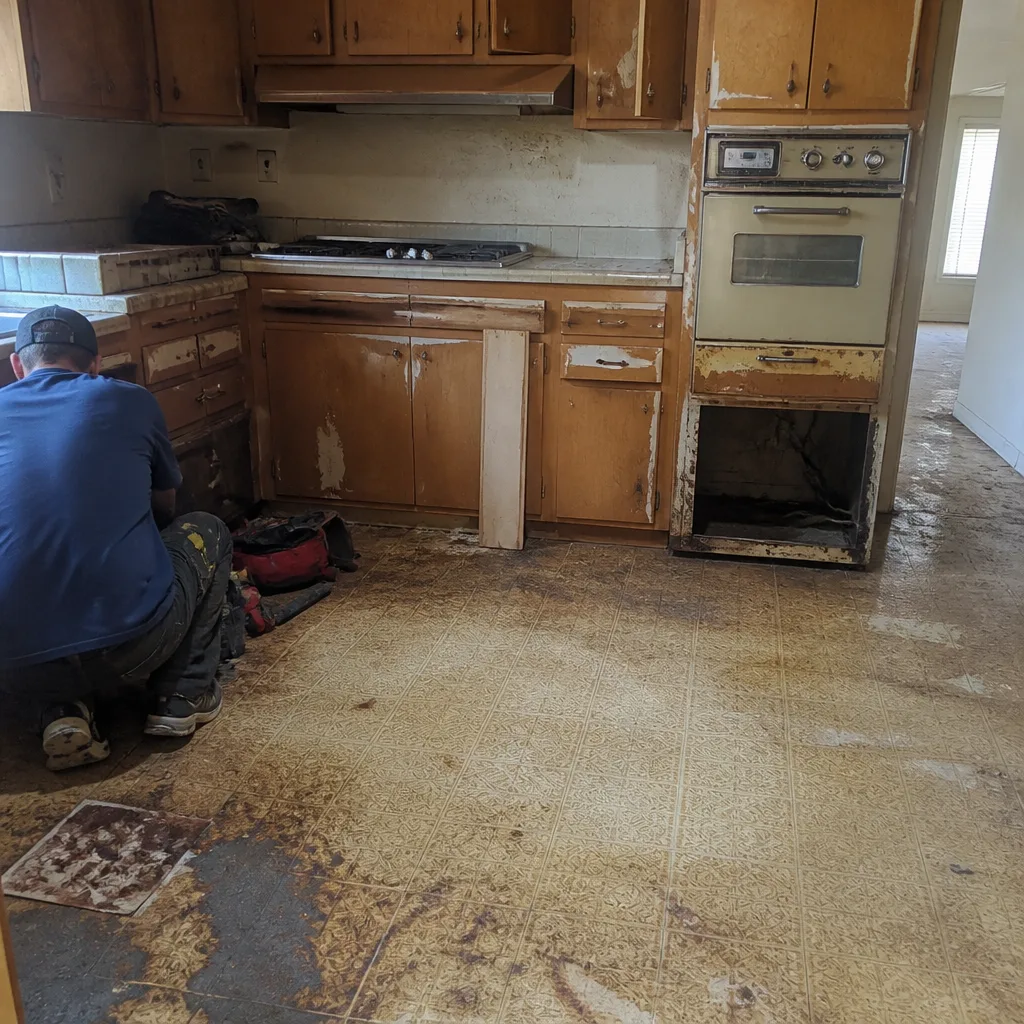
See the difference
 Before
 After
 Before
 After
 Before
 After
When to Call a Professional
A short run of 3-foot ornamental fence in the front yard is a weekend project for a handy homeowner. The rest is where the details bite. A fence taller than 6 feet, a corner-lot fence in a sight-distance triangle, a hillside lot in the Warm Springs or Mission San Jose hills, a fence that ties into a new driveway or addition, or any project where the neighbor relationship needs a written agreement – all of those are jobs where a pro earns their fee. The footing depth, the permit path, and the survey reading are the three places a DIY fence most often fails inspection or fails in a windstorm. Rowan Construction Group Fremont offers free estimates in Fremont – call (866) 797-6171. Our technicians have up to 19 years of experience, and a written price lands before any work starts.
Frequently Asked Questions
Fence installation in Fremont runs $38 to $95 per linear foot installed, depending on material. A 150-foot rear-yard wood fence typically lands between $6,500 and $12,500, and a 3-foot ornamental aluminum front-yard fence runs $70 to $95 per linear foot. Call (866) 797-6171 for an exact quote – estimates are free.
Yes, if the fence is over 3 feet in the front yard or over 6 feet anywhere on the lot. Standard 6-foot rear and side fences usually clear over-the-counter approval, while corner-lot or hillside fences typically go to plan-check review. The permit fee runs in the low hundreds and is tied to project valuation.
A minimum of 24 inches below grade for a 6-foot fence, and 30 to 36 inches on exposed lots facing the bay or on a hilltop. Fremont sits near the ASCE 7 exposure B/C boundary, so footings should be sized for wind load, not for inland California defaults.
No, California Civil Code Section 841 sets a framework for asking, not a mandate. If the fence benefits both properties and the cost is reasonable, you can ask for a share, but the neighbor isn’t legally forced to contribute. Get any agreement in writing and file it with your deed.
On our projects, no. Under Clause 1 of The Haven Standard, the price is written before anyone picks up a tool, and no change proceeds without a signed change order. That discipline is why our projects finish within a few percent of the agreed cost. Call (866) 797-6171 to start with a written quote.
A standard 150-foot fence takes two to three days on site once the permit is approved. The permit itself is the longer variable – over-the-counter approvals are fast, plan-check review can add weeks. Plan for the permit timeline before you schedule the crew.
The Bottom Line
A Fremont fence succeeds or fails on three decisions made before the first shovel: the permit, the survey, and the neighbor agreement. Confirm the height limit for your zone, order a survey if you don’t have one, and get the cost-sharing agreement in writing and filed. Then size the posts for Fremont’s wind exposure, choose material by lifespan rather than sticker price, and hold the contractor to a written quote. If you want the whole thing documented from the first estimate to the last photo record, see our Fence Installation in Fremont service page, or start at the Rowan Construction Group Fremont home page to see all seven trades. The crew that measures twice is the one you want.
Ready for a written price on your Fremont fence project? Call Rowan Construction Group Fremont at (866) 797-6171 for a free estimate – a flat written price, a written scope, and a written warranty before any work starts. Bring a competitor’s quote and we’ll review it line by line at no charge.
Written by the team at Rowan Construction Group Fremont.