Last updated November 17, 2026





Free written scope consultation - allowances, timeline, and change-order rules on paper before a single trade is scheduled
Bathroom Remodeling Warning Signs Every Homeowner Should Know
A soft spot in the floor in front of the toilet almost always means the subfloor has been wet for at least six months. By the time you feel it through the tile, the repair scope has usually doubled from what it would have been at first detection. That gap between what a homeowner notices and what is actually failing is the whole problem with bathroom warning signs: the stain, the crack, the loose tile are symptoms. The failure is underneath them. This guide shows you how to read the actual failure in your Fremont home, so you can get an accurate diagnosis before a contractor scopes the work and sets a price.
Quick Answer
The warning signs worth acting on are the ones pointing to water or movement behind the surface: a hollow-sounding loose tile, paint bubbling at the baseboard, a musty smell that persists with the exhaust fan running, white mineral deposits on grout, and doors or cabinets swelling near the shower wall. Cosmetic grout cracking is usually surface-level. A crack that follows a straight line and reappears after regrouting points to structural movement or a failed waterproofing membrane, and that needs a proper inspection before anyone quotes a tile-only fix.
Styles & brands we work with
- Kitchen remodeling
- Bathroom remodeling
- Home additions & ADU
- Roofing
- Windows & doors
- Driveway & pavers
- Fence
Table of Contents
- Cosmetic Cracks vs. Structural Cracks: How to Tell Them Apart
- The Five Moisture Indicators That Show Up Before Visible Mold
- What White Deposits on Tile and Grout Are Telling You
- Why Fremont’s 1950s – 1970s Housing Stock Fails Differently
- Reading the Subfloor Before You Choose a Finish
- Red Flags in Contractor Behavior During the Estimate
- A Five-Step Diagnostic You Can Do Yourself
- Common Mistakes to Avoid
Cosmetic Cracks vs. Structural Cracks: How to Tell Them Apart
Most grout cracks are cosmetic. Grout is a cementitious material and it moves with temperature and humidity. In a Fremont bathroom with a window that stays open in summer, grout at the wall-to-floor junction will hairline-crack within a few years of any remodel, and regrouting is a reasonable fix.
Structural cracking looks different, and the difference is worth learning:
- Direction: Cosmetic cracks wander and stay thin. Structural cracks tend to run straight, often along a single axis, and widen at one end.
- Recurrence: If you regrout a crack and it returns in the same place within a season, the movement underneath is still active.
- Companion signs: A structural crack rarely travels alone. Look for a tile that sounds hollow when tapped, a door that has started to stick, or a baseboard pulling away from the wall on the opposite side of the shower.
- Lippage: Run your hand across the tile field. A tile edge sitting higher than its neighbor by more than a business card’s thickness means the substrate below has moved or softened.
Structural movement cracks point to one of two things: a subfloor that has lost integrity to moisture, or a waterproofing membrane that failed at installation. Neither is fixed by new tile. Under the Haven Standard, the price is written before anyone starts, and a written price depends on a real diagnosis; that’s why we open a wall or pull a tile before quoting. A contractor who won’t is guessing with your money.
The Five Moisture Indicators That Show Up Before Visible Mold
Mold is the last indicator, not the first. Long before it’s visible, a bathroom with a moisture problem gives off five signals. In our experience across Fremont remodels, at least one of these shows up in nearly every project where a wall has to come out.
- Musty smell that persists with the fan running. If you run the exhaust fan for twenty minutes and the smell returns within the hour, the moisture source is active, not residual. A properly vented bathroom clears in one fan cycle.
- Paint bubbling at baseboard level. Bubbled or peeling paint at the bottom twelve inches of drywall means water is wicking up from the floor assembly, usually from a shower pan or a toilet seal that has been seeping. The paint is the visible end of the wick.
- Loose floor tile with a hollow sound. Tap each floor tile with a screwdriver handle. A dull thud instead of a sharp click means the thinset has detached, and thinset detaches when the subfloor moves or stays damp.
- Staining at drywall seams. A brown or yellow line along a drywall seam, especially the corner where the shower wall meets an adjacent wall, is water following the seam. Drywall paper wicks moisture along its joints before it ever shows a wet spot.
- Door and cabinet swelling near the shower wall. A bathroom door that has started to rub its frame, or a vanity door that no longer closes flush, is wood taking on humidity. When the swelling is concentrated on the shower side, the wall assembly is holding water.
Any two of these together justify opening the wall before you accept a quote. One alone is worth a moisture meter reading. Call (866) 797-6171 if you want a second opinion on what you’re seeing; estimates are free.
What White Deposits on Tile and Grout Are Telling You
Efflorescence is the white, chalky or powdery deposit you sometimes see on grout lines, on the face of a tile, or along the base of a wall. It’s a salt residue, and it forms when water moves through a cementitious material, dissolves soluble salts, and then evaporates at the surface, leaving the salt behind. It looks like a light dusting of powder or, in bad cases, a crusty white bloom that won’t wipe away clean.
Here’s what matters: efflorescence on a bathroom wall or floor means water is migrating through the assembly from the wet side to the dry side. The deposit is on the dry side, but the water came from behind it. On grout, a light haze is often just installation residue. A recurring bloom that comes back weeks after you clean it is water on the move.
Where you find it changes the diagnosis:
- On the floor tile outside a shower: often a failed pan liner or a curb that wasn’t built correctly, letting water travel under the tile field.
- At the base of a tiled wall: frequently a missing or improperly lapped waterproofing membrane behind the tile, so water gets behind the field and exits low.
- On a slab floor at an exterior wall: can indicate moisture coming up through the slab, which in Fremont homes near the bay is worth checking separately.
Efflorescence is a diagnosis prompt, not a cleaning problem. If you’re seeing it, the right next step is a moisture reading and, usually, opening a small section of wall.
Why Fremont’s 1950s – 1970s Housing Stock Fails Differently
Fremont was built out in overlapping waves, and the bathrooms in a 1958 ranch in Centerville fail for different reasons than the bathrooms in a 1972 tract home in Glenmoor or a 1980s build in Ardenwood. The age of the house determines what’s behind the tile, and that determines what a remodel actually costs.
Three patterns show up again and again in Fremont’s older stock:
- Single-layer subfloor. Older Fremont bathrooms were often built with a single layer of dimensional lumber under the tile, no cement board. It’s structurally adequate when dry and fails fast when wet. A subfloor that has been wet for a season in a 1960s Fremont home can flex enough to crack the whole tile field.
- No cement board or proper membrane. Tile set directly on drywall was common practice into the 1970s. Drywall is not a tile substrate; it’s food for mold once water gets behind the field.
- Original cast-iron drain lines. A lot of mid-century Fremont homes still have the original cast-iron drain under the slab or in the crawlspace. Cast iron rusts from the inside out and develops root infiltration at the joints, especially in neighborhoods with mature street trees. If your original cast-iron drain runs under the bathroom you’re planning to remodel, it’s worth a camera inspection before the tile goes down. Replacing a drain after a new floor is installed is a much larger job than replacing it first.
None of these are reasons to avoid a remodel in Fremont. They’re reasons to know what you have before the scope is written. Our bathroom remodeling process begins with that inspection, and our Rowan Construction Group Fremont home page lays out the standards the rest of this work is judged against.
Reading the Subfloor Before You Choose a Finish
The subfloor is the layer under your tile or vinyl, and it’s the part of the bathroom most homeowners never see. It’s also where the money goes when a warning sign is ignored. A wet subfloor loses stiffness. A soft subfloor flexes underfoot. Flexible substrate cracks tile, breaks grout, and pulls the waterproofing membrane at its seams.
What a proper subfloor check looks like before work starts:
- Moisture reading at the floor and the base of the walls, using a pin or pinless meter, with the numbers written down.
- Tap test across the entire tile field, marking any hollow tile with tape.
- Toilet pull if the wax seal is suspect. A toilet that has been rocking or leaking at the base is a subfloor problem in progress.
- Inspection of the floor assembly from below, through the crawlspace or from the ceiling below, where possible.
- A written determination of whether the subfloor can be salvaged or needs replacement, with the cost of each path stated in the quote.
This is the difference between a written price and a verbal estimate. The price depends on what’s under the tile. When we remodel a bathroom, the photo record from every visit shows what we found before the finish went down. If the subfloor needs replacing, you’ll see why in the photos and the number in the quote, not a surprise mid-job.
Red Flags in Contractor Behavior During the Estimate
The warning signs aren’t only in the walls. The estimate phase tells you how the job will go. These are the behaviors worth pausing on:
- No permit discussion. Bathroom remodels with plumbing, electrical, or structural changes require permits in most California jurisdictions. A contractor who doesn’t bring up permitting is either planning to skip it or hasn’t checked. Both are your problem later at inspection or resale.
- Verbal-only pricing. A number said out loud is not a number. Look for a flat price with a written scope and a written warranty before work starts. “Call for a quote” isn’t a quote.
- Refusal to open a wall for moisture inspection. A contractor who quotes a tile-only fix without a moisture reading is pricing a symptom. If they won’t open a small section to look, they can’t know what they’re pricing.
- No change order process. Ask how change orders work before you sign. A contractor who handles changes by conversation is a contractor whose final price will drift. The signed change order is what keeps a job within a few percent of the agreed price.
- No brand or material specs in the quote. “Standard fixtures” is not a specification. Look for named products: KraftMaid or Wellborn cabinets, Cambria or Caesarstone countertops, Kohler or Toto fixtures.
- Pressure to sign today. A written price is a written price. A deadline attached to it is a sales tactic, not a discount.
The 365-Day Done Right Promise exists because these failures are common. If something isn’t done right, it gets made right, and it’s written into the terms, not left to a handshake. If you already have a competitor’s quote, our Free Second Opinion reviews it line by line at no charge. That’s worth doing before you commit.
A Five-Step Diagnostic You Can Do Yourself
You can read most of the signals yourself in about twenty minutes with no tools beyond a screwdriver and a flashlight. Do these in order, and write down what you find so you can compare notes with a contractor.
- Sniff test with the fan running. Run the exhaust fan for twenty minutes. If the musty smell returns within an hour, moisture is active. If it clears, you may have a ventilation issue rather than a leak.
- Tap test the floor and shower walls. Use the handle of a screwdriver. A hollow thud instead of a sharp click means detached tile or a soft substrate.
- Look for bubbling paint and stains at baseboards and drywall seams. Use a flashlight at an angle. Water damage shows as a texture change, not just a color change.
- Check door swing and cabinet alignment near the shower wall. Swelling shows as rub marks on the door edge or a cabinet door that doesn’t sit flush.
- Look for efflorescence on tile and grout. A white powder or crust that returns after cleaning means water is moving behind the surface.
If two or more steps turn up a signal, the next step is a moisture reading and, usually, a small opening in the wall. That’s the point where an accurate diagnosis becomes a written scope. Call (866) 797-6171 to schedule that inspection; it’s free.
Common Mistakes to Avoid
- Treating a recurring grout crack as a regrouting job. If the same crack returns after regrouting, the movement underneath is still there. Regrouting a moving joint is like painting over a foundation crack.
- Replacing tile over a damp subfloor. In older Fremont homes, the subfloor is often the failing layer, not the tile. New tile over a soft substrate cracks within a season, and the money is spent twice.
- Mistaking efflorescence for soap scum. Both are white. Soap scum wipes off and stays gone. Efflorescence returns and tells you water is behind the surface.
- Choosing a vanity and shower tile before reading the subfloor. The finish decisions should come after the assembly is inspected. Picking finishes first locks in a scope before the diagnosis.
- Accepting a verbal price. “It’ll be around eight or nine” is not a price. You want a flat number, a written scope, and a written warranty before the first tool comes out.
- Skipping the drain line inspection. Original cast-iron drains under a Fremont bathroom are a known risk. A camera inspection is cheap now and very expensive after a new floor is installed.
- Hiring without asking about change orders. A contractor who doesn’t put changes in writing is a contractor who expects to talk about them later. The signed change order protects both sides.
When a larger project grows out of a bathroom moisture problem, or when a bathroom addition is on the same timeline, our Home Additions & ADU in Fremont work follows the same written-price discipline. If the project pulls exterior work in, Driveway & Pavers in Fremont and Fence Installation in Fremont are scoped the same way, with brands like Belgard and Unilock named in the written materials.
See the difference
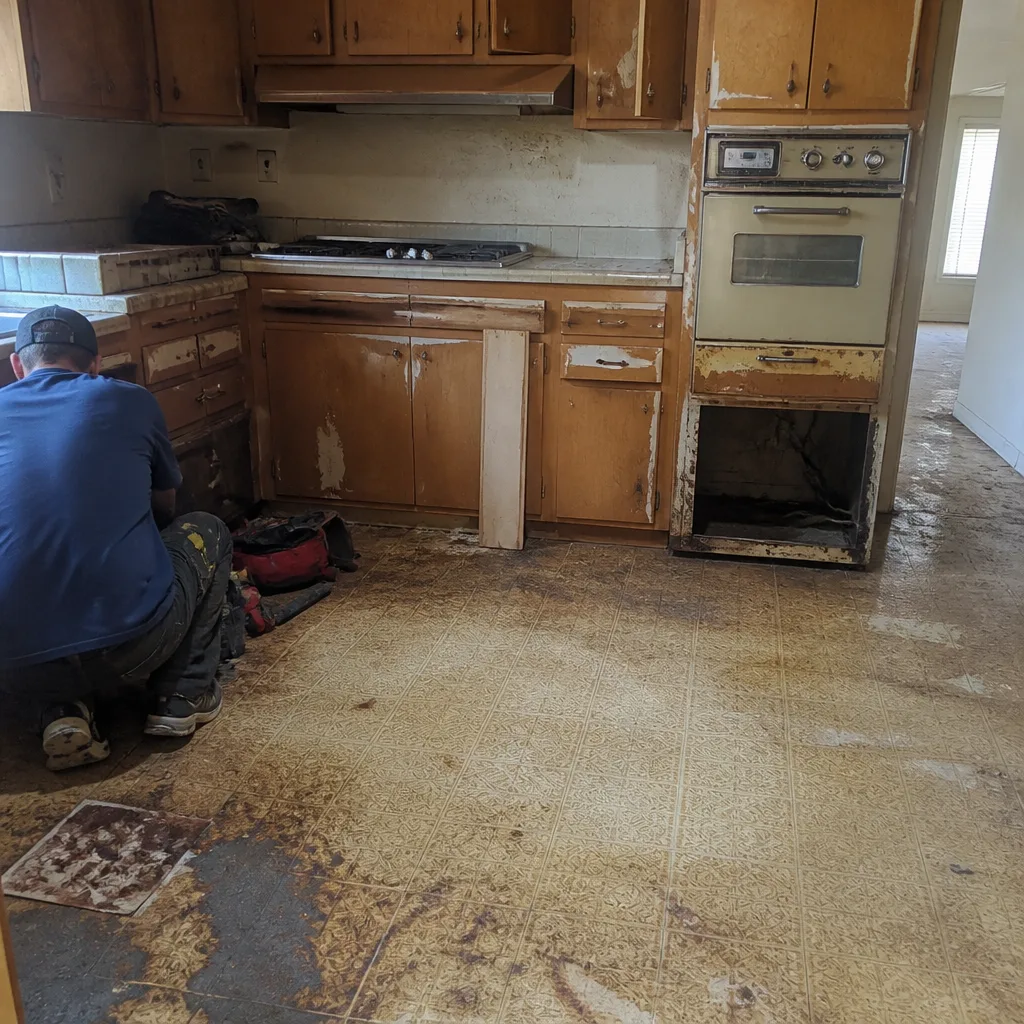 Before
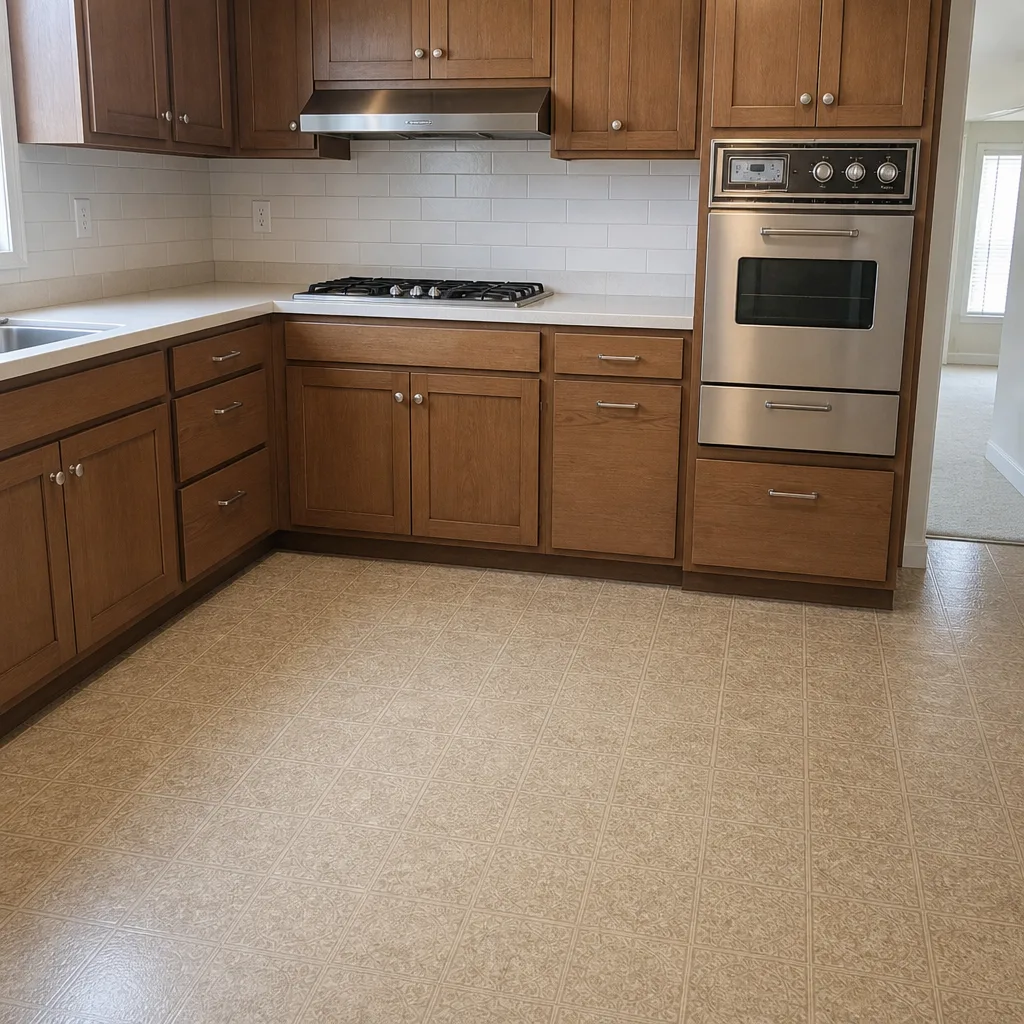 After
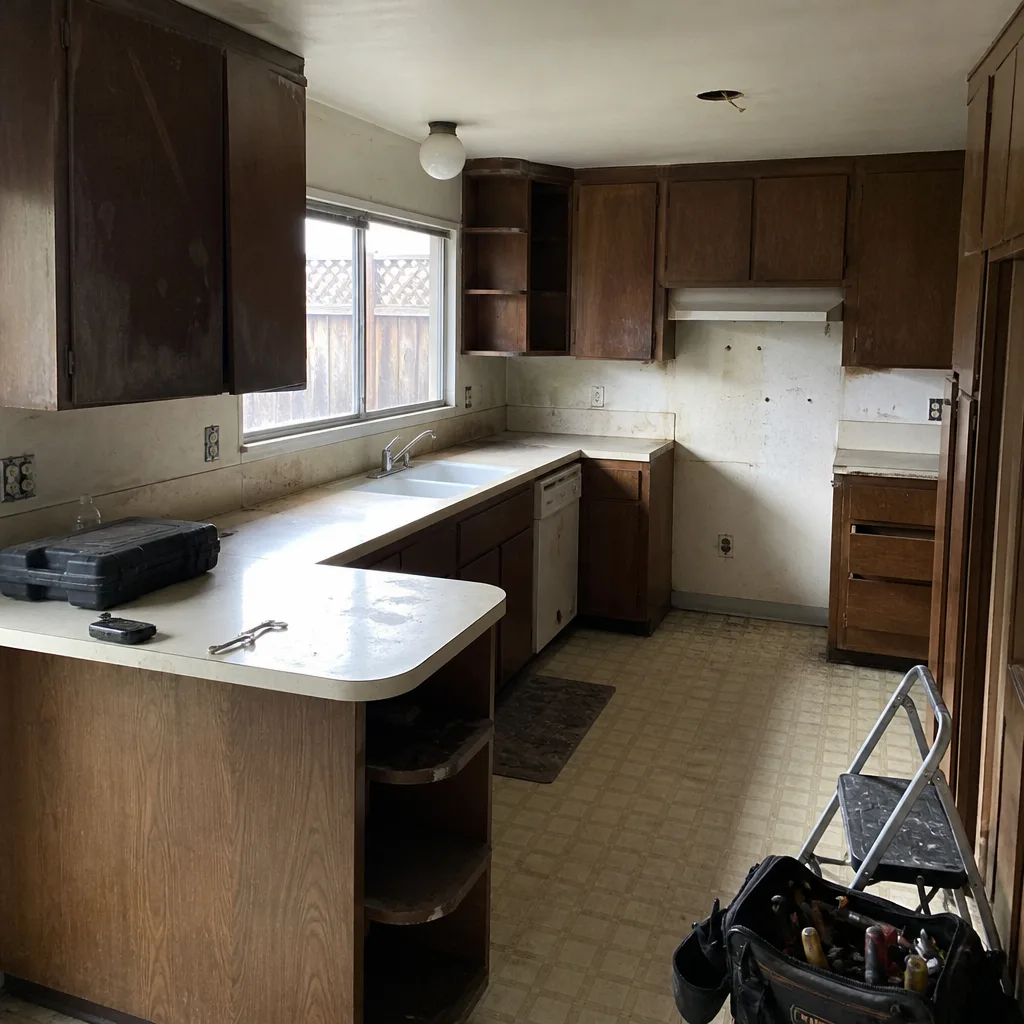 Before
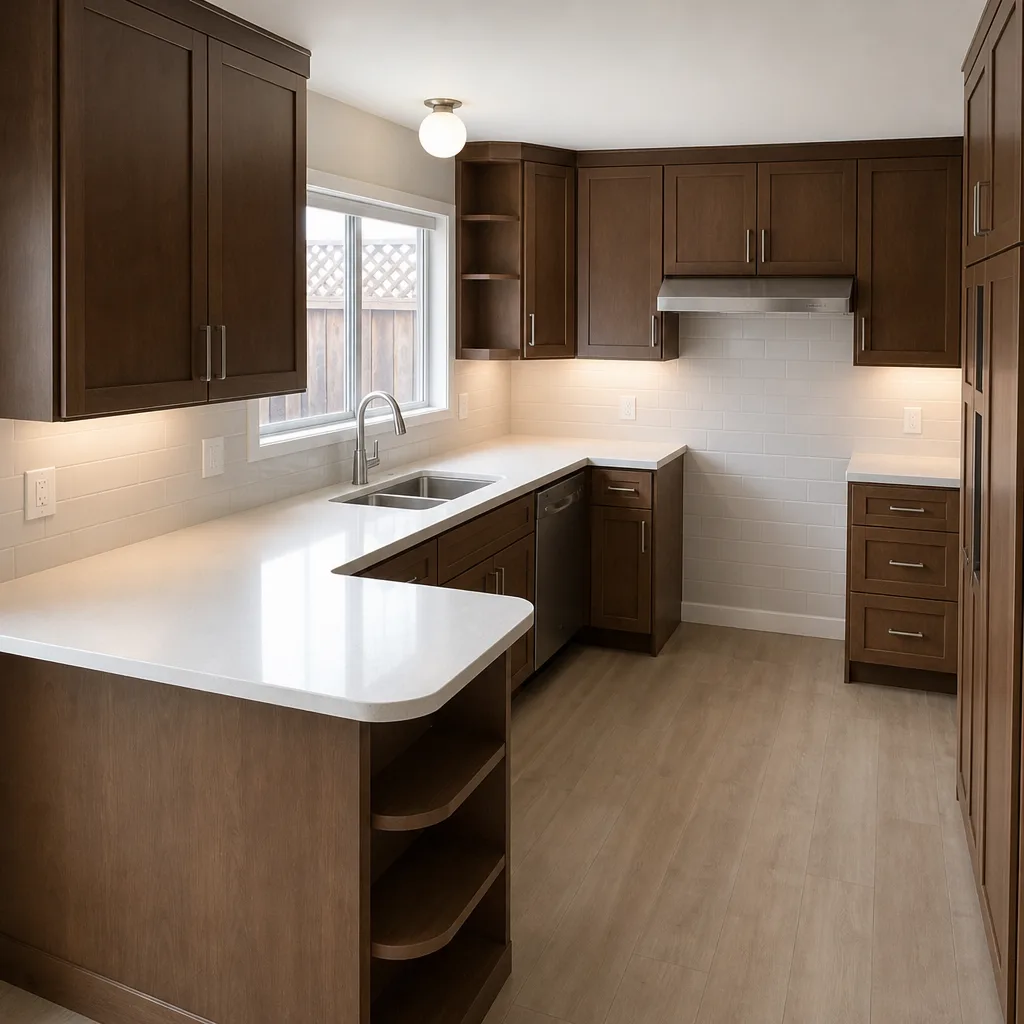 After
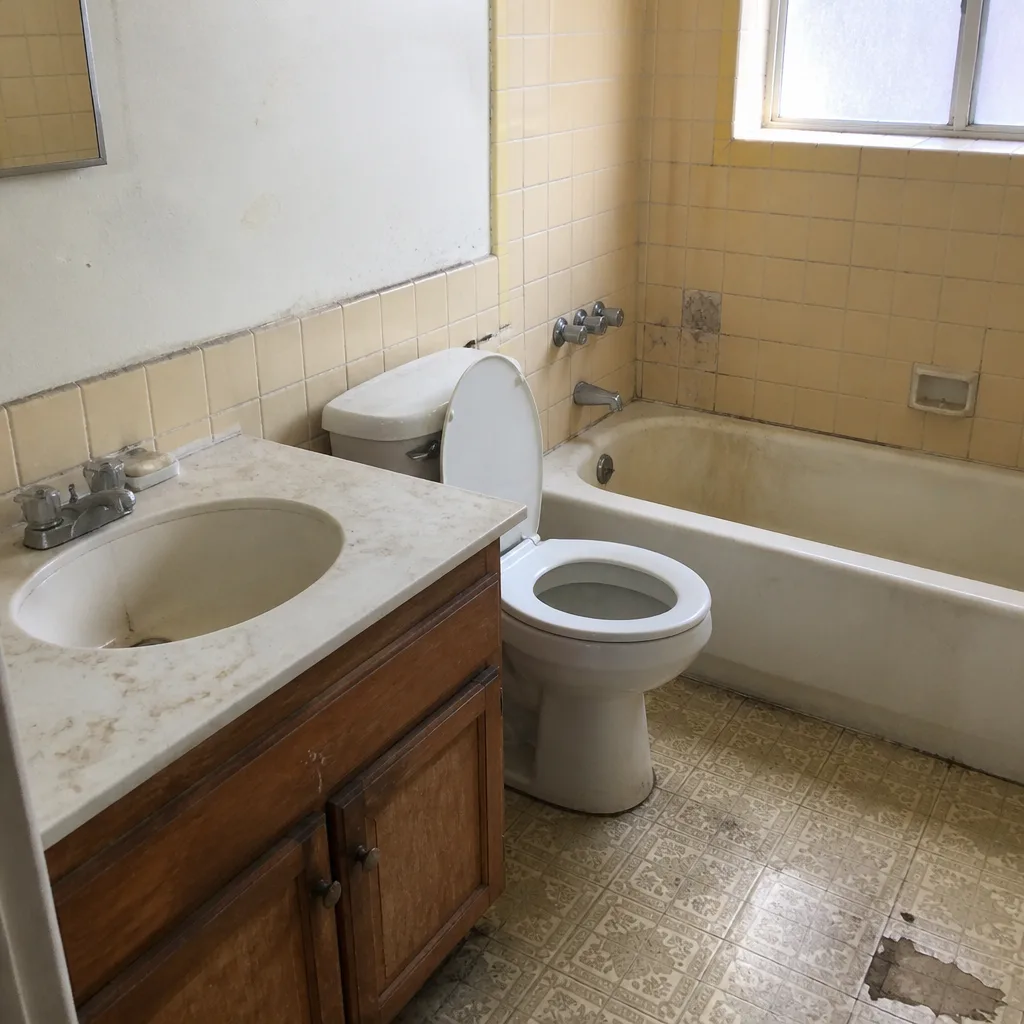 Before
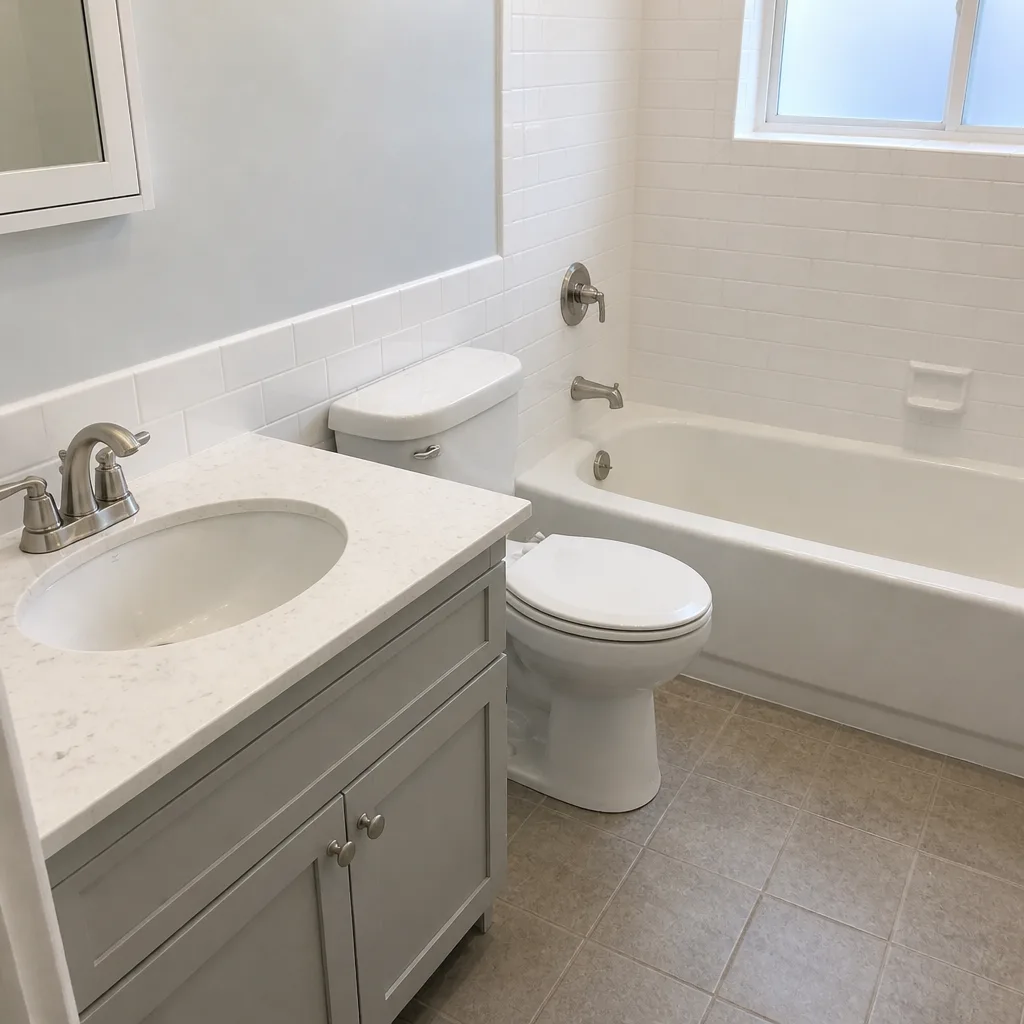 After
When to Call a Professional
Call a professional when a warning sign points to water or movement rather than surface wear, when two or more moisture indicators show up together, or when an original cast-iron drain is suspect. Call before you let anyone quote a tile-only fix, because the quote will be wrong. Call also when a door or cabinet has swollen near the shower wall, when the musty smell returns after the fan runs, or when a grout crack comes back after regrouting. These are not cosmetic. A moisture reading takes minutes and a small wall opening takes an hour; the difference between catching a wet subfloor early and replacing it late often doubles the scope. Rowan Construction Group Fremont offers free estimates in Fremont, with a written price before any work starts. Call (866) 797-6171.
Frequently Asked Questions
A full bathroom remodel in Fremont typically runs $22,000 to $55,000 for a hall or guest bath, and $45,000 to $90,000 for a primary bath with layout changes and higher-end fixtures. The number moves most on subfloor replacement, drain line work, and whether the waterproofing membrane is already failing. Call (866) 797-6171 for a written price based on your actual inspection, not a range.
Efflorescence is salt residue left when water moves through grout or cementitious material and evaporates at the surface, so it means water is migrating from behind the tile. A single cleaning that stays clean is often installation residue. A bloom that returns weeks later means the moisture source is active. Call (866) 797-6171 for a moisture reading; estimates are free.
Only if the crack is cosmetic and doesn’t return. If the same crack reappears in the same place after regrouting, the substrate or membrane beneath is moving and the regrout was a symptom fix. In Fremont’s older bathrooms, recurring cracks often trace to a single-layer subfloor that has flexed. Call (866) 797-6171 to have it inspected before you spend on the next surface fix.
Ask whether the permit is being pulled, whether the quote includes a moisture inspection and a subfloor determination, and whether changes are handled with a signed change order. Ask for material specifications by brand name, not “standard fixtures.” If the contractor won’t open a wall before quoting a tile-only fix, that’s a red flag. Call (866) 797-6171 if you’d like a second opinion on an existing quote.
Look for a single-layer subfloor, tile set directly on drywall with no cement board, and the original cast-iron drain line. Those three patterns are common in 1950s and 1960s Fremont homes, and each changes the scope. A camera inspection of the drain line before the floor is opened is worth the cost. Call (866) 797-6171 to schedule a pre-remodel inspection.
A hall bath typically takes three to five weeks, and a primary bath with a layout change runs five to eight weeks, with permit and inspection time included. Subfloor or drain line work adds time, and it’s usually the variable a written quote accounts for. Call (866) 797-6171 for a written schedule and price before work starts.
The Bottom Line
The warning signs you can see are symptoms, and the failure is underneath them. Recurring grout cracks, hollow-sounding tile, paint bubbling at baseboards, doors swelling near the shower wall, and white mineral deposits on grout all point to water or movement in the assembly, not surface wear. In Fremont’s 1950s to 1970s homes, single-layer subfloors and original cast-iron drains make those symptoms predictable. The right sequence is diagnosis first, written scope second, finish last. If you’re seeing any of these signs, get a moisture reading and a small wall opened before you accept a quote. Call (866) 797-6171 for a free estimate with a written price before any work starts. Under the Haven Standard, that’s how the number gets to be a number.
Written by the team at Rowan Construction Group Fremont.