
Driveway & Pavers: Repair or Replace? How Fremont Homeowners Decide
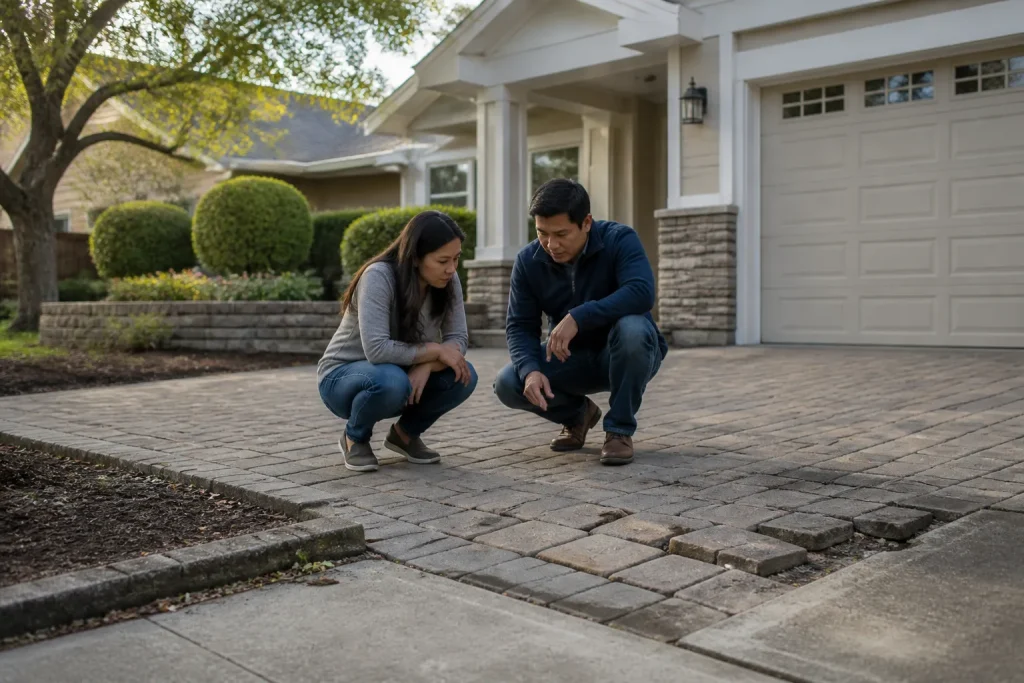
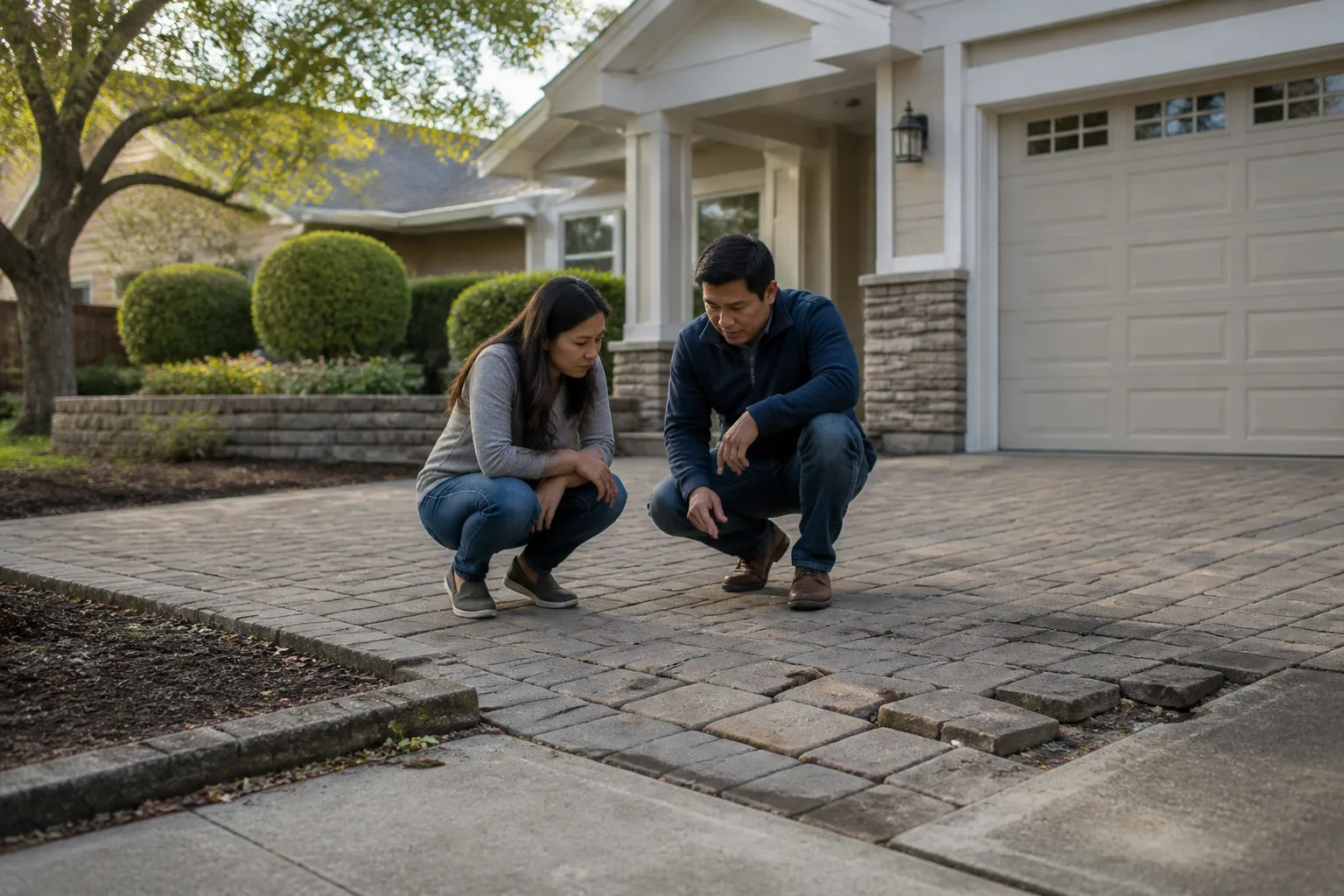
Replace a paver driveway when more than 30% of its surface has settled 3/8 inch or more, or when the base has voids and cannot drain. Repair it when the pavers themselves are sound and the problems are isolated to a small area. That 30% figure is the threshold most paving engineers use, because past it, base replacement costs less over ten years than chasing the same failures with surface patches. Most Fremont homeowners pass that number without knowing there was a number to measure.
If you’d rather not climb under a straight edge with a probe rod in hand, call (866) 797-6171 and we’ll run the assessment for you.
Why the Pavers Themselves Are Rarely the Problem in Fremont
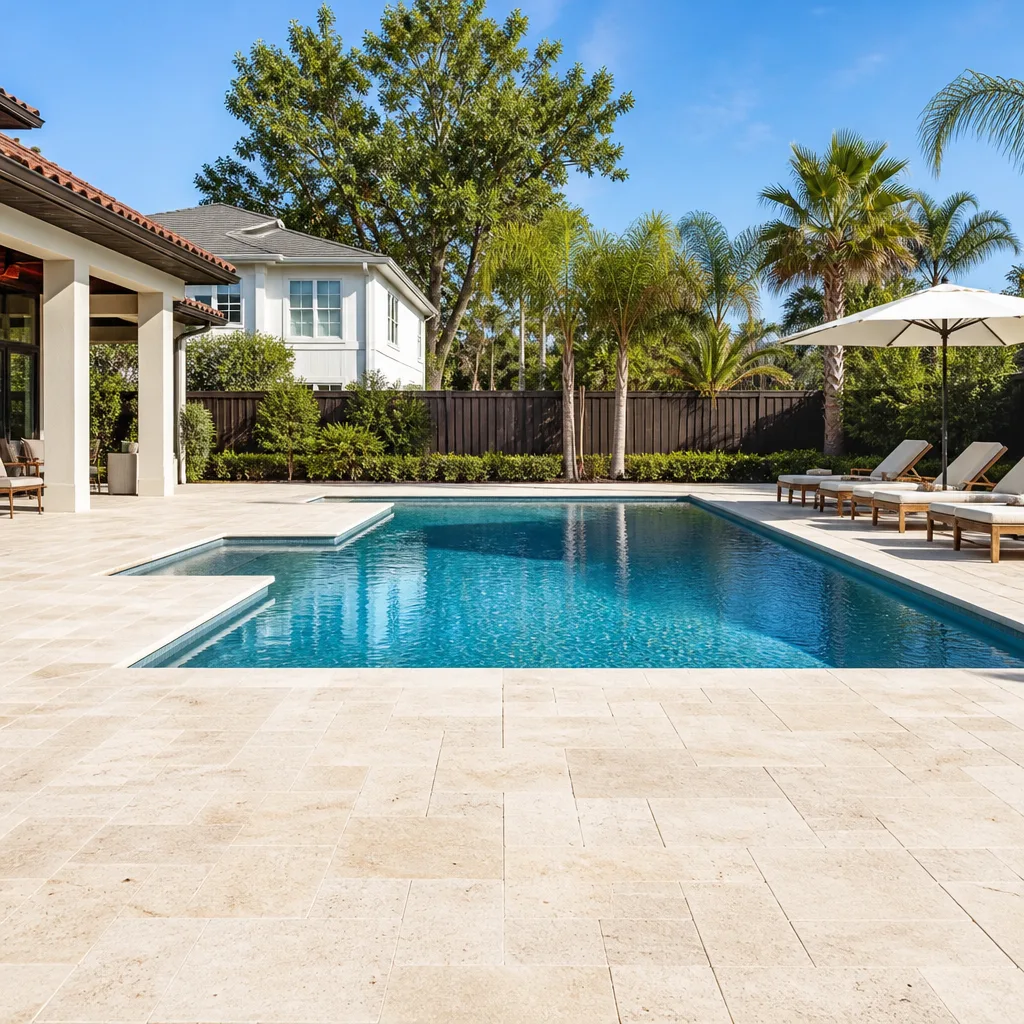
Here’s the part that surprises people. Belgard and Oldcastle concrete pavers are rated for 50-plus years of surface life. The block almost never wears out. What fails is underneath it, and that’s where your decision actually lives.
A paver driveway is a system: the pavers on top, a bedding layer of sand, a compacted aggregate base below that, and the soil beneath it all. The block is the strongest part of that stack. When a Fremont driveway starts to look wrong (sunken spots, rocking stones, water pooling), the failure is almost always in the base or the drainage, not the pavers. That’s good news in one sense: you may be looking at a repair. It’s sobering in another: if the base has gone, no amount of re-leveling the surface will hold.
In our experience across Fremont, the driveways that get re-topped every few years are the ones where nobody diagnosed the base. Each repair hides the problem for a season and the settlement returns, a little worse. The homeowners who spend less over the long run are the ones who measured first and scoped second.
The Three-Part Field Test You Can Run This Weekend
You don’t need special equipment to get a real data point before you call anyone. A 10-foot straight edge (a straight 2×4 works), a 1/2-inch steel rod, and a garden hose will tell you most of what a contractor’s assessment will confirm. Run all three, write down what you find, and you’ll walk into every estimate knowing which scope you actually need.
- Settlement mapping with a 10-foot straight edge. Lay the edge across the driveway in a grid, about every 6 feet, in both directions. Where the edge rocks, slide a shim under the low end until it’s level and measure the gap. Anything at or above 3/8 inch is a fail. Mark each failing spot with chalk and count them. If the failing area is more than 30% of the total surface, that’s the replacement signal.
- Base probe with a 1/2-inch steel rod. At the low spots you just mapped, push the rod down through the joint sand between pavers. A sound base resists. If the rod sinks easily past a few inches, you’ve found a void: the base has washed out or settled and the pavers are bridging a hole. Voids under a paver driveway don’t heal; they grow each rainy season.
- Drainage observation with a garden hose. Run water at a moderate flow across the surface for five minutes. Water should sheet away toward the street or a drain, not stand. If it pools in the same low spots you marked, or if it disappears quickly into a joint rather than running off, the grade or the base is failing. Standing water in Fremont’s wet winters is what accelerates everything else.
Two or three failing spots that probe sound and drain fine? That’s a repair. Broad settlement, voids, and standing water? That’s a base problem, and it points to replacement. For the full menu of what we install when replacement is the call, see Driveway & Pavers in Fremont.
How Paver Age Fits In (And Why It’s Not the Decider)
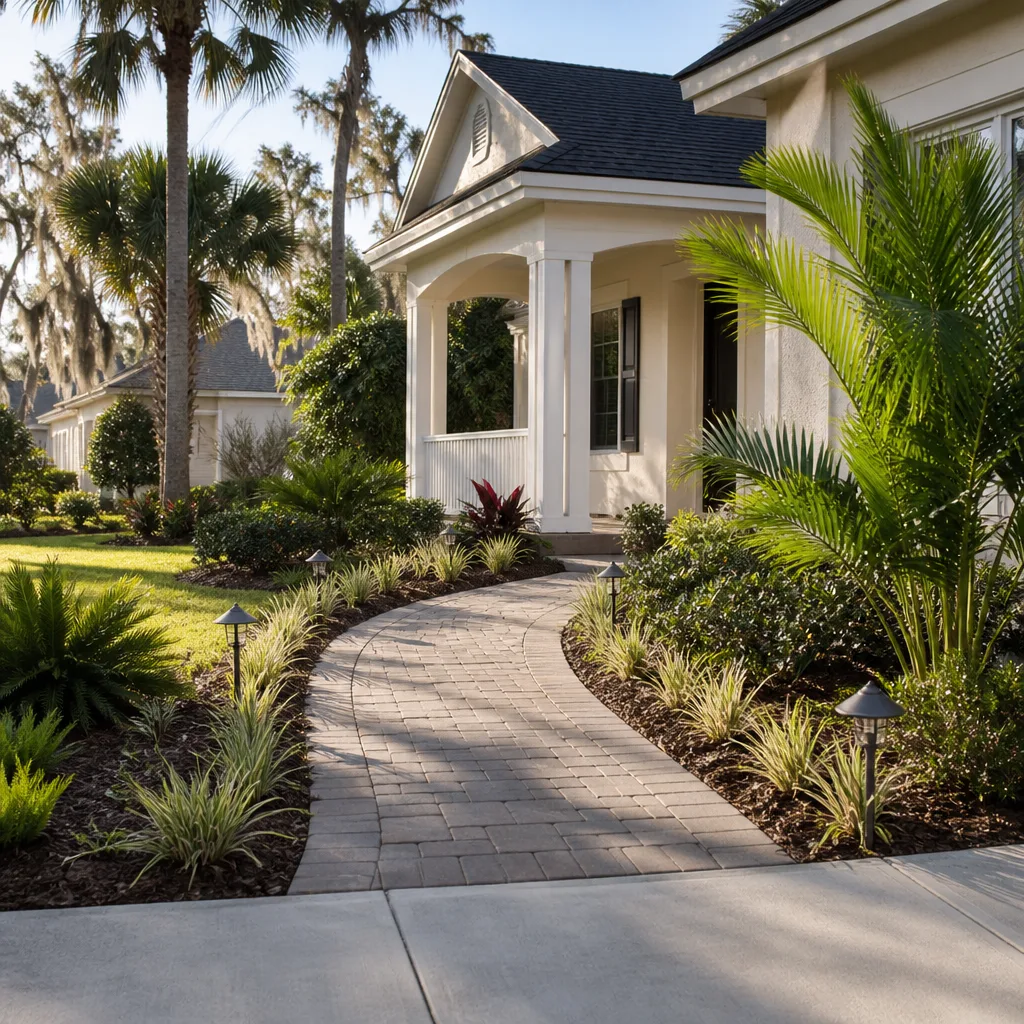
Homeowners often assume an older driveway is automatically a replacement. It usually isn’t. Because Belgard and Oldcastle pavers carry a 50-plus-year surface rating, paver age tells you very little about whether you need to replace. A 20-year-old driveway with a solid base and good grade may need nothing but re-sanding and re-leveling. A 9-year-old driveway on bad fill can be a full replacement.
What age does affect is the economics of repair. Older driveways have usually been patched before, and once you’re on your second or third surface repair, the money spent starts to argue for replacement. We track that as a running total: if your repair history is already a meaningful fraction of a replacement cost, the honest recommendation often flips. It’s the same line-item discipline we apply on any project, where the price is written before anyone picks up a tool and no change proceeds without a signed change order. The number decides, not a hunch.
Fremont-Specific Factors That Tip Toward Replacement
Location matters more than most people realize. Much of south and west Fremont sits on former bay mud fill, and fill settles unevenly over time. That differential settlement shows up as the whole driveway tilting or sagging in waves rather than one neat low spot. You can re-level the surface of a driveway on bay mud fill, and it will look right for a season or two, but the base keeps moving underneath and the problem returns. Surface repair cannot permanently correct differential settlement. That’s a base and grade fix, and in practice it means replacement done right, with proper excavation and compaction.
Fremont’s wet winters compound it. Water that pools on a graded-flat surface works its way into the joints and softens the base, and the cycle speeds up the settlement you’re already seeing. Driveways on the warmer, flatter inland streets tend to fail more slowly than those on sloped lots where runoff concentrates. If you’re on a hill and seeing settlement, treat it seriously early.
The same drainage thinking applies at the property line. A driveway that can’t shed water properly will push it toward whatever is next to it, which is why we often scope a driveway and a boundary together. If the grade runs toward a failing fence, it’s worth reading our notes on Fence Installation in Fremont so the fix addresses both sides of the problem.
The Cost-Per-Year Math That Settles the Argument
Comparing a repair price to a replacement price directly is misleading, because they don’t last the same length of time. Convert both to a cost per year of service and the decision gets simple.
| Option | Upfront cost | Expected service life | Cost per year |
|---|---|---|---|
| Patch repair | $1,200 | ~3 years | ~$400 |
| Full replacement | $7,500 | ~25 years (with solid base) | ~$300 |
On those numbers, the replacement is the cheaper driveway per year of service, and it also stops the leak-and-settle cycle that drives the repairs. That’s the calculation to run against your own quotes. A $1,200 patch every three years is $400 a year indefinitely. A properly built replacement spreads its cost over roughly 25 years. When repair cost per year climbs above replacement cost per year, replacement is the honest answer.
We’ll always convert a customer’s numbers to this view before recommending a scope. A written price before any work starts is the whole point of how we quote: you see the line items and the math, and you decide. If you already have a competitor’s written estimate, we’ll review it line by line at no charge as a free second opinion.
When to call a pro: if your probe test finds voids under the pavers, or if your hose test shows water standing across a wide area, stop at the assessment. Re-leveling pavers that sit over voids won’t hold, and the fix is a base rebuild, not a surface patch. That’s the point to bring someone in.
What a Written Assessment Should Include Before You Authorize Anything
Whichever scope you choose, ask for the assessment in writing before you sign off. A contractor who has actually diagnosed the problem can produce these four things without guessing. If a quote arrives with none of them, you’re getting a price for a job nobody scoped.
- Base material description: what’s under the pavers (aggregate type, depth, condition) and whether it needs rebuilding.
- Void locations: where the base has washed out or settled, marked and documented, not described as “some soft spots.”
- Drainage grade measurements: the actual fall of the surface and where water goes, tied to the hose test.
- A signed recommendation with reasoning: the contractor’s conclusion (repair or replace) and why, so you can compare two assessments apples to apples.
We document every visit with a photo record as standard, so you have evidence of what we found and what we did, not just a verbal summary. And if a project grows past a driveway (a paver apron leading to a new entry, a detached structure out back), it’s worth seeing how we scope additions and outbuildings in Home Additions & ADU in Fremont so the paving, grade, and structure are planned together rather than in sequence. For the wider picture of how we run every trade, start at the Rowan Construction Group Fremont home.
The Bottom Line
The repair-or-replace call isn’t a matter of taste. Run the three tests (straight edge, probe rod, hose), map your failing area against the 30% threshold, check whether you’re on bay mud fill, and convert both options to a cost per year. That produces a number you can defend, and a scope you can compare across estimates.
- Pavers under 50-year-rated brands like Belgard and Oldcastle rarely wear out; the base and drainage decide.
- More than 30% of the surface settled 3/8 inch or more, or voids under the pavers, points to replacement.
- On Fremont’s former bay mud fill, differential settlement means surface repairs won’t hold; the base is the fix.
- Compare repair and replacement as cost per year, not sticker price.
If you’re in Fremont and need help, Rowan Construction Group Fremont offers free estimates, a written scope, and a free second opinion on any estimate you already have. Call (866) 797-6171 to get started.
Frequently Asked Questions
Most paver driveway repairs in Fremont run from a few hundred dollars for a small re-level and re-sand up to roughly $1,200 for a patch that includes base work. Full replacement typically runs several thousand dollars depending on square footage and base condition. Call (866) 797-6171 for an exact quote, with the price written before any work starts, and estimates are free.
Not without your signature. We quote a flat written price with a written scope before anyone lifts a tool, and no change proceeds until you sign a change order. That discipline is why our projects finish within a few percent of the agreed number. Call (866) 797-6171 to schedule your free estimate.
Most residential paver driveway replacements finish in a handful of working days once materials are on site, with base excavation, compaction, and grade the parts that take the time. The exact schedule depends on square footage and how much base has to be rebuilt. Call (866) 797-6171 for a written timeline with your price.
Where a scope requires permits, we handle them and the inspections. Whether your specific project needs one depends on the work and the lot, and we’ll tell you in writing what’s required before work starts. Call (866) 797-6171 and we’ll walk you through it on a free estimate.
Written by the team at Rowan Construction Group Fremont.
Need Construction Help?
Call Rowan Construction Group Fremont - licensed & insured, here with fast after-hours help in Fremont.
(866) 797-6171