Last updated November 17, 2026








Free written scope consultation - allowances, timeline, and change-order rules on paper before a single trade is scheduled
Bathroom Remodeling Troubleshooting: Common Problems and How to Fix Them
Grout cracking along the floor tile joints within 18 months of a bathroom remodel is not a grout problem. It is a subfloor deflection problem, and re-grouting without correcting the structural cause will produce the same cracks within another 18 months. We’ve pulled up tile in Fremont bathrooms where the grout had been replaced twice in four years, only to find the joist span was undersized for a stone floor and the second layer of plywood had never been screwed down. This guide diagnoses the underlying cause from the surface symptom so the right trade gets called, not just the most visible one.
Quick Answer
Most bathroom remodel problems that homeowners blame on tile or fixtures – cracking grout, creeping mildew, slow drains, peeling ceiling paint – trace back to three hidden causes: subfloor deflection, drain slope errors, and vent stack deficiencies. Diagnosing the symptom correctly, and requesting the inspection cards, membrane data sheets, and exhaust fan CFM rating at completion, is what determines whether a fix lasts or fails again.
Styles & brands we work with
- Kitchen remodeling
- Bathroom remodeling
- Home additions & ADU
- Roofing
- Windows & doors
- Driveway & pavers
- Fence
Table of Contents
- Symptom-to-Cause Diagnostic Table
- Why Grout Cracks – Deflection vs. Grout Type
- Tile Lippage and Substrate Unevenness
- Persistent Mildew at Caulk Joints
- Slow Drains and How to Test Slope Without Opening the Floor
- Peeling Ceiling Paint and Undersized Exhaust Fans
- What Documentation to Request at Completion
- The Contractor Callback Process and CSLB
- Three Problems You Should Not Self-Diagnose
Symptom-to-Cause Diagnostic Table
The table below maps what a homeowner sees on the surface to what is usually happening under it, and which trade needs to look first. We use this same diagnostic order on every bathroom remodeling callback across Fremont, and it prevents the wrong trade from being dispatched to a problem they can’t actually fix.
- Grout cracking at floor tile joints → subfloor deflection (undersized joists, missing underlayment screws) or wrong grout type for the joint width (sanded grout in a 1/16-inch joint). Trade: tile setter plus a framing carpenter if deflection is the cause.
- Tile lippage (edges sitting at different heights) → substrate unevenness exceeding the industry flatness tolerance, or installer error with insufficient thin-set coverage. Trade: tile setter, with a substrate inspection first.
- Persistent mildew at caulk joints → insufficient ventilation CFM or an exhaust path that’s blocked (duct terminating in the attic instead of outside). Trade: HVAC or a licensed electrician if the fan must be upsized or rewired.
- Slow drain → slope error at the P-trap or improper venting causing siphoning. Trade: plumber, before any tile work is disturbed.
- Paint peeling on the bathroom ceiling → exhaust fan undersized, or not wired to run long enough for the humidity load. Trade: electrician plus HVAC verification of CFM.
- Soft or spongy floor near the toilet flange → subfloor rot from a slow supply line leak or a failed wax ring. Trade: plumber to stop the source, carpenter to assess rot extent, then tile setter.
Notice the pattern: in every case above, the finish material is a symptom, not the cause. Calling a tile setter to re-grout a deflection problem is like repainting a wall with a water leak behind it.
Why Grout Cracks – Deflection vs. Grout Type
Grout cracks for two reasons, and they require two different fixes. The first is deflection: the floor structure flexes beyond the tolerance the tile can absorb. The second is grout type mismatch: sanded grout in a joint narrower than 1/8 inch, or unsanded grout in a joint wider than 1/8 inch, both fail. A repair that doesn’t identify which one is happening will not last.
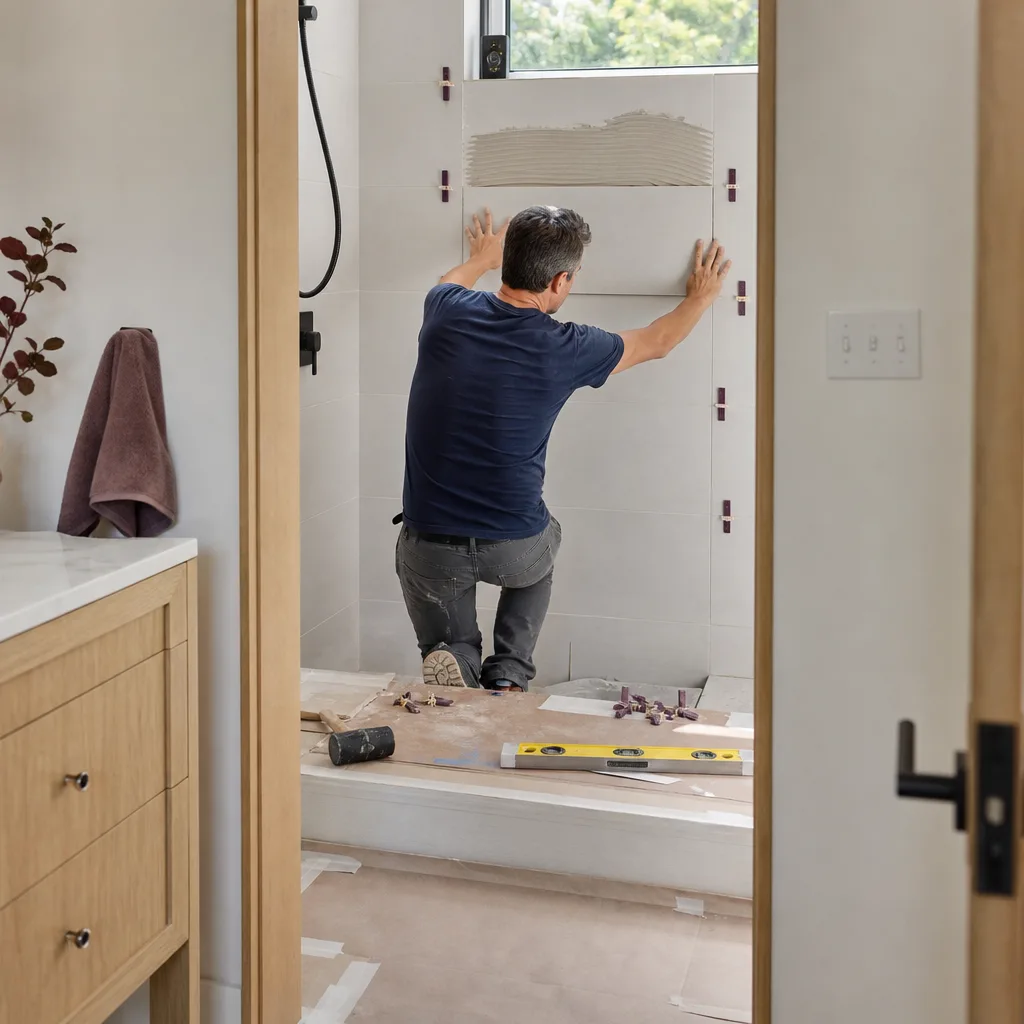
To test for deflection without opening the floor, look at the joist span. If the joist spacing is 16 inches on center and the span is over 13 feet, a natural stone tile floor (which needs an L/720 deflection rating) will deflect too much – the standard for ceramic tile is only L/360. Ask for the deflection calculation the installer should have run before setting tile. This is the number a real contractor can produce.
Grout type is easier to check: measure the joint width with a feeler gauge at three random points. Under 1/8 inch requires unsanded grout; over 1/8 inch requires sanded. If the joint was prepped narrow and filled with sanded, the grout will shear at the aggregate edges within a heating and cooling cycle.
What should happen from here
- Measure joint width and document the reading with a photo.
- Pull the insulation from below (or open a small access) to check joist size, span, and spacing.
- Compare joist span to the deflection standard for the tile type installed.
- If deflection is over tolerance, sister or add joists before re-grouting. Re-grouting alone is a temporary cosmetic fix.
In older Fremont bathrooms from the 1960s and 1970s, we regularly find joist spans that were fine for vinyl but not for the porcelain tile that was installed in a later remodel. The deflection was built in; the grout is just first to show it.
Tile Lippage and Substrate Unevenness
Lippage is a tile edge sitting noticeably higher or lower than its neighbor. The Tile Council of North America sets tolerance at 1/32 inch for grout joints under 1/4 inch, and up to 1/16 inch for wider joints. If you can catch a fingernail on a tile edge, the installation has a substrate or workmanship problem, and repairing the tile alone will produce the same result.
The most common substrate cause is an uneven plywood layer: the plywood wasn’t flat to within 1/8 inch over 10 feet before the backer board was installed. The backer board inherits the error. The second most common cause is thin-set coverage – if the installer combed the mortar but did not back-butter the tile, the tile sits on the ridges and drops into the valleys unevenly.
The fix depends on the extent. Small lippage on a handful of tiles can be corrected by removing and re-setting those tiles on a properly skim-coated substrate. Wide-spread lippage across a floor usually requires the tile setter to pull the field, level the substrate with a self-leveling underlayment, and re-set.
Persistent Mildew at Caulk Joints
Mildew that returns within weeks of re-caulking is almost never a caulk problem. It’s a ventilation problem – the moisture the bathroom generates during showers is not being removed fast enough. The exhaust fan is either undersized for the room’s cubic footage, or its duct is terminated in the attic rather than through the roof or exterior wall, and the moist air comes right back in.
Fan size rule of thumb: 1 CFM per square foot of bathroom floor area, with a minimum of 50 CFM. A 60-square-foot bathroom needs a 60 CFM fan; a 100-square-foot bathroom with a shower needs 100 CFM. The fan’s model number should be printed on the housing inside the grate – check it against the manufacturer’s CFM rating.
The duct check is a flashlight-and-mirror exercise from the attic: trace the duct from the fan’s housing to its terminus. If it ends in the insulation, that’s a code violation and the moisture source of your mildew. If it terminates outside but has a long, loosely-supported run with two or three sharp 90-degree bends, the fan’s rated CFM drops significantly and needs a fix.
Slow Drains and How to Test Slope Without Opening the Floor
A shower or tub drain that begins pooling within a few seconds is usually slope, not hair. A properly sloped shower drain runs at 1/4 inch of fall per foot of horizontal run, and a 4-foot run should fall 1 inch total. The P-trap and the branch line to the main stack both need to be at that slope all the way. A flat spot or a back-sloped section in the P-trap arm, or a vent stack that is not properly connected to the fixture drain, will produce a slow drain and a gurgle even when the line is clear.
Here’s how to test slope after installation without opening the floor:
- Run the shower to temperature, then stop the water and let it settle.
- Pour a measured quart of water into the drain at a steady rate.
- Time the drain-down to empty the visible water in the shower pan. A correctly sloped drain should move a quart in under 20-30 seconds for a standard 2-inch shower drain.
- Repeat three times. If drain-down time increases each time, there is a slope or vent problem upstream, not a partial clog in the trap.
- If drain-down is fast but the drain gurgles, suspect improper venting rather than slope – the trap is siphoning.
That last point matters. Siphoning is a venting failure, not a clog, and snaking the line will not fix it. The plumber needs to confirm the vent stack is connected and clear before any trap work is priced.
Peeling Ceiling Paint and Undersized Exhaust Fans
Ceiling paint that peels in sheets, particularly above the shower, is almost always a moisture problem – the exhaust fan either doesn’t move enough air, or doesn’t run long enough after the shower stops. A properly installed fan should be wired so it runs for at least 20 minutes past the last time the shower was used. If your fan is on a simple on/off switch that the last person out turns off after 30 seconds, the moisture is still in the air.
The fix is usually two parts: first, confirm the existing fan’s CFM against the room’s floor area; second, wire the fan to a humidity sensor or a timer switch so it continues to run after the bathroom is empty. If the fan’s CFM is below the room’s floor-area number, it must be upsized. Both steps are electrician work, not painting work.
Repainting the ceiling without correcting the fan or the duct is a cosmetic patch. Peeling will return within one wet season. In Fremont’s mild, damp winters, the peel cycle is closer to six months than a year.
What Documentation to Request at Completion
The single most useful thing a homeowner can do at the end of a bathroom remodel is to request a documentation package. It is the difference between a troubleshooting call that resolves in one visit and a diagnostic process that stretches over weeks because the information is lost. At Rowan, this package is standard – the photo record on every visit is part of the Haven Standard, not an add-on.
The package should include:
- The passed inspection cards for every permitted trade – plumbing, electrical, and mechanical if a new exhaust fan was installed.
- The waterproofing membrane product data sheet, and photographs of the membrane installed before the tile went down.
- The exhaust fan model number and CFM rating, plus a photo of the duct termination at the roof or exterior wall.
- Brand and product name of the tile, the grout, the thin-set, and the caulk, with the lot numbers if available.
- The signed change orders if any scope changed mid-project, and the written warranty document, in full.
- The deflection calculation or joist-size confirmation if a stone tile floor was installed.
If you’re comparing contractors for a bathroom remodeling project in Fremont, ask upfront which of these items they’ll hand over at completion. A contractor who says “we can get you that” instead of “here’s the folder” is telling you something about how the next callback will go.
The Contractor Callback Process and CSLB
When a bathroom remodel symptom shows up after the project closes, the fastest path to a fix is a written warranty claim. A written claim, unlike a phone call, creates a dated record that a contractor must respond to, and that a regulator can act on if the response isn’t made.
A proper written warranty claim contains four things:
- The date the symptom was first observed, plus photographs with a scale reference.
- A plain description of the symptom and the specific installed material it involves – “grout lines cracked along 12 feet of the shower floor tile perimeter, brand and product named in the completion package.”
- A reference to the warranty document, by clause, and to the original install date.
- A written request for a response within the timeframe the warranty specifies, or within the CSLB timeframe if the warranty is silent.
Under California law, the Contractors State License Board has a defined process for homeowner complaints against licensed contractors, including timeframes for the contractor to respond to a written notice of defect. If the contractor does not respond within the CSLB timeframe, or responds with an inadequate fix, the homeowner can file a complaint with the CSLB. The license number should be on the original contract and on every invoice. Keep the original completion package with the CSLB license number and the warranty clause as the first two documents in a dedicated folder.
If you’re already in the middle of this with another contractor and you want a free second opinion on the written estimate or the warranty language, Rowan Construction Group offers a line-by-line review at no charge. Call (866) 797-6171. Under Clause 1 of the Haven Standard, no work proceeds until the price is in writing and signed, and that discipline applies to the review as well.
Three Problems You Should Not Self-Diagnose
Three failure modes in a bathroom remodel look diagnosable from a homeowner’s walkthrough and are not. Opening a wall to inspect any of them can create a much larger, more expensive problem before the actual scope is understood. For each one, the right move is to call the correct trade, who will verify the scope before quoting the repair.
1. Supply line leaks behind tile
A supply line leak that has been slow for months may be wetting the framing and underlayment under the shower wall, with no visible water at the fixture. If you open the tile face to look, you lose the waterproofing assembly and the repair scope expands into a full wall rebuild. Call a plumber for a pressure test before the wall is opened. The plumber can confirm the leak location from the valve side.
2. Vent stack blockages
A blocked vent stack produces slow drains, gurgling, and sometimes sewer odor in the bathroom – all symptoms that mimic a partial clog in the fixture trap. Snaking the trap does not fix a vent blockage and can make it worse. Call a plumber with a camera and vent-stack inspection tools. The diagnosis is upstream of the drain you can see.
3. Subfloor rot extent
A spongy floor near the toilet flange could be a 1-square-foot patch of rot from a failed wax ring, or it could be a 6-foot by 6-foot section rotted through to the joists from a slow leak over a decade. Until the extent is known, any repair quote is a guess. Call a licensed carpenter or general contractor to open a small inspection opening – typically 12 by 12 inches in an inconspicuous spot – and measure the rot before the tile setter is called. That small opening is the honest way to price the repair.
We’ve seen all three become six-figure problems because a homeowner opened the wall to “check it real quick” on a Sunday. The wall waited a decade; it can wait for the plumber on Monday. You can read more about how we approach the trades that touch these problems on our Rowan Construction Group Fremont home page, or on the pages for Home Additions & ADU in Fremont, Driveway & Pavers in Fremont, and Fence Installation in Fremont.
Common Mistakes to Avoid
- Re-grouting without checking deflection. If the subfloor is deflecting, the new grout will fail in the same 18-24 months. Check the joist span before the tile setter arrives.
- Re-caulking without checking the exhaust fan’s CFM. Mildew comes back because the moisture source is not the caulk. Confirm the fan rating against the room’s floor area first.
- Repainting the ceiling without correcting the fan wiring. If the fan doesn’t run past the shower, the peel returns within a wet season. Fix the wiring, then paint.
- Treating a gurgling drain as a clog. Snaking a properly draining but gurgling line targets the wrong problem. Gurgle is a vent failure, not a clog.
- Opening the wall “just to look.” Every wall opening on a tile shower loses the waterproofing assembly. Save the exploration for a licensed trade with a scope verification plan.
- Skipping the completion package. Without the inspection cards, the membrane data sheet, and the fan model number, every future callback costs more than it should.
- Accepting a verbal warranty claim. A phone call is not a dated record. Send the claim in writing, with photos, and reference the warranty clause.
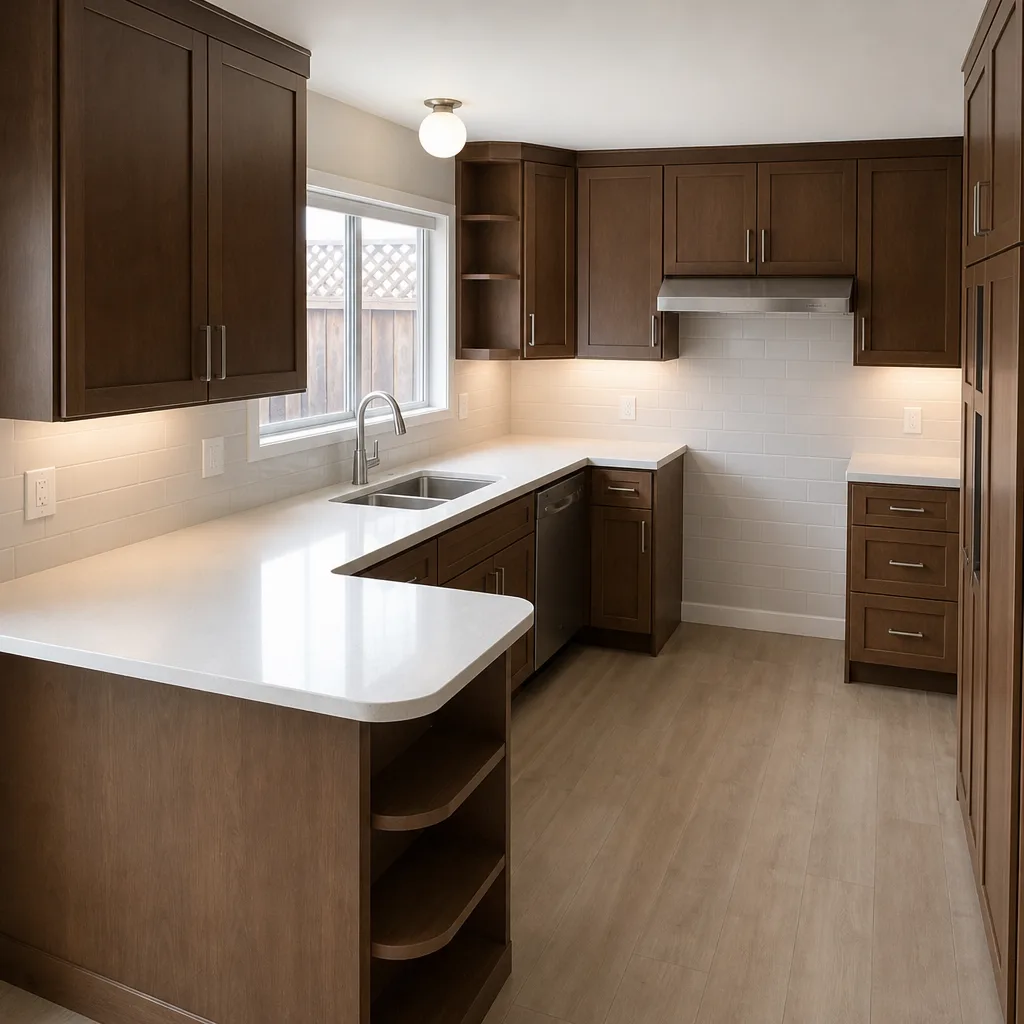
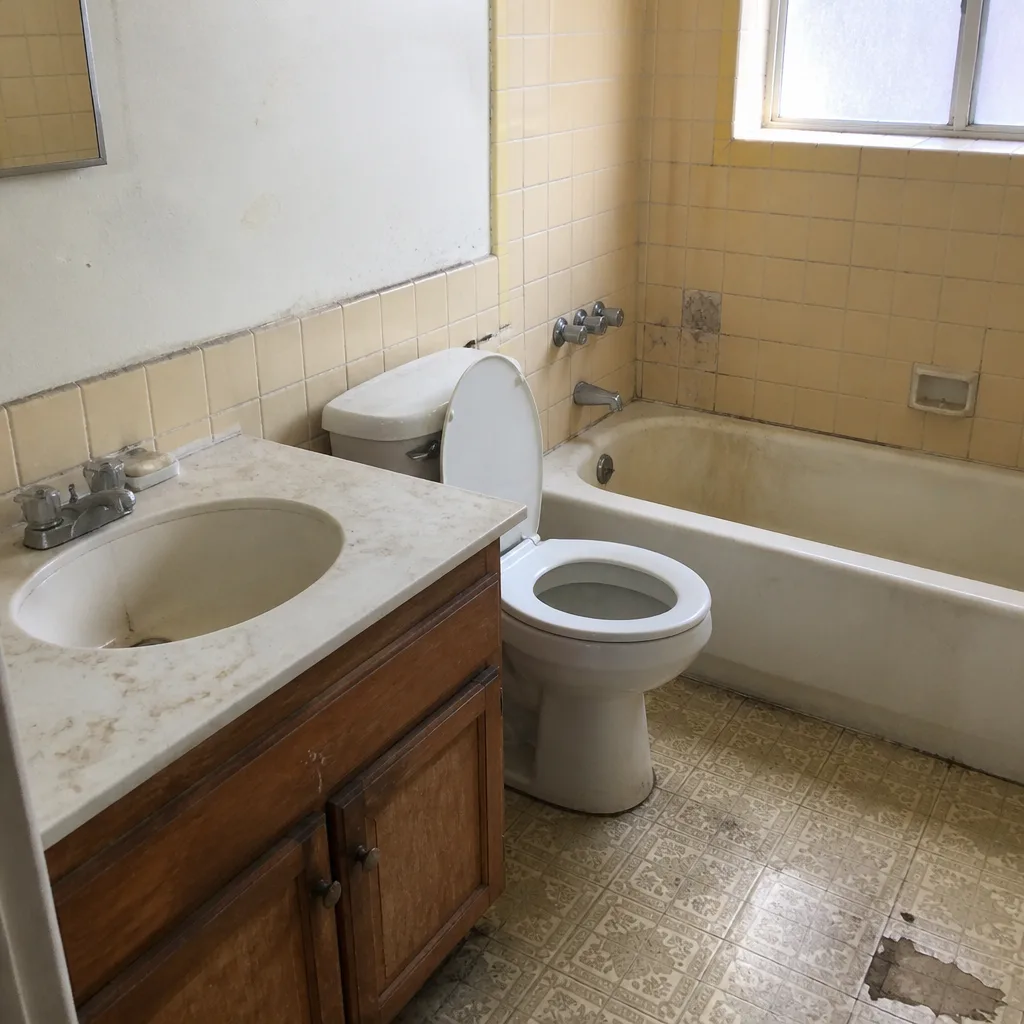
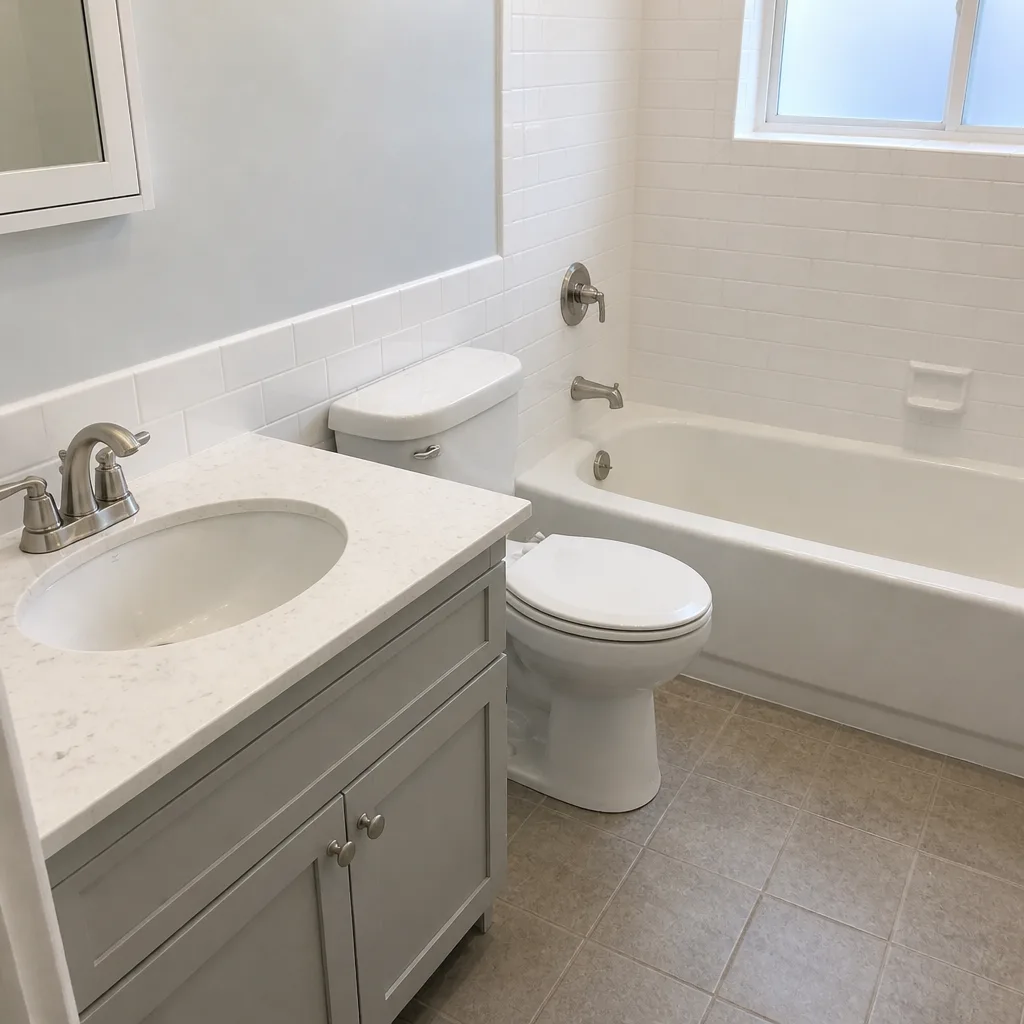
See the difference
 Before
 After
 Before
 After
 Before
 After
When to Call a Professional
Call a licensed professional when the symptom appears within the first 12 months of a completed remodel, when a repair you or another contractor already made has returned, when the symptom involves water behind tile or under the floor, or when the fix would require opening a wall or floor surface that is currently finished. Also call when you don’t have the completion package – without documentation, the diagnosis takes longer and the honest way to price it is to inspect first. Rowan Construction Group Fremont offers free estimates in Fremont and a free second opinion on any written estimate. Call (866) 797-6171. Our technicians have up to 19 years of experience, and every visit includes a documented photo record so you have evidence of what was found and what was done.
Frequently Asked Questions
Grout cracks because the subfloor is deflecting or the wrong grout type was used for the joint width. Re-grouting without correcting either cause will produce the same cracks within 18-24 months. Call (866) 797-6171 for a free estimate that includes a deflection check before any re-grouting is quoted.
Mildew returns because the exhaust fan isn’t moving enough air for the room’s cubic footage, or because the duct terminates in the attic instead of outside. The caulk is not the problem. Check the fan’s CFM rating against the bathroom’s floor area, then call a professional if the fan needs upsizing.
Pour a measured quart of water into the drain and time the drain-down three times in a row. A correctly sloped drain moves a quart in under 20-30 seconds for a standard 2-inch shower drain. If drain-down time increases each rep, or if the drain gurgles, that’s a slope or venting problem, not a clog. Call (866) 797-6171 for an exact diagnosis.
Peeling ceiling paint above a shower is a moisture problem, not a paint problem. The exhaust fan is undersized or isn’t wired to run long enough after the shower stops. Fixing the fan and the duct before repainting is what prevents the peel from returning.
Request the passed inspection cards for every permitted trade, the waterproofing membrane data sheet with pre-tile photos, the exhaust fan model and CFM rating, and the brand names and lot numbers of the tile, grout, thin-set, and caulk. If those items aren’t offered at handoff, ask before the final invoice is paid.
File with the Contractors State License Board when the contractor fails to respond to a written defect notice within the CSLB timeframe, or when the response is inadequate. A written claim, with photos and a warranty clause reference, is what makes the CSLB complaint actionable. Call (866) 797-6171 for a free second opinion on the warranty language before you file.
The Bottom Line
Almost every bathroom remodel problem homeowners blame on tile or fixtures traces back to three hidden causes: subfloor deflection, drain slope or venting errors, and undersized or poorly ducted exhaust fans. Diagnose the symptom correctly with the table above, test the drain slope with the quart of water, and request the completion package at handoff so future callbacks are quick. Don’t open walls to self-diagnose supply line leaks, vent blockages, or subfloor rot – call the right trade. The documenting habits are the ones that turn a $400 repair into a permanent fix instead of a $1,200 series of them.
Rowan Construction Group Fremont brings The Haven Standard to bathroom remodeling – a written flat price before any work starts, no change without a signed change order, background-checked and uniformed technicians, and a documented photo record on every visit. Call (866) 797-6171 for a free estimate, or bring a competitor’s written quote and we’ll review it line by line at no charge. The 365-Day Done Right Promise is backed by a terms page, not an asterisk.
Written by the team at Rowan Construction Group Fremont.