
Bathroom Remodeling: Repair or Replace? How Fremont Homeowners Decide
The waterproof membrane behind your Fremont bathroom tile has a service life of roughly 10 to 20 years, depending on how well it was installed. Most homeowners staring down a crack in the grout have no idea whether their membrane is in year 4 or year 17. That single fact changes the right answer. Decide fixture by fixture and surface by surface, not room by room, and you’ll avoid the two expensive mistakes we see most: a full gut remodel driven by a cosmetic problem, or a surface patch that hides failing subfloor and plumbing until it costs far more.
If you’d rather have someone read the evidence with you, call (866) 797-6171 for a free estimate with a written price.
Why “repair or replace” is the wrong question at the room level
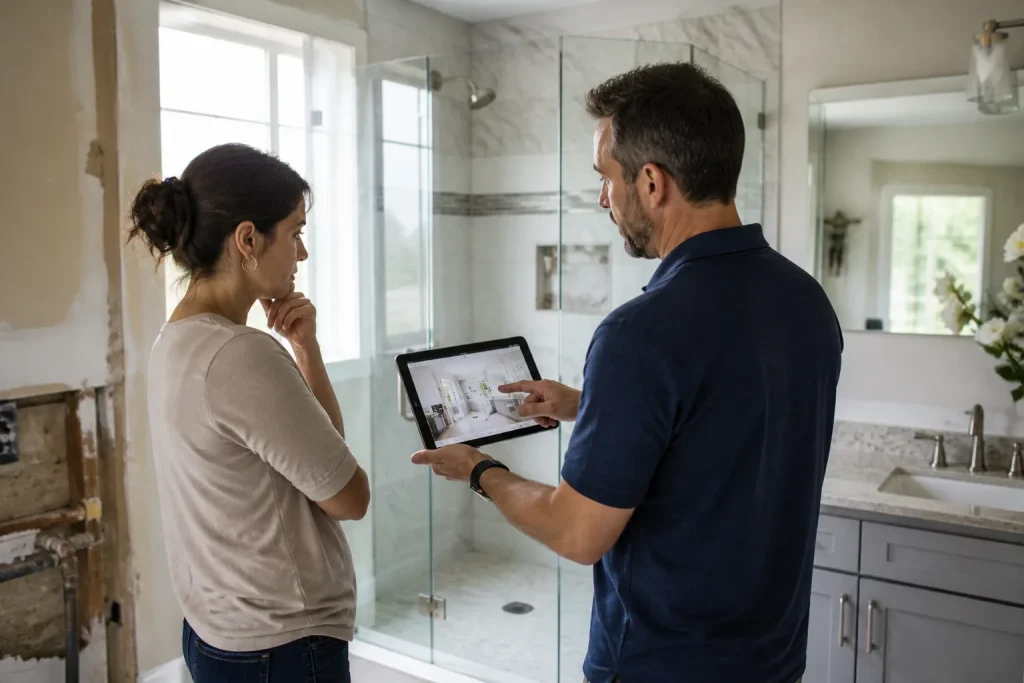
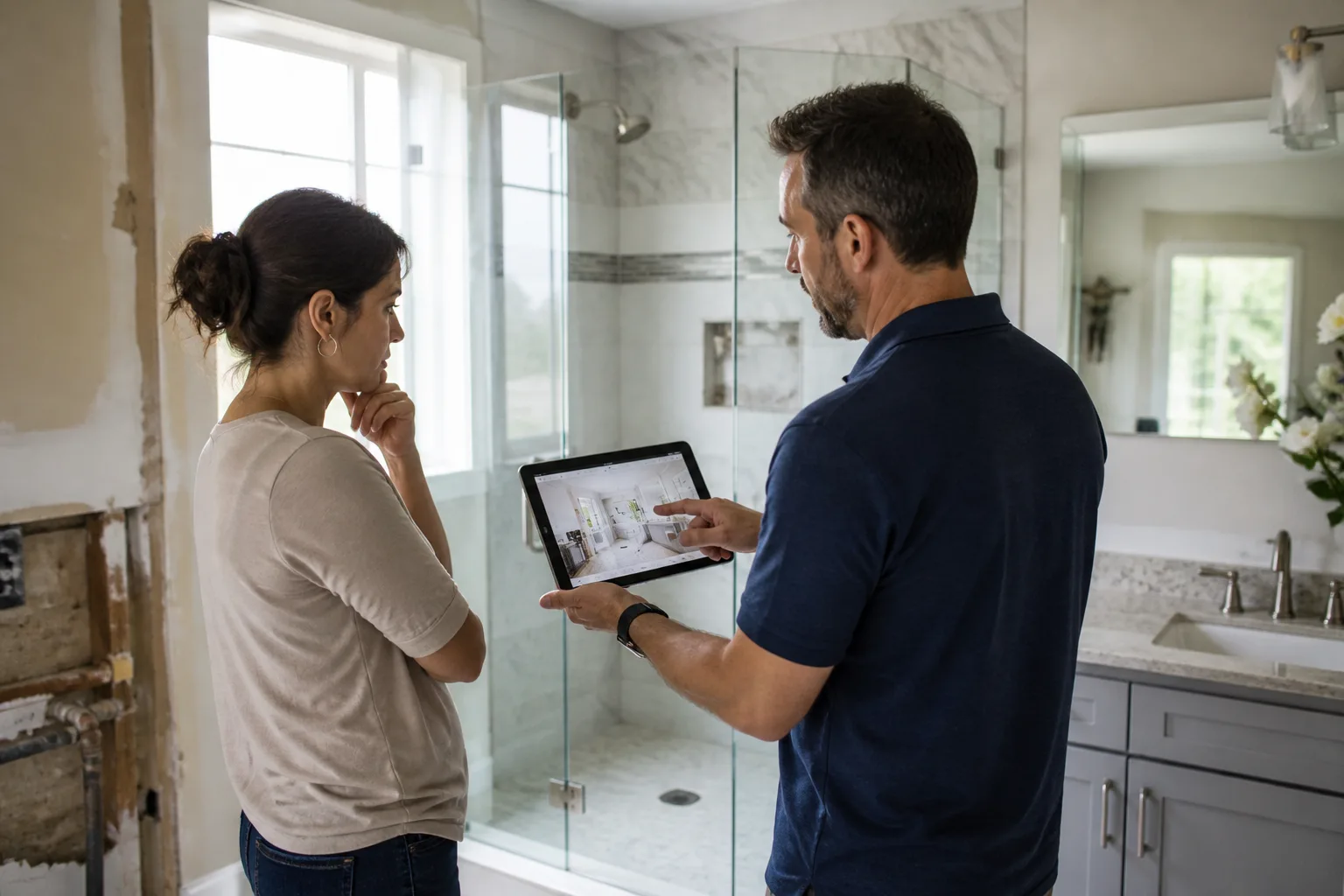
Homeowners ask whether to repair or replace “the bathroom,” but a bathroom is seven or eight assemblies that age at different rates. A 1990s vanity may be solid while the shower pan under it is shot. The tile face can look fine while the substrate beneath it is soft. Deciding the whole room at once skips the inspection that would tell you which parts are actually failing.
In our experience, the most expensive outcomes come from two habits:
- Gutting for a cosmetic problem. A cracked grout line or dull tile drives a $30,000 remodel when a targeted $2,000 – $4,000 repair would have added years of life.
- Refreshing over a failing base. New tile over a compromised membrane or soft subfloor looks good for about three years, then the problem surfaces bigger, wetter, and behind a fresh finish you paid for.
The fix is to score each component on its own. You inspect, you price the repair, you price the replacement, and you compare against service life. That’s the whole method, and the rest of this page walks through it for a Fremont bathroom.
How do you check subfloor and tile condition without tearing anything out?
You can read a lot about a Fremont bathroom’s subfloor and membrane before a single tile comes up. Two checks tell most of the story, and neither requires demolition.
- The deflection test. Press firmly along the grout lines and at the base of the walls, especially near the shower and toilet. Solid floor feels rigid. Give, bounce, or a soft spot underfoot means the subfloor or the membrane beneath the tile has lost integrity. Any movement at all is a signal the substrate needs attention before cosmetic work.
- Moisture meter readings. A pin or pinless moisture meter on the tile, grout, and the subfloor from below (if you have access) shows whether moisture is trapped in the assembly. Elevated readings around the shower or toilet base point to a membrane that’s already letting water past it.
Add the visible clues: a soft or spongy floor near the toilet flange, tiles that sound hollow when tapped, efflorescence (white mineral staining) at grout lines, and a persistent musty smell that comes back after cleaning. If the subfloor is soft or the membrane reads wet, replacement comes first, and no tile refresh should go over it. We’ve walked into Fremont bathrooms where a homeowner planned a $3,000 refresh and the deflection test found a rotted subfloor around the toilet flange. Better to find that on a free estimate than mid-project.
Fremont plumbing age: what a camera inspection costs vs. a mid-remodel failure
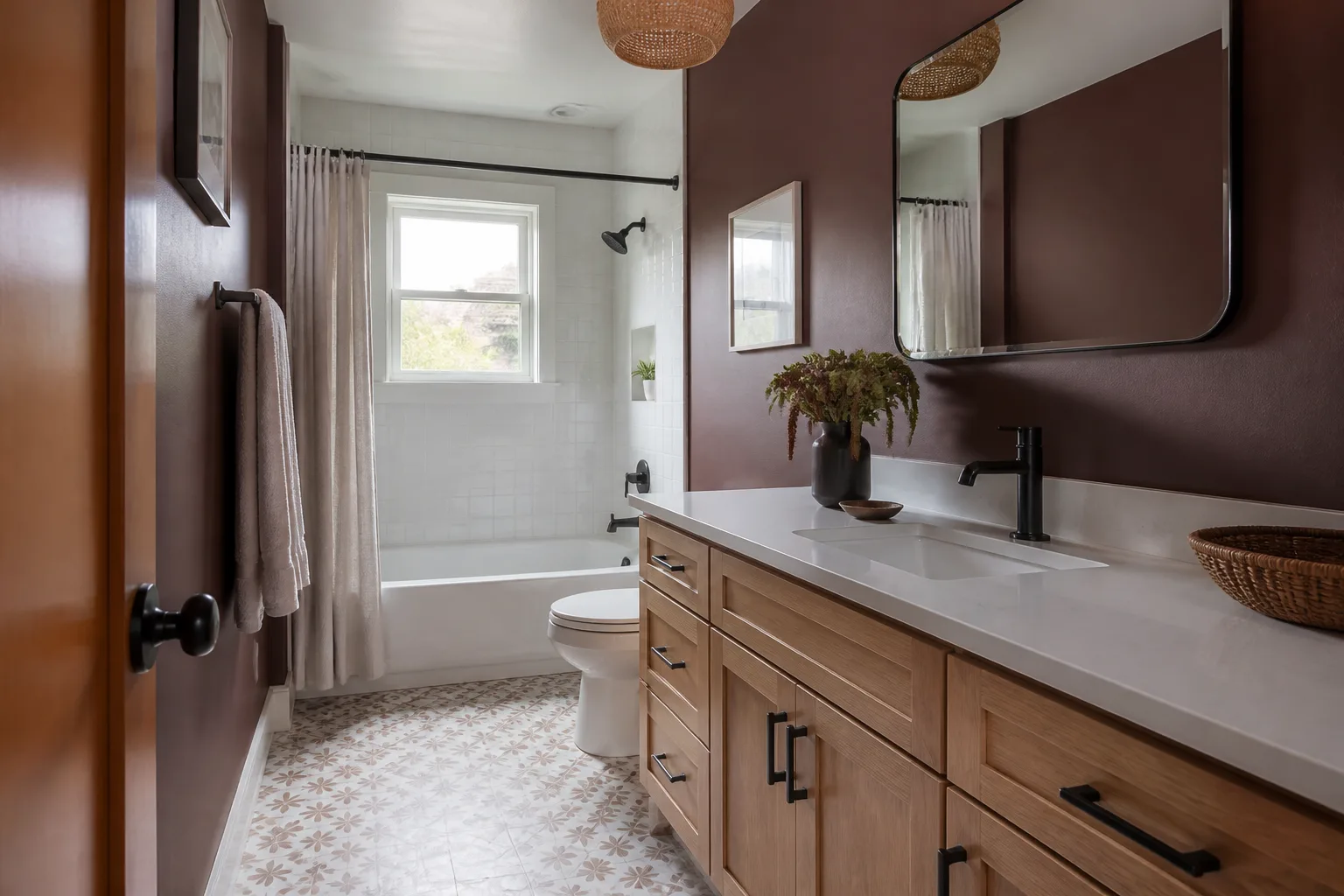
Fremont has housing stock that spans a wide range, and plumbing age is where the city’s neighborhoods tell on themselves. Homes built before 1985 in areas like Niles and Central Fremont frequently still have galvanized steel supply lines. Galvanized pipe rusts from the inside out, and you can often read the decline before it fails:
- Discolored or brownish water, especially the first draw in the morning
- Weak or uneven pressure at one fixture versus others
- Visible rust at pipe joints under the sink or at the shutoff valves
- Pinhole leaks or recurring moisture at fittings
A camera inspection of the drain lines and a look at the supply side typically runs a few hundred dollars and takes under an hour. Compare that to a supply or drain failure discovered mid-remodel, when a wall is open and tile is on order: the repair alone can run into the thousands, before the rework and the schedule slip. If your Fremont bathroom is in a pre-1985 home and you’re planning any tile work, the inspection is the cheapest insurance in the project. It also tells you whether to replace a hidden section while the wall is open, which is far cheaper now than later.
Refinish or replace? Tub and fixture costs in Fremont
For a tired but structurally sound tub, refinishing can be the right call. For a high-use family bathroom, the math shifts. Here’s the comparison we put in writing for Fremont homeowners:
| Option | Typical installed cost | Realistic service life (high-use bath) |
|---|---|---|
| Cast iron tub refinishing | $400 – $700 | 5 – 10 years with careful cleaning |
| Tub replacement (new tub installed) | $1,200 – $2,800 | 20 – 40 years |
Refinishing buys you time and looks good, but the surface is a coating, not porcelain enamel, and it chips and dulls faster in a shower that sees daily use from a family of four. Replacement costs roughly two to four times as much up front and lasts several times as long. For a rental, a spare bath, or a home you’ll sell in a few years, refinishing can make sense. For the main bathroom you plan to keep, replacement usually wins on cost per year of service.
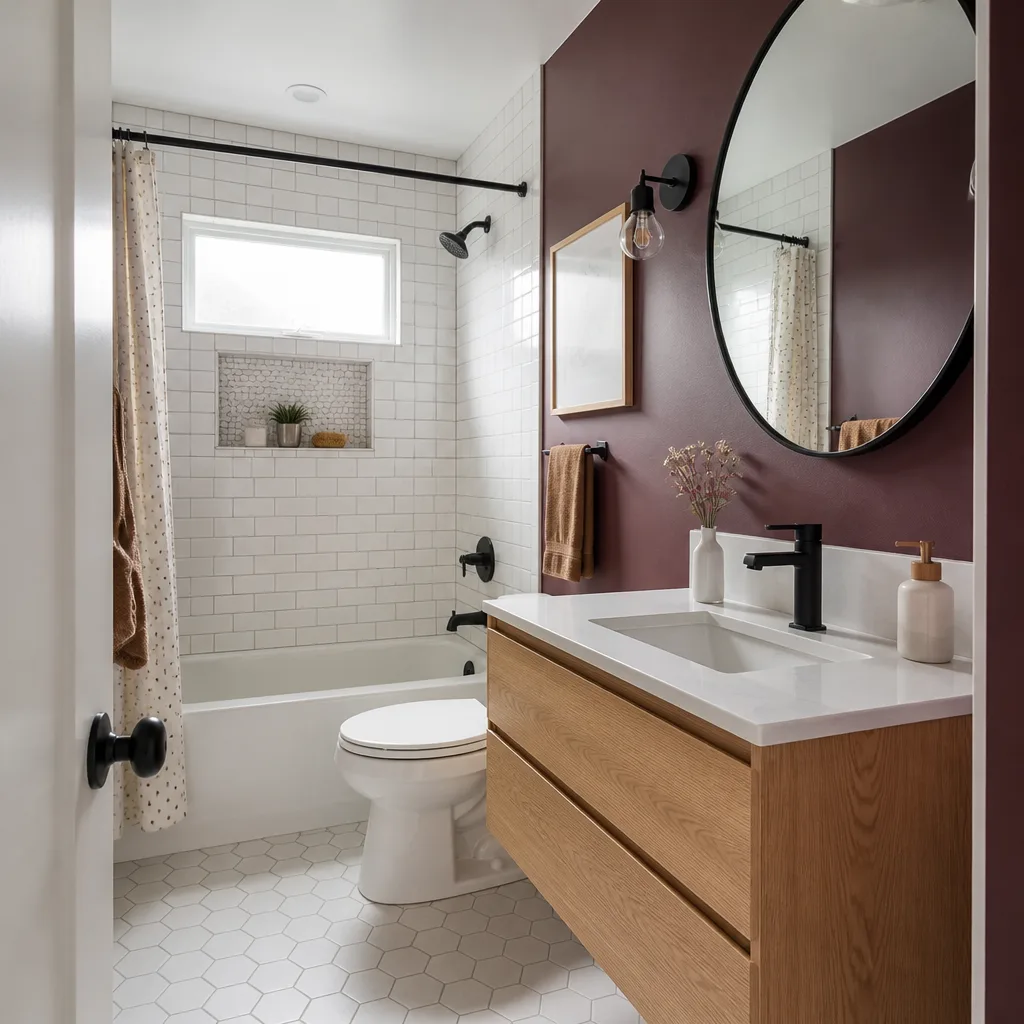
The same logic applies to other fixtures. A vanity you can clean and re-front is often cheaper to keep than to replace. A toilet that runs constantly or leaks at the base is almost always replacement territory once the seal and flange are suspect.
When does a cosmetic bathroom remodel trigger permits in Fremont?

A pure cosmetic change (new tile over an intact substrate, paint, a new vanity set in the same spot) often doesn’t require a permit. But several common “small” changes do, and unpermitted work creates title and resale problems later. In Fremont, the changes that most often cross the line are:
- Moving a drain or supply line. Relocating plumbing fixtures generally requires a plumbing permit and inspection.
- Adding or relocating an electrical circuit. Adding a GFCI outlet, a dedicated circuit, or in-floor heat means an electrical permit.
- Changing a window or its size. Altering a window opening, especially in an exterior wall, can trigger a building permit and sometimes energy-code review.
- Structural changes. Removing or altering a wall, or changing the framing around a shower, needs a permit.
Ask before the first tile is set, not after. Permits pulled and inspections passed are part of the record you’ll want when you sell, and a contractor who treats “we’ll skip the permit” as a shortcut is handing you a problem. Under our Haven Standard, the scope of work and whether it needs a permit are written into the quote before anyone starts, so there are no surprises at inspection time.
Repair-or-replace scoring table for a Fremont bathroom
Here’s the framework we use, component by component, with the threshold at which replacement beats repair in current Fremont contractor pricing. Repair if the component is under the threshold and still has service life left; replace once it crosses the line.
- Tile: Inspect for hollow taps, cracks, and loose pieces. Repair (re-grout, replace a few tiles) if the substrate is sound. Replace the tile field when more than a small patch is loose or the membrane is compromised. Threshold: a scattered repair under $\$$1,000 vs. a full re-tile above that.
- Subfloor: Deflection test plus moisture meter. Repair isolated soft spots only if the surrounding board is dry and solid. Replace the subfloor if there’s any give, rot, or trapped moisture. Threshold: patching rarely pays; once soft, replace.
- Vanity: Check the cabinet frame, drawer glides, and the wall behind it for moisture. Repair (new top, hardware, refinish) if the box is solid. Replace if the frame is swollen or water-damaged. Threshold: around $\$$600 for a re-top and refinish vs. a new vanity above that.
- Toilet: Check the seal, flange, and for rocking or leaks at the base. Repair (new wax ring, supply, fill valve) if the porcelain and flange are sound. Replace if it rocks, leaks, or the flange is damaged. Threshold: a $\$$200 – $\$$400 repair vs. $\$$400 – $\$$900 for a new toilet installed.
- Shower valve: Check for dripping, hard-to-turn handles, and whether replacement parts are still available. Repair (cartridge or trim) if parts exist. Replace the valve when it’s obsolete or the wall is already open. Threshold: cartridge repair under $\$$300 vs. a full valve replacement above that.
Add up the repairs. If they’re most of the way to the cost of doing the room right, and the membrane is near end of life, the full remodel is the honest answer. If most components pass and one or two fail, a targeted repair is the win. We’ll write both numbers on one page so you can see the gap.
Here’s a light example: we pulled a vanity out of a garage over in the Centerville district recently, and under it the homeowner had stored a spare tile box from the original install. Ten years later, matching tile for a small repair was free instead of a discontinued-tile hunt. Keep your spare tile.
When to call a pro
Two situations call for a trained professional rather than a weekend project: anything involving the waterproof membrane and the shower assembly, where a mistake hides behind finish and shows up as rot a few years later; and any work on the plumbing supply, drains, or the electrical circuit. Refinishing a tub or swapping a vanity top is within reach for many homeowners. Ripping out a shower pan and rebuilding the waterproofing, or opening a wall to replace a valve, is not a place to learn on the fly. A licensed contractor also knows which Fremont changes need a permit and inspection, and pulls them as part of the scope.
If your bathroom also connects to other projects, it helps to see the whole plan: our Rowan Construction Group Fremont home page lays out the trades, and if you’re rethinking the exterior at the same time, see Driveway & Pavers in Fremont and Fence Installation in Fremont. Planning an addition instead of a bathroom redo? Start with Home Additions & ADU in Fremont.
The Bottom Line
Answer repair-or-replace one component at a time. Test the subfloor for deflection and moisture before any cosmetic work. Read your plumbing age if you’re in a pre-1985 Fremont home, and get the camera inspection before a wall comes open. Compare refinished versus replaced fixtures on cost per year of service, not sticker price. And check permit triggers before the tile goes down, not after. A written price that lays out the repair path and the replace path side by side lets you decide with numbers, not fear of the unknown.
If you’re in Fremont and want that read on your bathroom, Rowan Construction Group Fremont offers free estimates, a written flat price before any work starts, and a free second opinion on any estimate you already have. Call (866) 797-6171 to schedule yours.
Frequently Asked Questions
A targeted repair in Fremont typically runs $2,000 – $4,000 for the common cases: re-grouting and replacing a few tiles over a sound substrate, a new wax ring and supply line, a new tub or shower valve cartridge. A full bathroom remodel is a much larger number that depends on scope. Call (866) 797-6171 for an exact written price on both paths; estimates are free.
Cosmetic work like paint, a vanity set in the same spot, or tile over an intact substrate usually doesn’t need a permit. Moving a drain, adding a GFCI or dedicated electrical circuit, changing a window, or altering framing generally does. Call (866) 797-6171 and we’ll tell you up front whether your scope needs one before we quote it.
Press along the grout lines for any give or bounce (the deflection test) and take moisture meter readings at the shower and toilet base. Soft spots, hollow-sounding tile, white mineral staining at grout, and a musty smell that returns after cleaning all point to a failing membrane or subfloor. Call (866) 797-6171 to have it looked at with a written photo record of what we find.
Refinishing runs $400 – $700 and lasts roughly 5 – 10 years with careful cleaning; a new tub installed runs $1,200 – $2,800 and lasts 20 – 40 years. For a rental or a spare bath, refinishing can make sense. For the main bathroom you keep, replacement usually wins on cost per year. Call (866) 797-6171 for exact current pricing.
Written by the team at Rowan Construction Group Fremont.
Need Construction Help?
Call Rowan Construction Group Fremont - licensed & insured, here with fast after-hours help in Fremont.
(866) 797-6171