
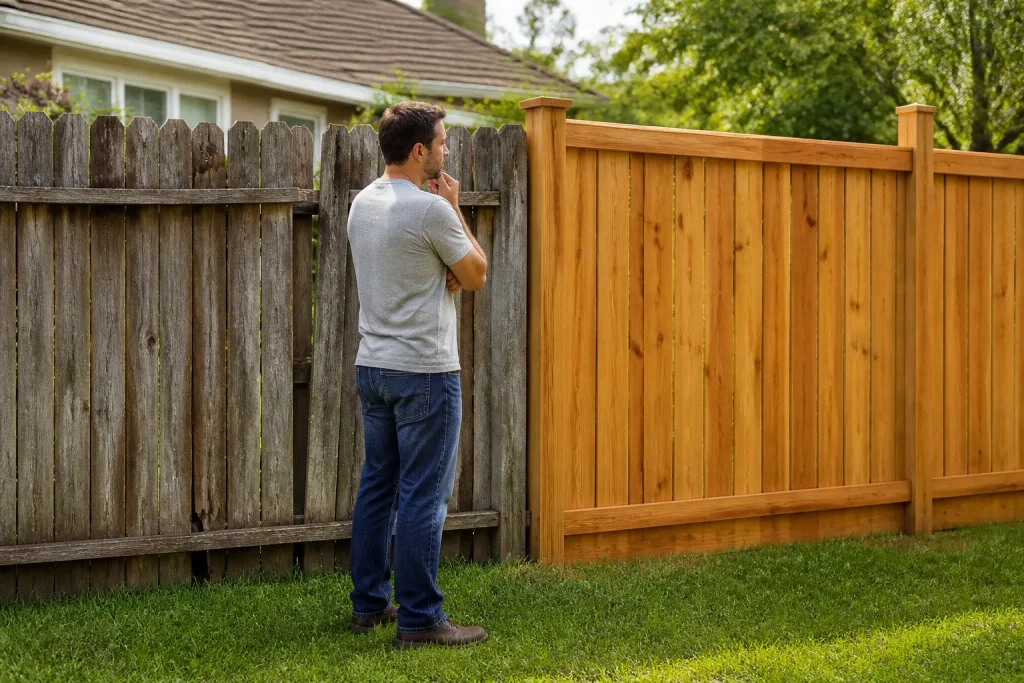
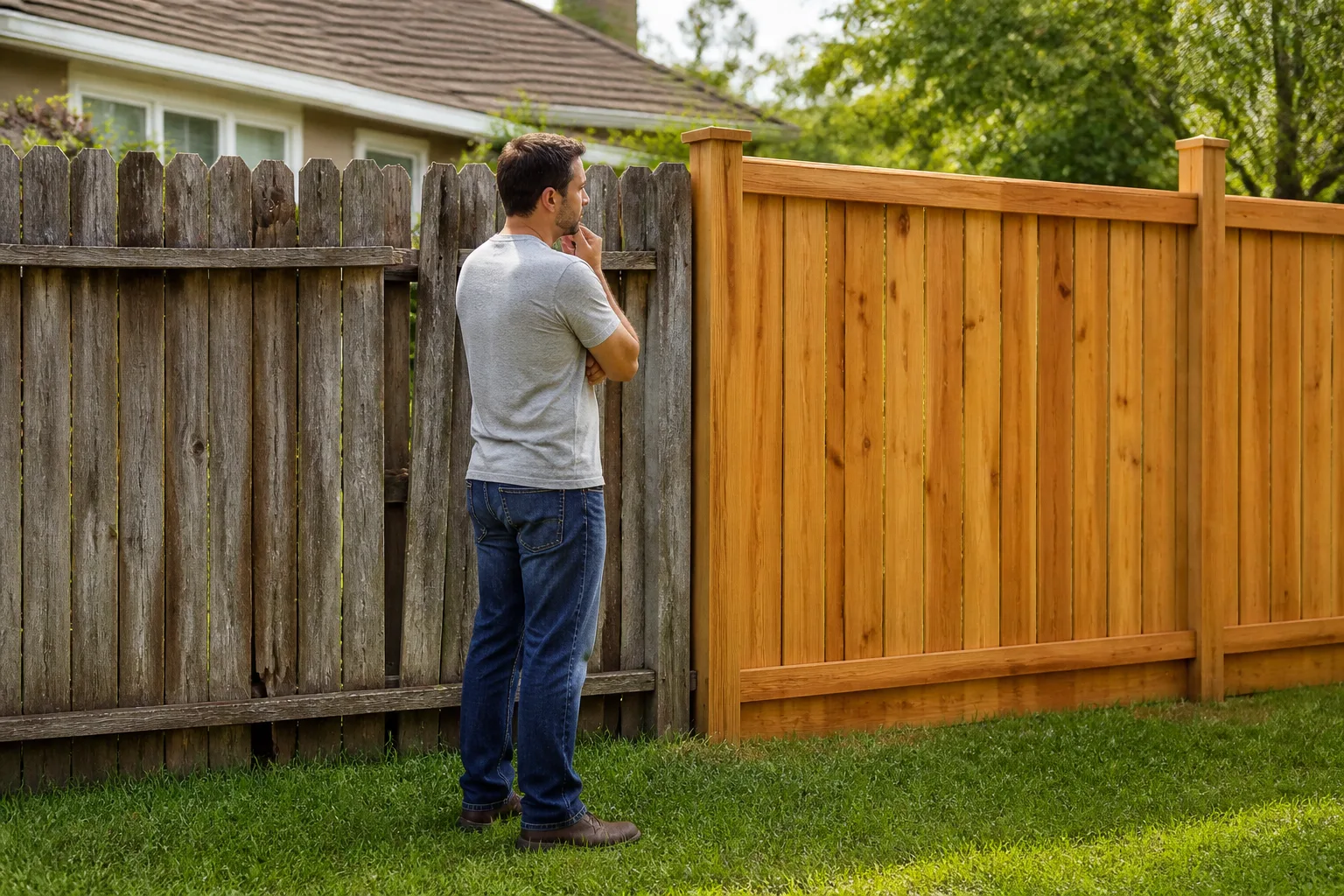
Fence Installation: Repair or Replace? How Fremont Homeowners Decide
Most Fremont fence advice comes down to a feeling: does it look bad enough yet? That is a bad way to spend four figures. The repair-or-replace question is a math problem with four measurable inputs: post condition, panel count, permit trigger thresholds, and HOA replacement cycles. A contractor who recommends full replacement when only 3 of 12 posts have failed is either right or selling you something, and the checklist below tells you which before anyone writes a number.
If you would rather not spend a Saturday with a screwdriver and a tape measure, call (866) 797-6171 and we’ll put a written price in front of you either way. The point is that you should be able to check our reasoning against your own fence.
Start With the Post-Pull Test, Not the Panels
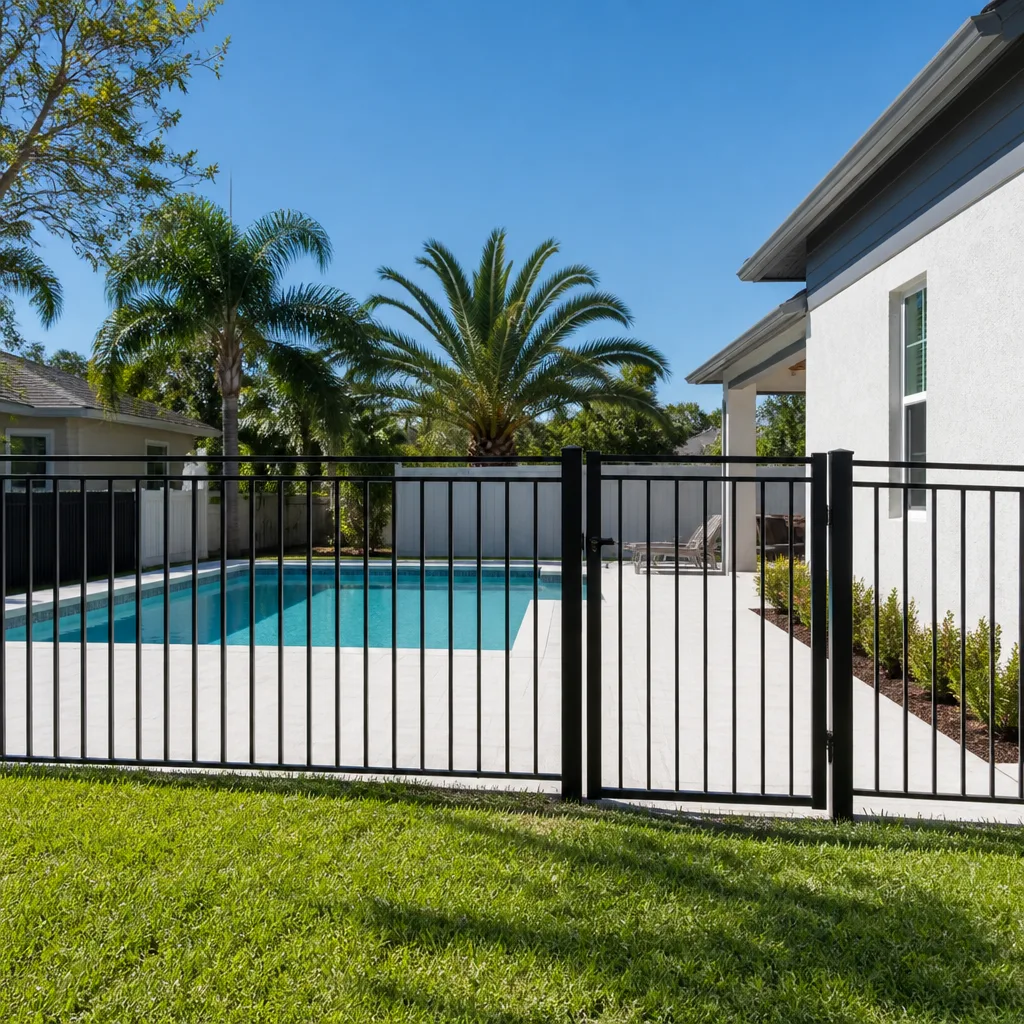
Boards are the visible part, which is why every quote you get will lead with boards. Posts are what decide the job. A fence with failing boards on sound posts is a rebuild. A fence with decent boards on rotting posts is a collapse waiting for the next winter wind off the bay. Here is the 10-minute test we run.
- Find the dirt line on each post. Clear back the soil 2 to 3 inches so you can see where wood meets earth.
- Push a screwdriver into the base, at an angle, with steady pressure. Sound cedar and redwood resist. Rotted wood lets the blade sink.
- Measure the depth of penetration. If rot runs more than 1 inch into the buried section, that post is load-bearing on borrowed time. Two inches or more and it should not be holding a panel.
- Wobble the post by hand. Any movement at the base means the concrete footing has failed or the wood below grade is gone.
- Count. Write down how many posts pass and how many fail. That number drives everything else.
In our experience, when a third or more of the posts fail this test, patching panels is money spent on a frame that will not hold them. When one or two posts fail on an otherwise sound run, we replace those posts and the panels they carry, and the fence buys you another decade.
Fremont’s Permit Threshold: Plan for It Before You Cross It
This is where mid-project surprises come from. A repair that stays a repair does not need a permit in the City of Fremont. A repair that quietly becomes a rebuild does, and the cost of stopping to pull one after the crew has already staged materials is higher than planning for it on day one. The threshold that matters is both footage and valuation: once the scope crosses into replacing a substantial linear run or the project value climbs past the city’s minor-work line, you are in permit territory.
We treat the line as a planning tool, not a technicality. Under our written scope, the permit question gets answered in the quote before anyone picks up a tool, because Clause 1 of the Haven Standard is that the price is written and the scope is set before work starts. If your project sits near the threshold, that is exactly the kind of thing to raise at estimate time, not after the old panels are in a pile on the driveway.
A few practical notes for Fremont lots:
- Older properties near the Centerville and Niles districts often have fences on the property line, and a survey or existing plot plan settles which side you own before you spend on it.
- Fences bordering a public right-of-way or a corner lot may have stricter height limits than a fence between neighbors.
- If you are pairing the fence with hardscape, coordinate the sequence. We routinely time fence work alongside Driveway & Pavers in Fremont so the fence posts go in before the pavers do, not after.
HOA Cycles in Mission San Jose and Warm Springs
Plenty of Fremont homeowners are on a clock they did not set. HOA maintenance schedules in Mission San Jose and Warm Springs often call for fence replacement on a fixed cycle, commonly somewhere in the 15-to-20-year range, and the association can require it whether or not you are ready. That changes the repair math more than anything else on this list.
Say you have a fence with 3 failed posts out of 12 and the HOA replacement is two years out. A full $6,000 system today is a poor buy. Repairing the failing posts and panels for a fraction of that, knowing the whole run comes down on the association’s calendar, is the clear call. Reverse the timeline, with the HOA replacement five or six years away, and the repair has room to pay for itself.
Two things to do before you decide:
- Get the HOA’s approved material and color schedule in writing. If the association specifies a certain vinyl profile or fence height, your repair should use something that matches, or the next inspection finds you.
- Ask when the last replacement happened and when the next is scheduled. That one date is worth more than any opinion about how the fence looks.
Warm Springs sees this constantly because so many of those tracts were built within a few years of each other, which means the fences age together and the associations replace together.
Panel by Panel: What Repair and Replacement Actually Cost
Here is the comparison most quotes skip. These are typical Fremont ranges, and they move with lumber pricing, so treat them as a planning baseline and confirm the exact figure on a written estimate.
| Scope | Typical Fremont Cost | What You Get |
|---|---|---|
| Replace 3 – 4 cedar boards on existing rails | $120 – $350 | Patched run, original posts |
| Replace a failed post (concrete set, panel reset) | $250 – $550 each | Restored structural capacity |
| Rebuild a 12-panel section on sound posts | $1,100 – $2,200 | New boards and rails, existing frame |
| Full redwood system, 100 linear feet | $4,500 – $7,500 | New posts, panels, rails, finish |
| Full vinyl system, 100 linear feet, 20-year warranty | $4,000 – $6,800 | Manufacturer-warranted system, low maintenance |
The honest comparison is not repair cost versus replacement cost. It is cost per remaining year. A $1,800 repair that buys eight years runs about $225 a year. A $6,000 replacement that lasts twenty years runs $300 a year, and it comes with a warranty. That is why the post count matters so much: it tells you how many years the repair actually buys. When the numbers are this close, a written quote with real brand names in it, not “premium vinyl,” is what lets you compare fairly.
When a Repair Voids Your Warranty
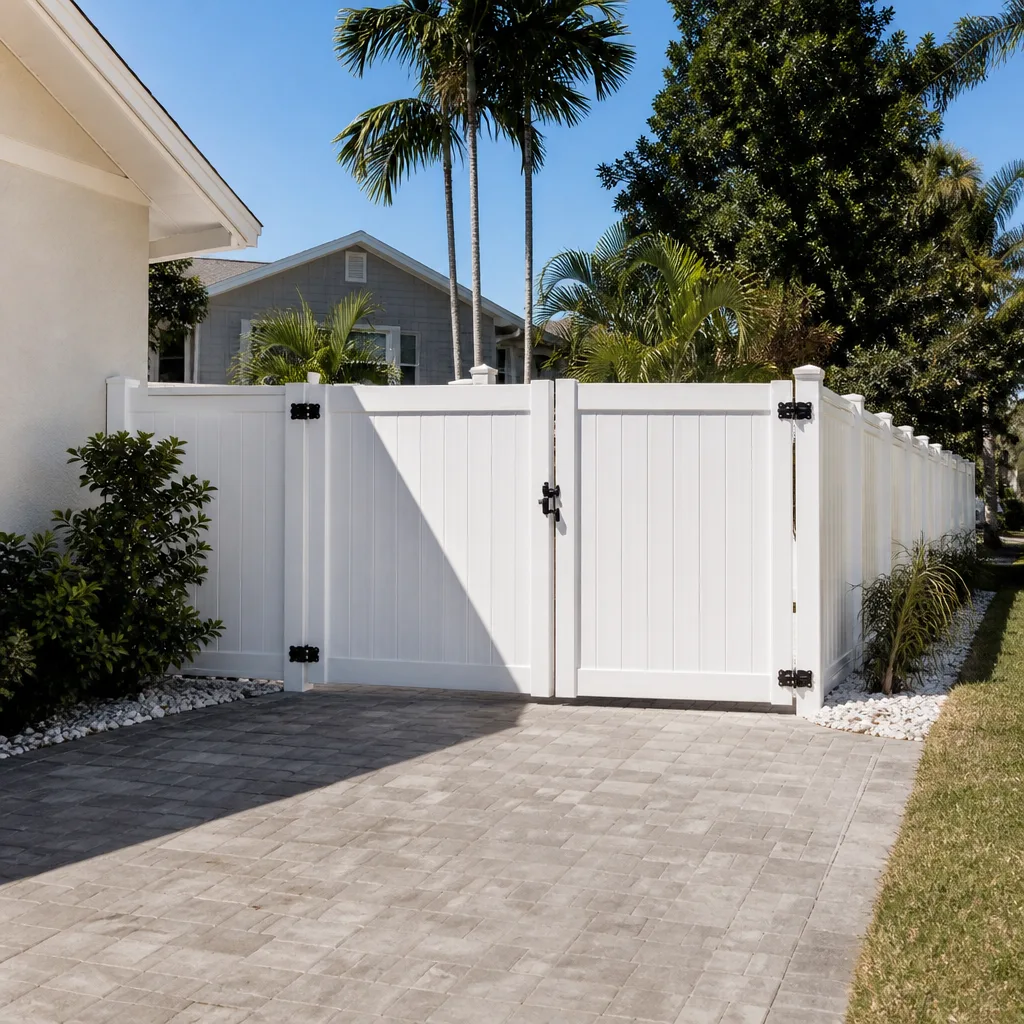
If your fence is a vinyl system still inside its manufacturer warranty, read the documentation before you let anyone patch it. Bufftech (CertainTeed) and Westech both publish installation and repair requirements, and the language that matters is usually about how damaged sections are replaced, what fasteners are permitted, and whether modifications by an unapproved method void coverage on the affected run. A well-meaning repair that installs a mismatched profile or drills through a panel in the wrong spot can end the warranty on that section.
What to look for in the paperwork:
- Any clause about “alterations” or “modifications” and what counts as one.
- Whether replacement sections must be the same product line and color.
- Whether a repair by a non-approved installer voids coverage, and what documentation the manufacturer wants.
This is where brand matters in a practical way. We work with systems from Bufftech and ActiveYards, and we keep the manufacturer documentation with the written scope so you know what your warranty covers after we leave. On a project where the fence still has warranty life, repairing within the rules is usually the right answer for a Fremont homeowner.
When to call a pro: the post-pull test is safe and worth doing yourself. Anything involving buried utilities, property-line disputes, a fence over 6 feet, or a warranty-covered system is where a mistake gets expensive. If your project is really an outdoor build-out rather than a fence, Home Additions & ADU in Fremont is the page to read next.
The Bottom Line
Decide from your own fence, not from a sales pitch. Run the post-pull test and count failures. If a third or more of your posts fail, replacement is usually the better math. If two or three fail on otherwise sound framing, repair the posts and the panels they carry. Check your HOA’s replacement cycle and your permit threshold before you commit either way, because those two dates and lines change the answer more than appearance does. And if your fence still has a manufacturer warranty, read the alteration language before anyone touches it.
If you’re in Fremont and need help, Rowan Construction Group Fremont offers free estimates, and we’ll review a competitor’s quote line by line at no charge. Call (866) 797-6171 for a written price before any work starts. You can start with our Fence Installation in Fremont page or see the full range of what we do on the Rowan Construction Group Fremont home page.
Frequently Asked Questions
Typical Fremont fence repair runs $120 – $350 to replace a few cedar boards and $250 – $550 per failed post, with a rebuilt 12-panel section on sound posts at $1,100 – $2,200. Call (866) 797-6171 for an exact quote – estimates are free.
Small repairs generally do not require a City of Fremont permit, but once the scope crosses the city’s footage or valuation threshold for a rebuild, it does. The threshold should be checked at estimate time, before work begins. Call (866) 797-6171 and we’ll tell you where your project sits.
It can, if the repair uses a mismatched profile, an unapproved fastener, or a method the manufacturer counts as an alteration. Check the documentation from Bufftech (CertainTeed) or Westech before patching a warranted run. Call (866) 797-6171 if you want us to read the terms with you.
A repair on a few posts and panels is typically a single-day job, while a full 100-foot replacement usually runs two to three days depending on material and site access. The written scope states the schedule before work starts. Call (866) 797-6171 to schedule your free estimate.
Written by the team at Rowan Construction Group Fremont.
Need Construction Help?
Call Rowan Construction Group Fremont - licensed & insured, here with fast after-hours help in Fremont.
(866) 797-6171