
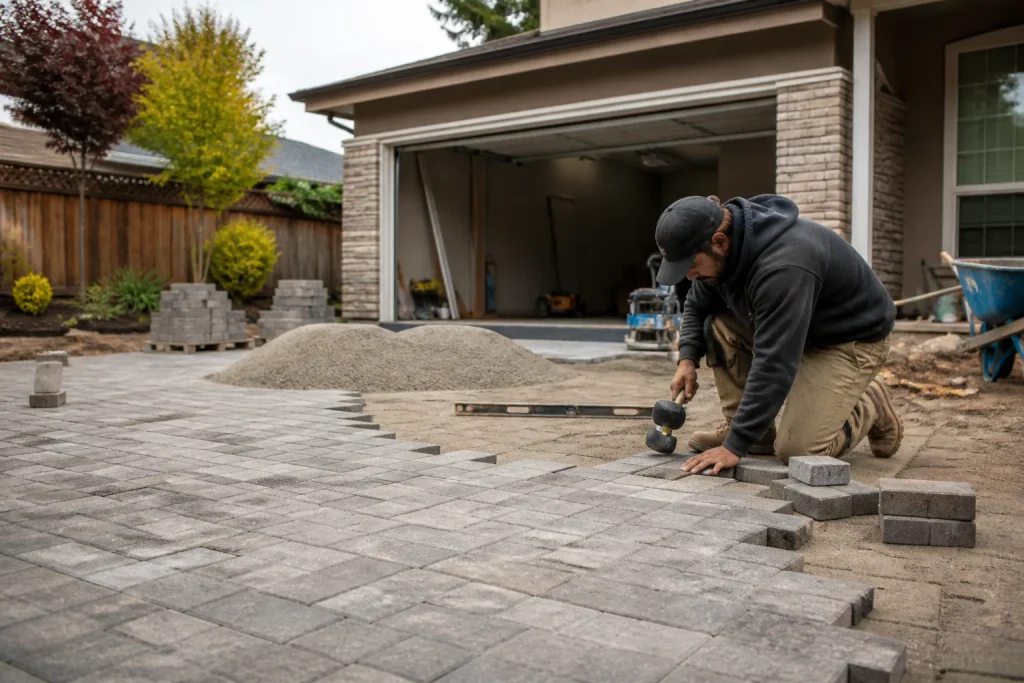
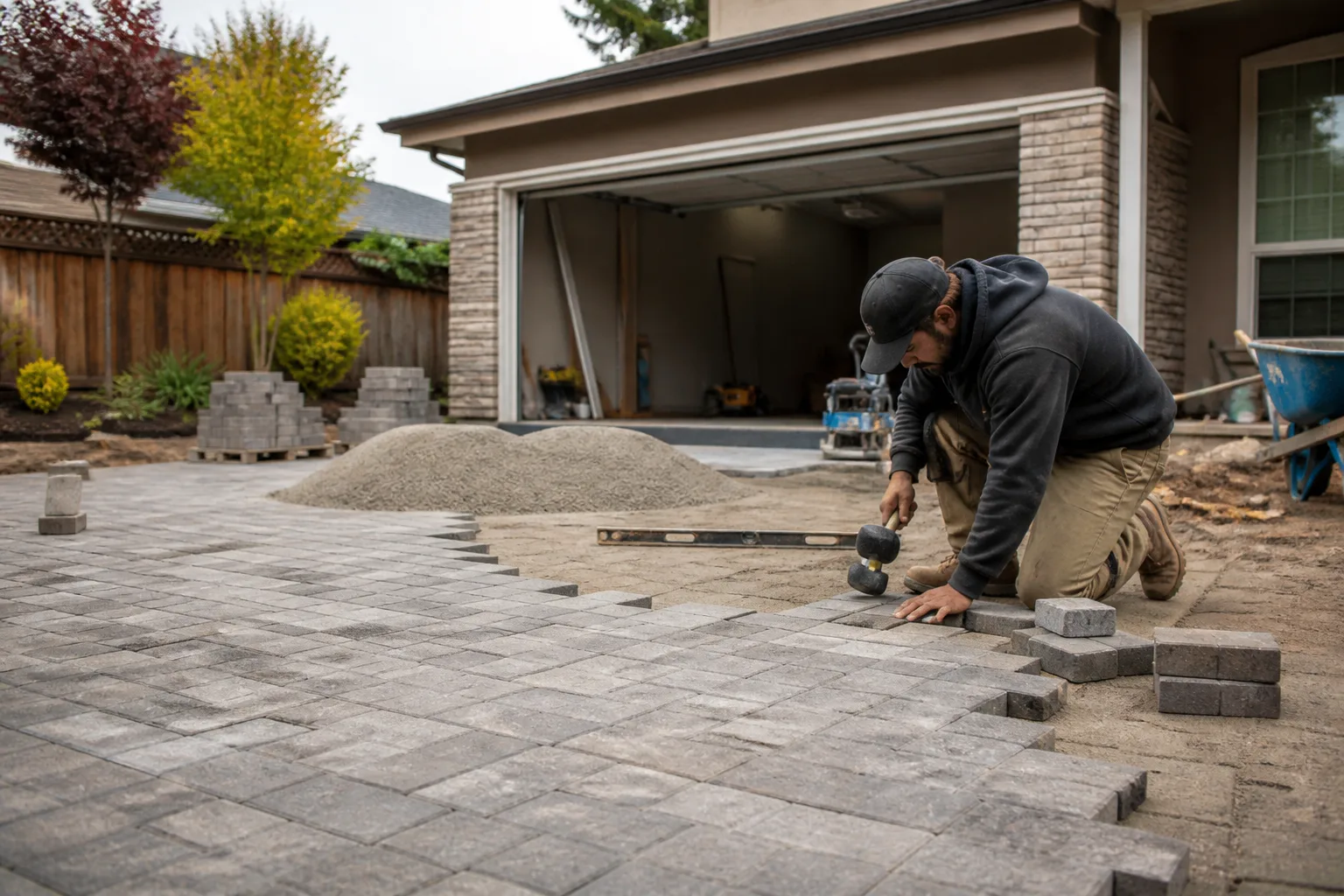
5 Mistakes to Avoid With Driveway & Pavers
The five costliest driveway paver mistakes are almost never about color or pattern. They’re base preparation and documentation failures that stay invisible for two rainy seasons and then surface as settlement, fanning edges and cracks – usually after the contractor has moved on and the warranty turns out to exclude the exact failure in front of you. Skipping geotextile fabric between subgrade and aggregate base adds about $0.30 per square foot at install and is the leading cause of base contamination failures that run $4,000 – $9,000 to correct five years later. If you’d rather not gamble on that, call (866) 797-6171.
We’ve walked hundreds of driveways around Fremont, and the same five problems keep showing up. Here’s what each one costs, and how to catch it before you sign.
Mistake 1: Underbuilding the Aggregate Base
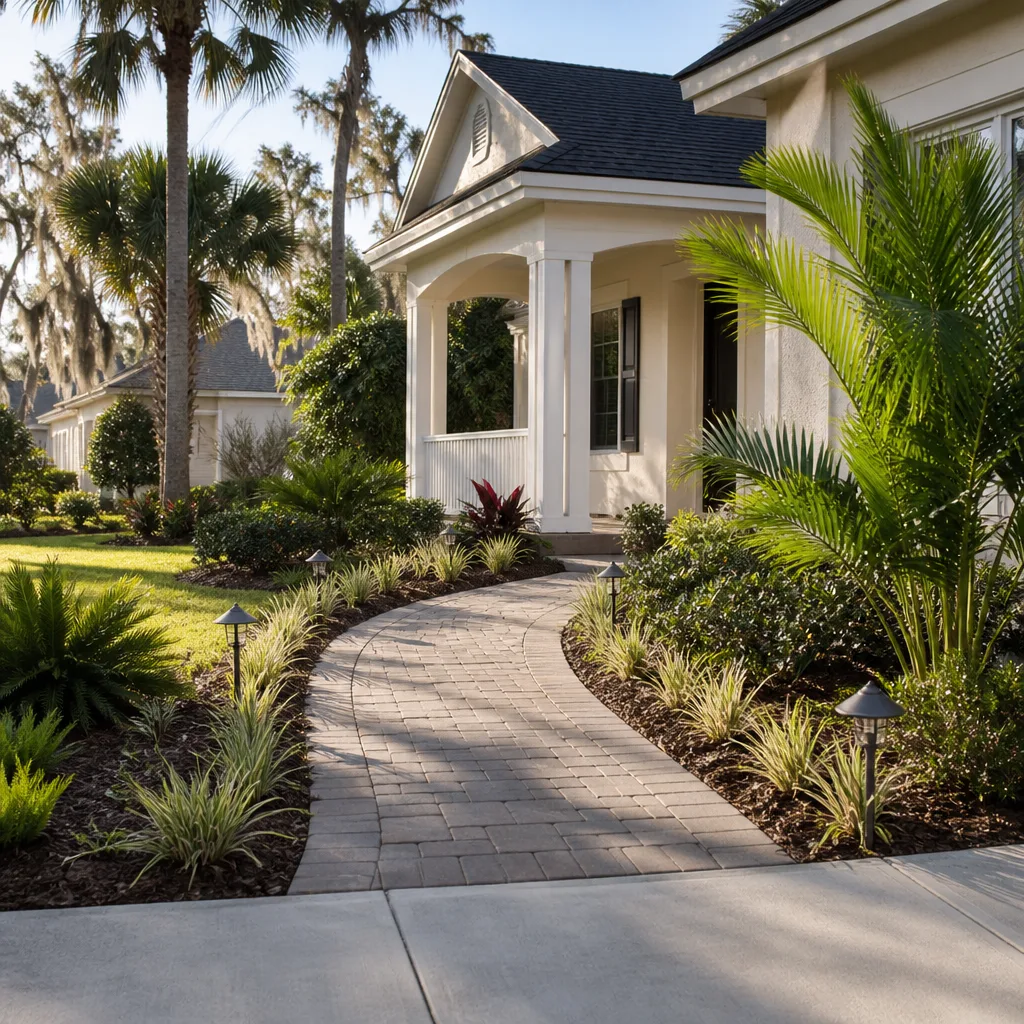
The aggregate base is the compacted crushed-rock layer under your pavers. It’s what actually carries the car; the pavers are just the wear surface. California’s Greenbook standard specifies 4 inches of base for pedestrian areas and 6 – 8 inches for vehicular driveways. Low bids almost always show 3 inches in the written scope. That missing 3 inches is where the discount comes from.
Three inches of base over Fremont’s expansive clay soils is a settlement waiting to happen. When the base is too thin, vehicle load passes straight through to the subgrade, the clay moves seasonally, and the surface starts to dip and heave. By the time you see it, correction means pulling the pavers, re-excavating and rebuilding – typically $8 – $14 per square foot in this market, versus the $1.50 – $2.50 per square foot you “saved” by accepting the low bid.
- What to check: Ask for the base depth in writing. “6 inches compacted” should be a line item, not a verbal assurance.
- What it costs to fix: Full base reconstruction on a two-car driveway in Fremont runs $6,000 – $15,000 depending on square footage and access.
If a bid is $3,000 under the others, ask what base depth it assumes. That single number usually explains the gap.
Mistake 2: No Signed Change Order Protocol
This one isn’t about dirt and rock – it’s about paperwork, and it’s where mid-size driveway projects quietly blow their budget. A verbal “sure, add a little extra grading while you’re at it” turns into $2,000 – $5,000 in undocumented charges by the time the invoice arrives, and you have no record of approving anything.
On a Fremont driveway, the common triggers are drainage corrections, extra haul-off of clay soil, and re-grading around a slope. Each sounds small in the moment. Stacked together without documentation, they turn a $14,000 project into an $18,000 one with no paper trail.
What a clean process looks like:
- Every scope change gets a written change order with a price attached.
- No work proceeds on that change until you sign it.
- You keep a copy of every signed order alongside the original quote.
That discipline is why projects at Rowan Construction Group finish within a few percent of the agreed number. Under Clause 1 of the Haven Standard, the price is written before anyone starts – and it doesn’t move without your signature on the change.
Mistake 3: Choosing Pavers by Color Before Confirming Thickness
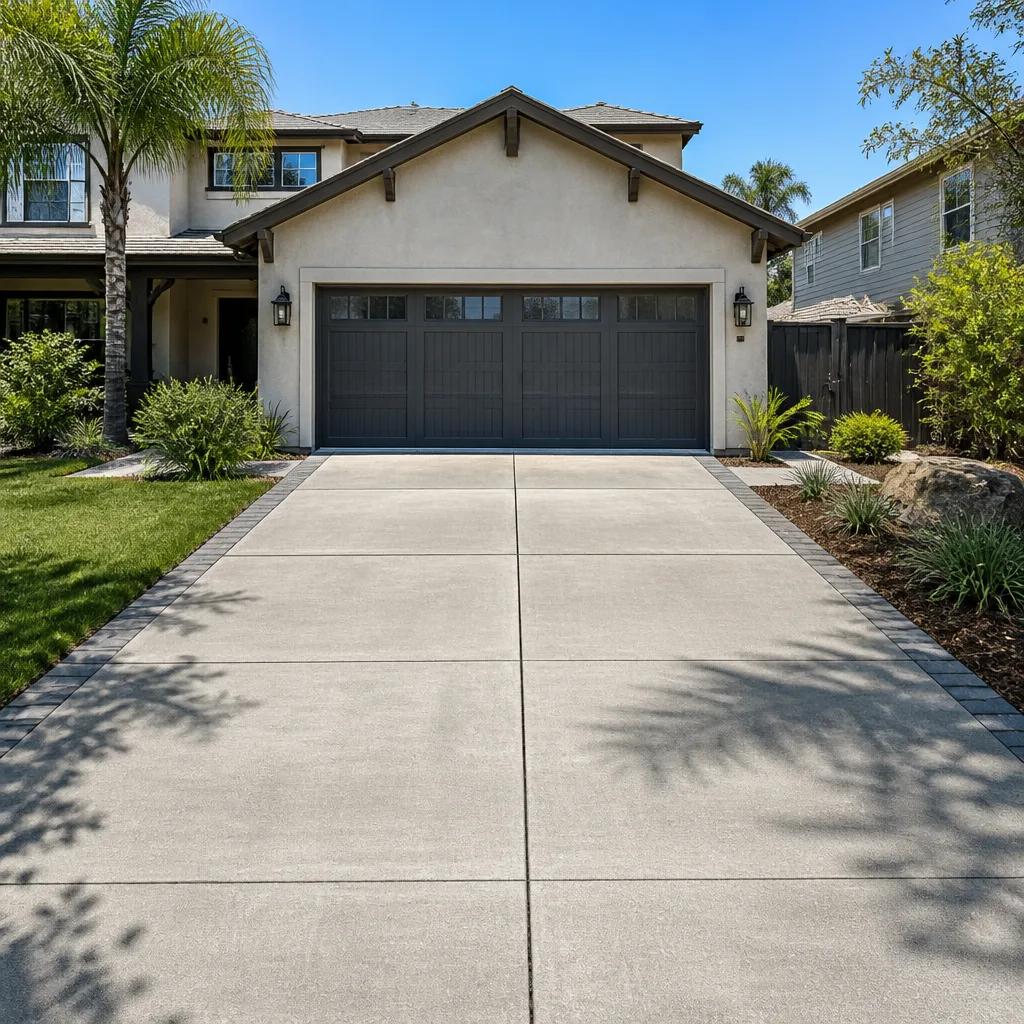
Walk into any paver showroom and every sample looks the same thickness. It isn’t. Residential driveways need a 60mm paver minimum. Anything carrying an RV, boat trailer or heavy truck needs 80mm. That 20mm difference is invisible on a display board and decisive under load.
We’ve seen 60mm pavers crack and rut on Fremont driveways that regularly take a loaded work truck, and the homeowner genuinely didn’t know there was a spec to check. The fix is a rebuild, not a patch – cracked units can’t be swapped without disturbing the interlock around them.
Within a good spec, brand matters less than consistency and availability. Belgard and Techo-Bloc both make solid 60mm and 80mm lines, and picking from a brand with regional stock means you can match a repair five years from now. That’s a real concern: a discontinued color means patching with a visible mismatch or replacing a whole field of pavers.
- 60mm: standard residential driveway traffic.
- 80mm: RV pads, heavy-truck parking, steep aprons.
- Ask for it in writing: “60mm Belgard [line]” or “80mm Techo-Bloc [line],” not “standard pavers.”
Mistake 4: Improper Edge Restraint Installation
Edge restraint is the border holding your paver field in compression. The mistake is spiking it into the aggregate base instead of into native soil. Under repeated vehicle load, restraint spiked into loose aggregate migrates outward, the field loses compression, and the perimeter course fans out – usually within two to three years.
Once the perimeter is loose, the problem spreads. Rain gets in, bedding sand washes out, and units start rocking. Repairs to a fanned edge on a typical Fremont driveway run $800 – $2,500 depending on perimeter length, and that doesn’t count re-matching pavers if the original line is gone.
The correct installation means augering through the base into undisturbed native soil, spiking the restraint there with long anchors, and keeping it snug against the paver field with proper curbing or a buried edge. It happens below grade, so it’s the easiest thing to skip and the hardest thing to inspect later. Photos taken during the build are your only real proof. Our crews document every visit for exactly this reason – you get the photo record whether you ask for it or not.
Mistake 5: No Post-Installation Compaction Pass
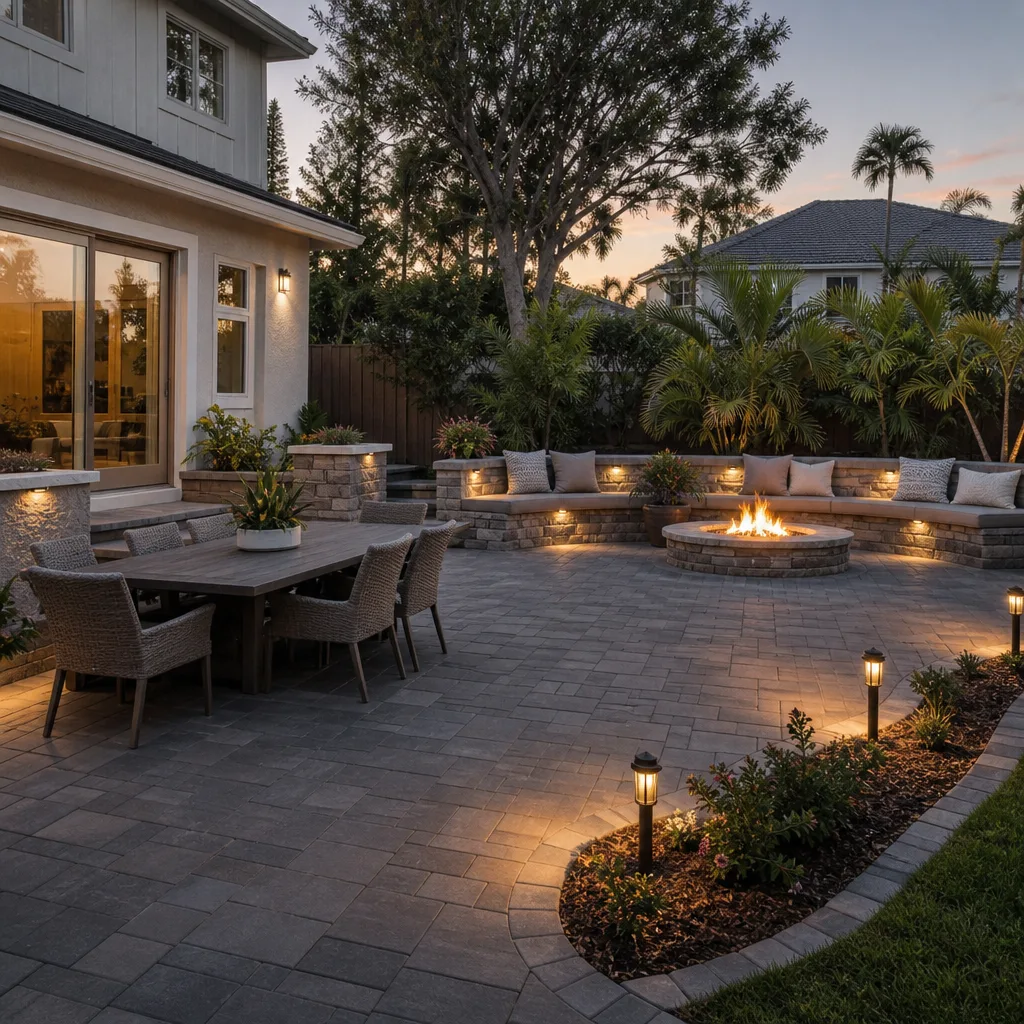
Skipping the final compaction pass is the most common shortcut we see on driveways in Fremont, because by that stage the job looks done. It isn’t. After the pavers are laid and joint sand swept in, a plate compactor with a rubber pad needs to run over the whole surface. That run seats each unit into the bedding sand and drives sand into the joints.
Skip it and individual units stay slightly proud of their neighbors. They rock under foot traffic, crack under vehicle impact, and the joints stay open to water. A cracked paver or a rocking field that needs resetting two years in runs $1,200 – $3,500 to correct, and it’s entirely avoidable.
This pass is also your free quality check. If the crew loads up and leaves the moment the last paver goes down without a compactor run, that tells you something about the paperwork you’re about to receive, too.
When to call a pro
A driveway is heavy, load-bearing work. Excavation, base compaction and edge anchoring are all easy to get subtly wrong, and the errors show up after the invoice is paid. If a contractor won’t put base depth, paver thickness and the change order protocol in writing, that’s your signal to get a second opinion. We offer a free line-by-line review of any written estimate – bring a competitor’s numbers and we’ll walk through them at no charge.
Related services in Fremont
Pavers usually pair with other hardscape and exterior work. See our Driveway & Pavers in Fremont page for scope, materials and pricing by square foot. For privacy and boundary work, our Fence Installation in Fremont trade covers materials, footing depth and permit needs. And if the driveway project is part of a larger plan, our Home Additions & ADU in Fremont team can coordinate sequencing so the driveway isn’t rebuilt twice. Start at our Rowan Construction Group Fremont home page if you’re comparing trades across one written quote.
The Bottom Line
None of the five mistakes are aesthetic. They’re all things you can catch before work starts by asking for three numbers in writing: base depth in inches, paver thickness in millimeters, and how the change order protocol works. Get those three confirmed and the rest is pattern and color.
Quick recap:
- Base depth: 6 – 8 inches compacted for vehicle use, not 3.
- Change orders: written and signed, or no work proceeds.
- Paver thickness: 60mm minimum, 80mm for heavy loads.
- Edge restraint: spiked into native soil, not aggregate.
- Final compaction: non-negotiable, with a rubber-padded plate compactor.
If you’re in Fremont and need help, Rowan Construction Group Fremont offers free estimates – call (866) 797-6171. Every quote is a flat written price with a written scope and a written warranty before work starts, backed by the 365-Day Done Right Promise.
Frequently Asked Questions
Driveway paver installation in Fremont typically runs $12 – $22 per square foot installed, including base, pavers and edge restraint, with full driveways landing between $8,000 and $25,000 depending on square footage, base depth and access. Call (866) 797-6171 for an exact quote – estimates are free.
Permits depend on what the work touches. A like-for-like paver replacement usually doesn’t require one; a new driveway that changes the curb cut, drainage or site grading often does. Ask your contractor to confirm permit needs in writing, and don’t accept “we’ll handle it” without paperwork.
Yes. Geotextile fabric between the subgrade and the aggregate base costs about $0.30 per square foot at install and keeps fine clay and silt from migrating up into the base. Without it, the base loses structure, the surface settles unevenly, and correcting it runs $4,000 – $9,000 five years down the line.
A properly built paver driveway should last 25 – 30 years. Improperly built, expect major failures within two to five years – settling, fanning edges or cracked units – all traceable to base depth, edge restraint or a skipped compaction pass rather than the pavers themselves.
Written by the team at Rowan Construction Group Fremont.
Need Construction Help?
Call Rowan Construction Group Fremont - licensed & insured, here with fast after-hours help in Fremont.
(866) 797-6171