
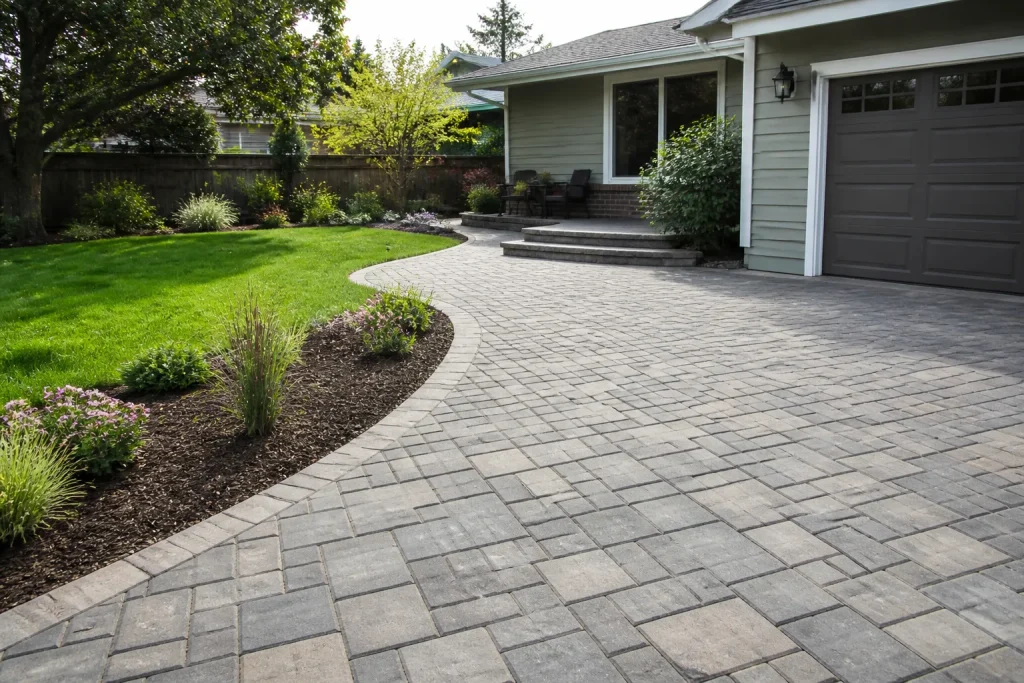
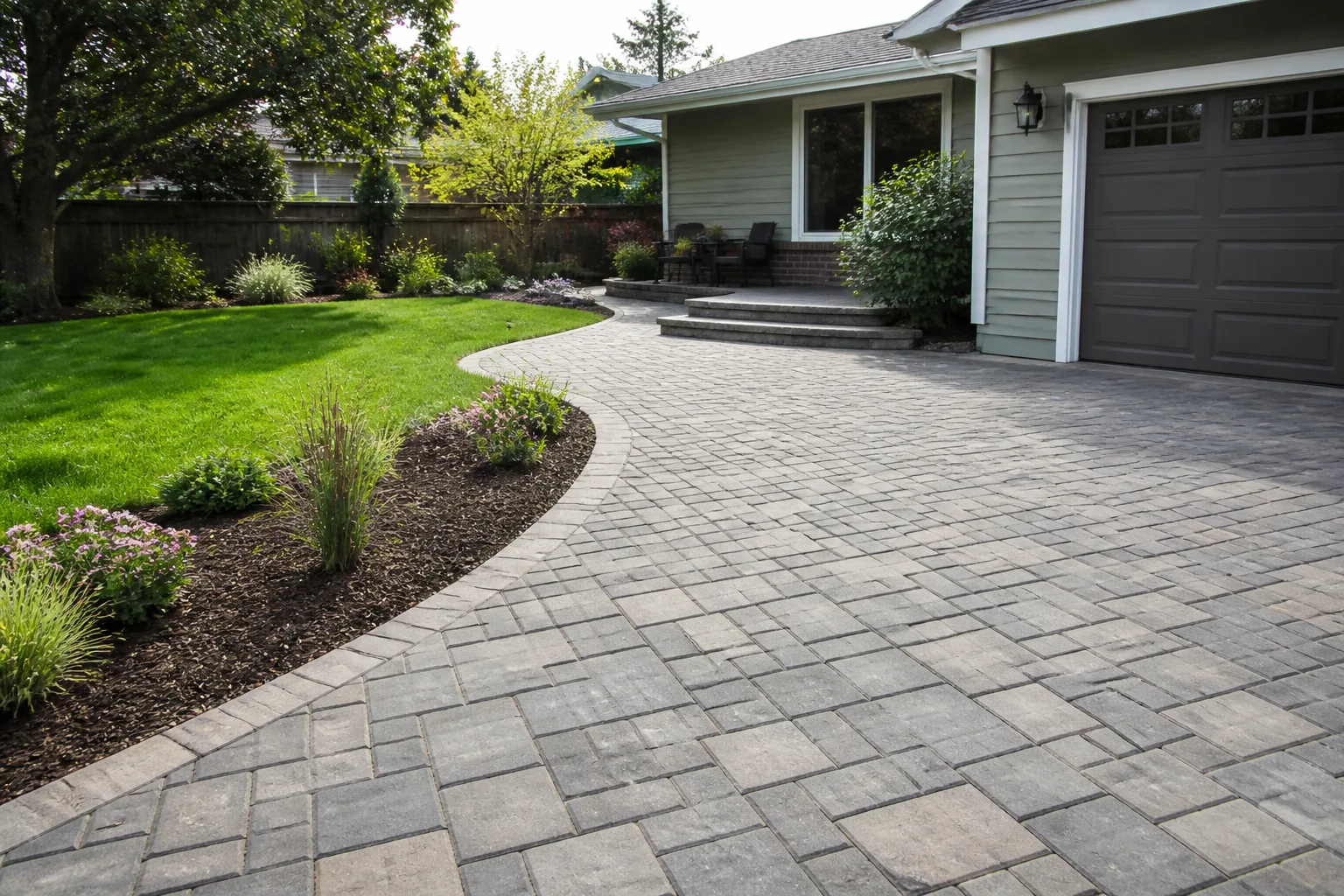
Sakrete Driveway & Pavers in Fremont: A Homeowner’s Guide
Sakrete’s Paver Set mortar and its Multi-Purpose Concrete Mix share a similar bag design but carry different compressive strengths at 28 days – roughly 4,000 PSI versus 2,500 PSI – and that gap matters when a vehicle tire bears on a paver edge. Pick the wrong bag for a Fremont driveway and you’ll find out in about eighteen months, when the joint crumbles and the paver rocks under the front wheel. Here’s how to match the right Sakrete product to the right job before you load the cart.
Which Sakrete Products Actually Belong on a Driveway Paver Job?
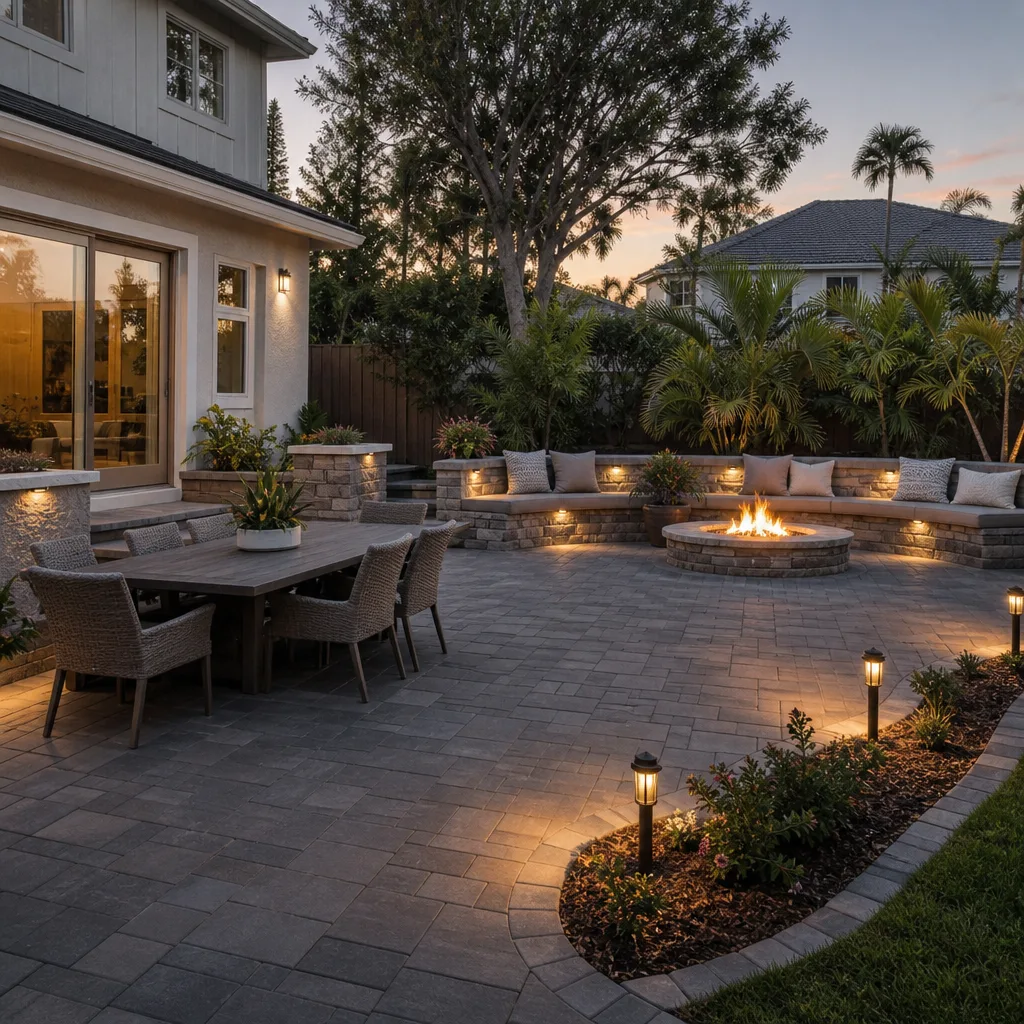
Sakrete’s lineup runs broad, and only part of it belongs under a driveway. Sakrete Paver Set is a polymer-modified joint sand designed to lock between pavers and resist erosion from rain and hose-off. It’s the correct choice for jointing. Sakrete Polymeric Sand is a coarser, bindable joint fill for wider gaps – typically 1/8 inch and up – and works well on a driveway where joints run wide. Sakrete Fast-Setting Concrete Mix is a 20-to-30-minute initial-set product meant for post holes, small pads, and repairs, not for large-scale paver bedding. Sakrete Concrete Resurfacer is a thin-bond overlay for worn concrete surfaces, useful if you’re prepping a slab edge or repairing a transition.
Two notes pulled from the brand’s published technical data sheets. First, Paver Set is not a structural bedding material; it’s a joint stabilizer, and it needs a properly compacted base and a plate compactor to seat correctly. Second, Fast-Setting is not the same chemistry as the brand’s High-Strength mix, and mixing the two lines on the same job is a mistake we’ve seen tradespeople make. Read the TDS on the bag before you buy – it takes four minutes and saves a redo.
- Paver Set – joint sand for standard paver gaps, polymer-activated, correct for the top 1 inch of the joint.
- Polymeric Sand – wider joints and heavier-traffic driveway edges.
- Fast-Setting Concrete Mix – post-setting and small repair pads only; do not bed pavers into it.
- Concrete Resurfacer – cosmetic and edge repairs on existing slabs, not structural.
When Fast-Setting Is an Asset in Fremont, and When It’s a Trap
Fast-setting Sakrete products shine in cold-weather or tight-schedule conditions. In Fremont, that means an early-spring repair window when nights still drop into the 40s and you need the patch walkable by evening. On a small post hole or a repair pad under a gate post, the 20-30 minute set is an advantage: less curing time in the way of the next task.
Where it becomes a liability is any pour larger than about 4 square feet – and certainly any bedding operation under drive pavers. Fremont summer afternoons routinely hit 85-95°F, and concrete chemistry speeds up in heat. A mix with a nominal 25-minute working time can hit initial set in 10-12 minutes on a hot slab in the sun, leaving you with a rock-hard lump in the wheelbarrow and a cold joint in your pad. For anything with a working time requirement – bedding, setting curbs, laying a transition strip – the slower High-Strength mix is the right tool. We’ve seen a homeowner in Centerville lose a whole Saturday to a fast-set bag that cured before they’d finished mixing batch two.
The rule we use: fast-set for repairs under 4 square feet. Slow-set for anything structural or any pour that needs more than 20 minutes of work time. Cover bags in the sun either way; a bag of Sakrete that’s cooked in the truck bed mixes warm and sets fast.
Fremont Application Notes: Temperature, Timing, and the 90-Degree Ceiling
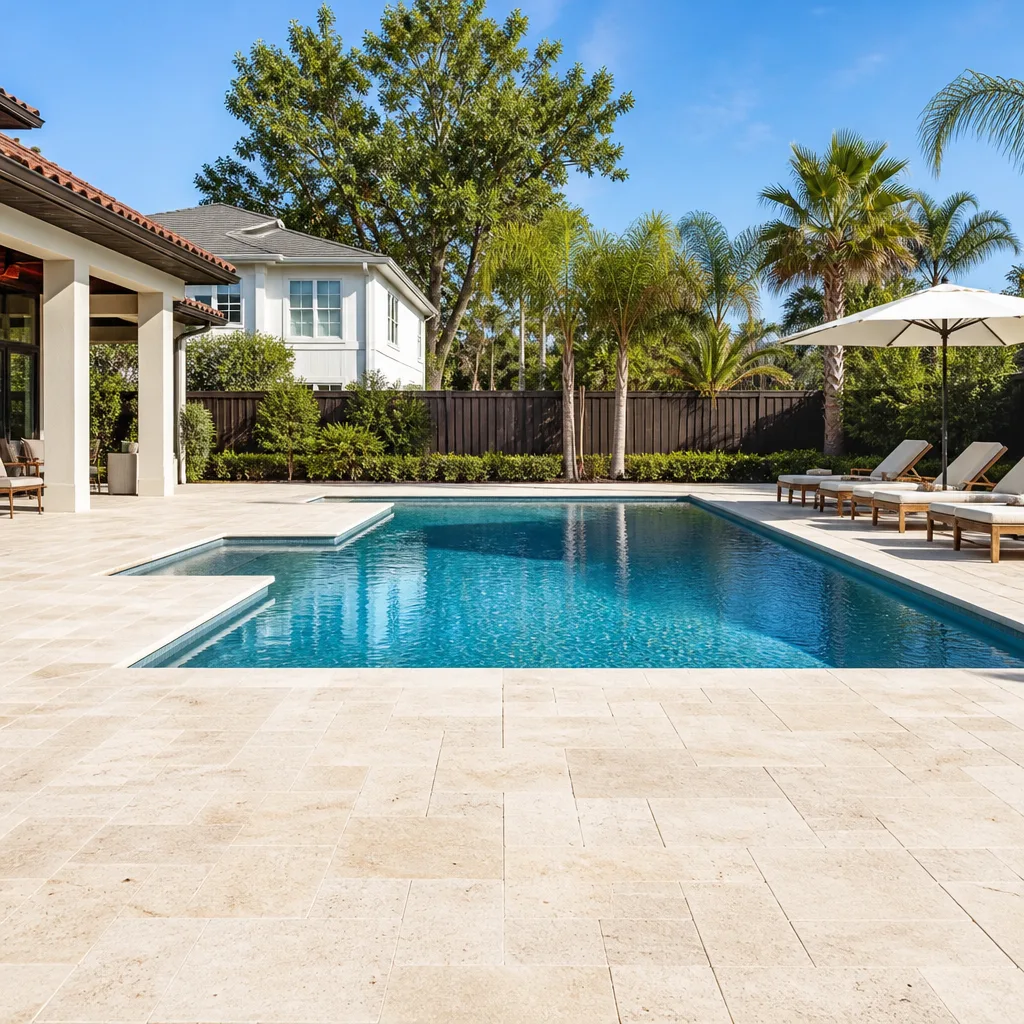
Sakrete’s published application instructions for Polymeric Sand specify surface temperatures between 32°F and 90°F. Fremont sits in a warm-summer Mediterranean climate, and our July and August afternoons commonly exceed that upper bound – by the time the sun has been on a driveway slab for two hours, the concrete or paver surface runs five to fifteen degrees hotter than ambient air. That means installation windows shift to early morning, ideally between 6 and 9 a.m., or to an overcast day. If you’re outside that window, the polymer can set before it cures into the joint.
The same logic applies to Paver Set mortar. Above 90°F surface temperature, working time drops and the joint finish becomes uneven. In Fremont, we plan paver jointing jobs in the morning and set aside the afternoon for compaction, cleanup, and inspection. If a job runs long, we stop jointing and resume the next morning rather than press a product past its stated temperature range.
Fremont also brings specific dirt into the equation. Driveways in Niles and Mission San Jose often sit under mature oak canopy; leaf litter and tannin staining on paver surfaces mean a hose-off with a polymer joint product is easier to maintain than a plain sand joint, which erodes with each wash. In Ardenwood, clay soils push seasonal movement into pavers at the driveway edge, and a joint product that flexes slightly – like a properly installed polymeric – is a better fit than a rigid mortar.
Sakrete vs. Quikrete vs. Oldcastle: What the Price Actually Looks Like in Fremont
Sakrete, Quikrete, and Oldcastle all cluster within $2-6 per 50-pound bag for comparable concrete mixes at the two largest local supply points – Lowe’s on Fremont Boulevard and Home Depot in Newark. The differences show up in specialty lines. Sakrete’s Paver Set runs slightly higher than a plain joint sand because of the polymer content; Quikrete’s Hardscape line competes closely, and Oldcastle’s paver joint products come in slightly different bag weights. Price alone rarely justifies the drive between the two stores; product fit does.
For a 400-square-foot driveway repair – say, relaying a settled section – a realistic estimate is:
- Base or leveling material: 4-6 bags of 50 lb concrete mix, or 2-3 cubic yards of base rock if you’re rebuilding the substrate
- Paver Set or Polymeric Sand: 5-7 bags of 50 lb for 400 SF of joint fill at 1-1.5 inch joint depth
- Fast-Setting mix: 2-3 bags only if you’re setting posts or a curb
- Concrete Resurfacer: 1-2 units (typically 40 lb) for edge repair
Budget $250-$450 in materials for a 400 SF joint-and-edge repair. A full rebuild that adds base rock, excavation, and pavers pushes to the $2,500-$6,000 range depending on the paver selection. If you’re pricing the whole job, our Driveway & Pavers in Fremont page carries current line-item ranges in dollars. For driveway borders that pair with a new fence line, Fence Installation in Fremont covers the shared footing work.
Where Sakrete Is Genuinely a Homeowner Product – and Where It Isn’t
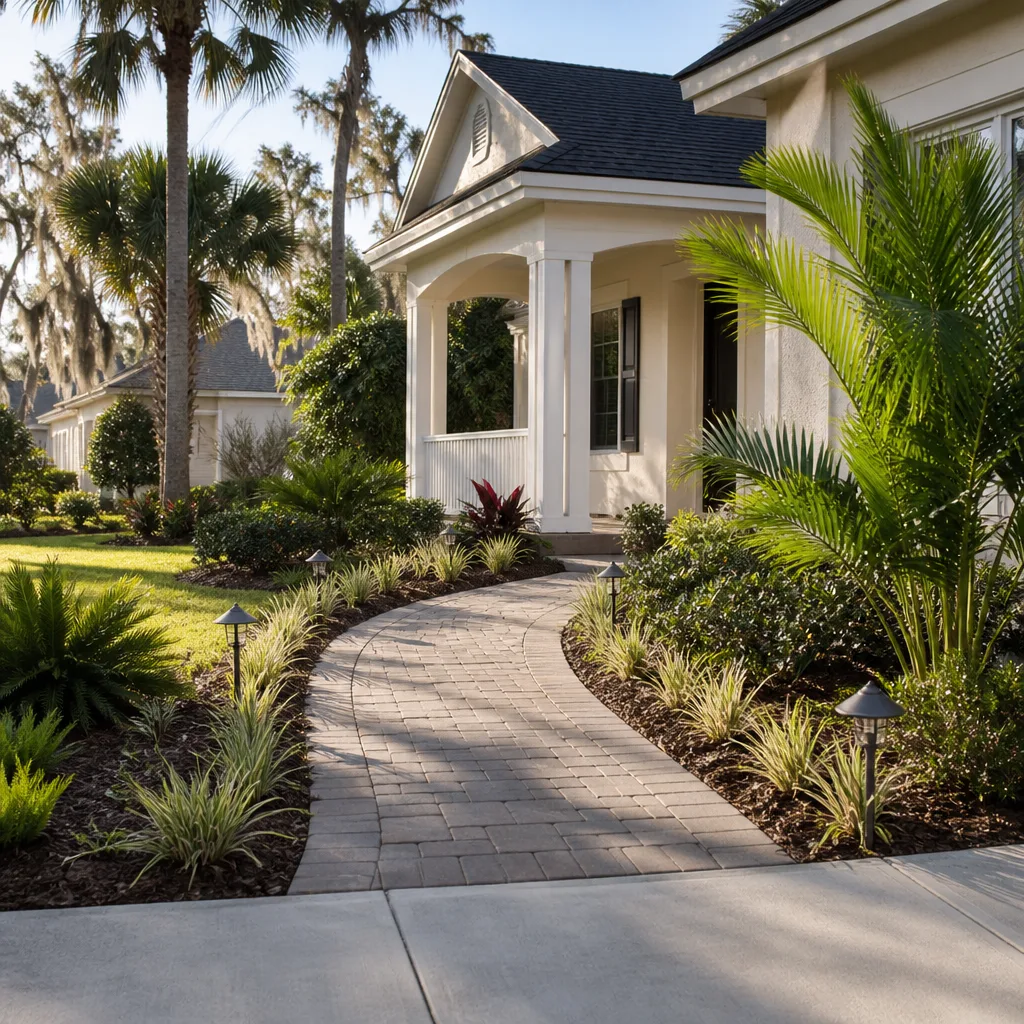
Sakrete’s retail SKUs are designed for homeowner application. Joint sand, fast-setting repair mix, and resurfacer all work in a wheelbarrow with a mixing paddle and a hose. A homeowner with patience and a plate compactor rented from the local tool yard can produce a clean joint job on 400 SF of driveway.
Where the same brand crosses into professional territory: the larger volume pours, the structural bedding, the jobs requiring mix-water precision. A 50 lb bag of Sakrete High-Strength in a wheelbarrow is an approximation; a drum-mixed, water-metered pour from a batch truck is a specification. On a Fremont driveway that sees two vehicles daily, “close enough” mix water becomes premature cracking, and premature cracking becomes a redo. Our crews carry moisture meters and measure water in liters against the TDS, not against feel.
Two cases where professional installation is usually the lower-risk call: any driveway with a slope (Fremont hillside properties in Mission Highlands routinely run 5% grade or steeper), and any driveway built on expansive clay (much of Ardenwood and the older Rancho district). Both demand base prep depth and compaction that a weekend bag-and-tamper job won’t achieve. While the pavers are up, it’s often the moment to talk about a Home Additions & ADU in Fremont if the driveway runs alongside a planned addition; a joint trench is cheaper than two digs.
When to Call a Pro
Call when the driveway has failed more than once in the same spot, when the substrate is clay-heavy or sloped, or when the total pour exceeds 4 square feet of structural material. Call when the joints are wider than 1.5 inches and you need engineering rather than joint sand. And call when a paver itself is rocking under a tire – rocking pavers signal base failure, and joint sand won’t fix a base problem. Rowan Construction Group sends a written price before any work starts, backed by The Haven Standard clause on no-hassle upfront pricing; every visit comes with a documented photo record of what we found. Our technicians have up to 19 years of experience and the crew is background-checked and uniformed.
Related services in Fremont: Rowan Construction Group Fremont home for the seven-trade overview, and if your driveway project touches the roof drainage line, our roofing team specs GAF and Owens Corning systems on the same written quote.
The Bottom Line
Match the bag to the job. Paver Set and Polymeric Sand joint the pavers. Fast-Setting Concrete Mix handles small repairs and posts. Concrete Resurfacer handles edge and surface repairs. High-Strength mix handles structural bedding. In Fremont, plan jointing work for morning windows between 6 and 9 a.m. during summer, keep total fast-set pours under 4 square feet, and step up to professional installation on slopes and clay-heavy soil. If you’re in Fremont and need help, Rowan Construction Group Fremont offers free estimates – we’ll bring a written price and a written scope, and we’ll review any competitor quote line by line at no charge. Call (866) 797-6171.
Frequently Asked Questions
Is Sakrete Paver Set the same as concrete mix? No. Paver Set is a polymer-modified joint sand designed to lock between pavers; concrete mix is a structural product with a 2,500-4,000 PSI compressive rating. Using concrete mix as joint fill will crack pavers as the mix cures and expands. Buy the bag labeled for pavers.
Can I use Sakrete Polymeric Sand on a Fremont driveway in summer? Only if surface temperature stays below 90°F during installation. In Fremont, that usually means an early-morning window from 6-9 a.m. Check the paver surface with an infrared thermometer before you start; the sun pushes slabs well above air temperature by mid-morning.
How much Sakrete do I need for a 400 SF driveway repair? Plan on 6-8 bags of joint product (Paver Set or Polymeric Sand) at 50 lb each, plus 2-3 bags of concrete mix for edge or base repairs, for a total materials budget around $250-$450. If you’re rebuilding base and laying new pavers, expect $2,500-$6,000 for the full job.
Is Sakrete as good as Quikrete? For most driveway paver applications the two brands perform within the same range when you match the product to the task. Paver-specific joint sand is the correct line from either brand. What matters more than the label is surface temperature at installation, base compaction, and joint width. If you’re unsure which product fits your job, call (866) 797-6171 – we’ll talk it through.
Written by the team at Rowan Construction Group Fremont.
Need Construction Help?
Call Rowan Construction Group Fremont - licensed & insured, here with fast after-hours help in Fremont.
(866) 797-6171