
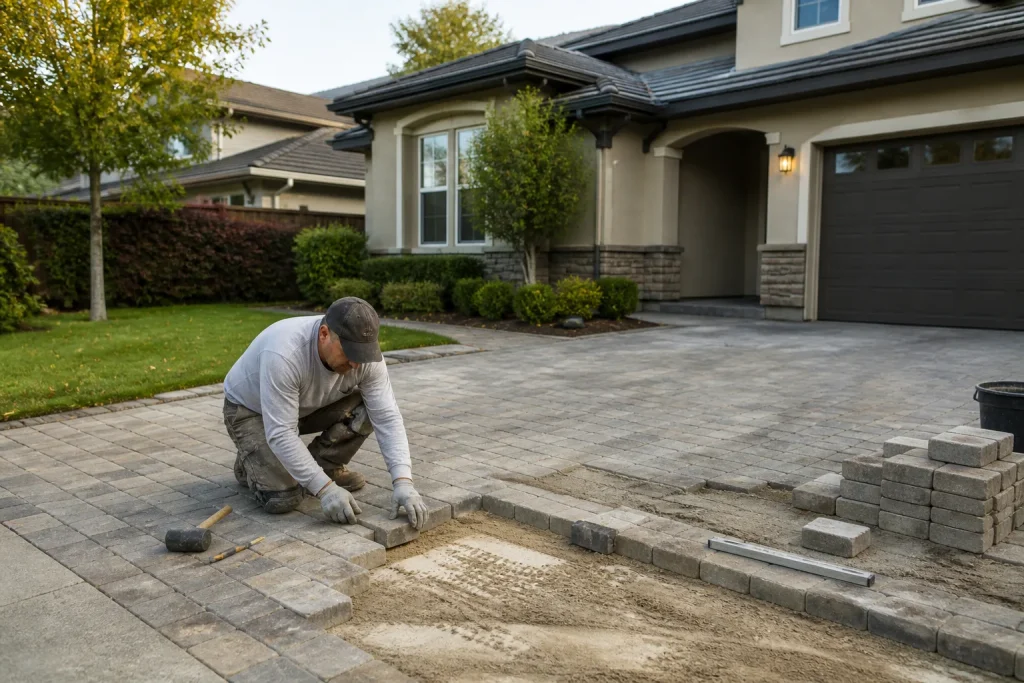
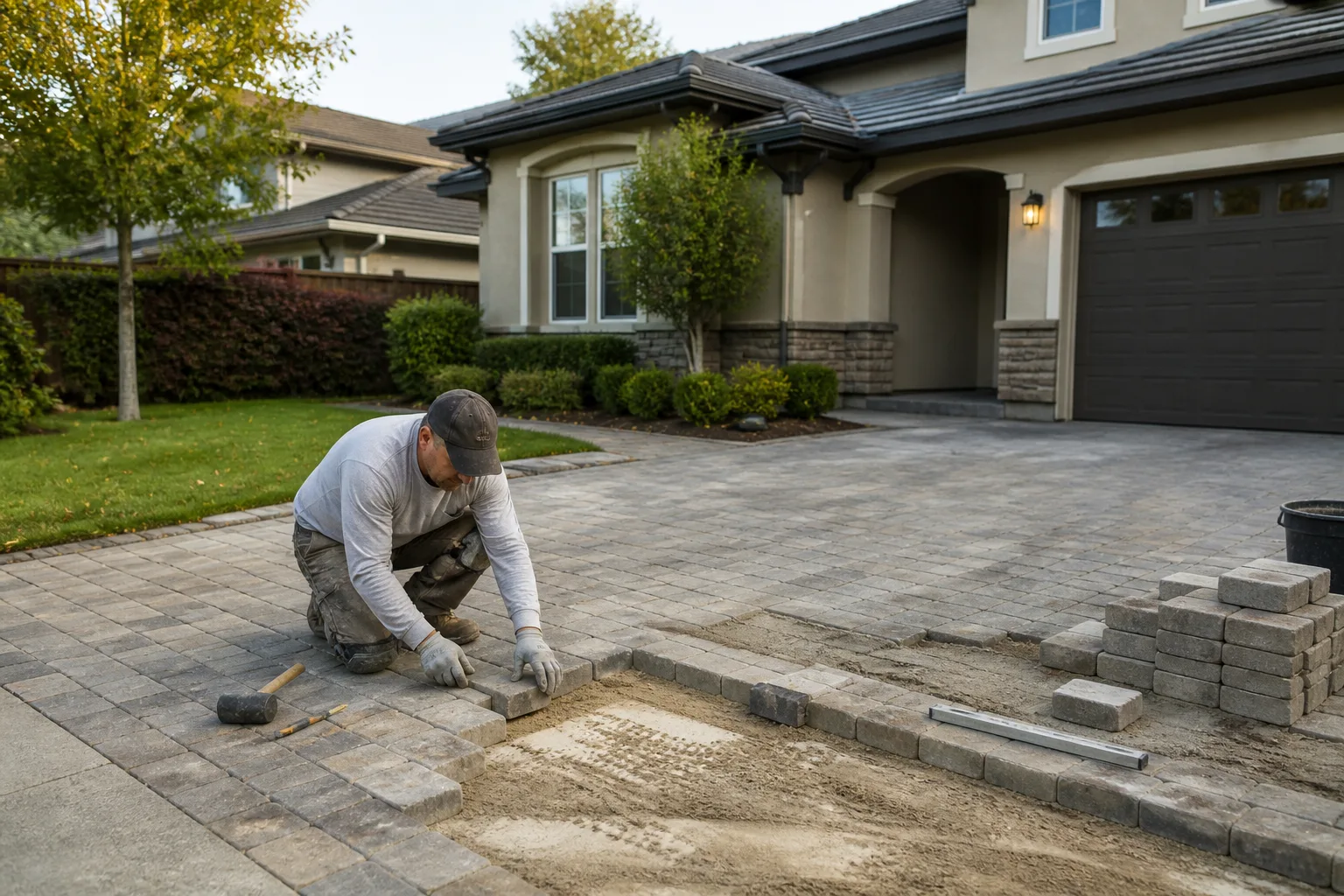
Emergency Driveway & Pavers Near Me: What Fremont Homeowners Should Do First
If a section of your driveway has sunk, heaved, or cracked open, the first thing to do is stop and photograph it before you touch anything. Then measure how deep the drop is, work out whether the failure is in the pavers or the base underneath, and check whether the damage sits on your property or crosses into the public right-of-way. That four-part order matters, because the difference between a $400 reset and a $4,000 rebuild usually gets decided in the first half hour, before a single paver is lifted.
If you would rather have trained eyes on it than a checklist in hand, call (866) 797-6171 and we’ll talk it through.
Why the First 30 Minutes Decide the Size of the Bill
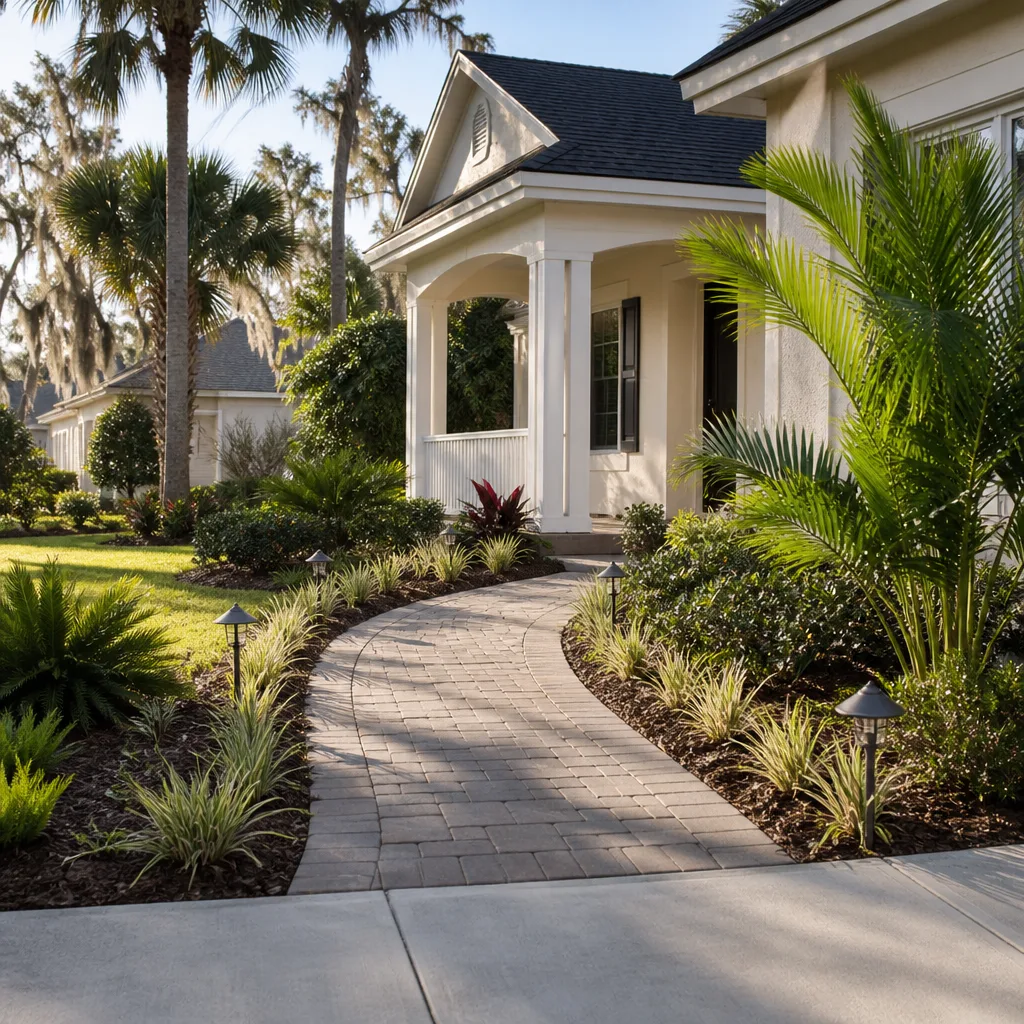
A driveway failure feels like an emergency the moment a tire drops into it. But the urgency is rarely structural. It’s liability and access. When a lifted or sunken paver creates a trip hazard near a garage apron, an insurer can argue the hazard was visible and unaddressed, and that argument has real weight in Alameda County courts. Fremont homeowners have lost coverage disputes over hazards a reasonable person could have seen and flagged.
Here’s the part most people get backwards. The expensive mistakes happen in the first half hour, and they almost always involve doing too much:
- Backing a heavy vehicle over a settled section to “test” it, which crushes the bedding sand and turns a two-paver reset into a full panel rebuild
- Prying up pavers to look underneath, which breaks the interlock and lets the surrounding field shift
- Pressure-washing the area to see it better, which drives sand out of the joints and destabilizes everything around the failure
- Piling bricks, boards, or gravel into the hole, which hides the evidence a contractor needs to diagnose the actual cause
In Fremont we see a lot of this on driveways built in the 1990s and early 2000s, particularly where mature street trees have pushed roots under an apron over the past two decades. The root heave lifts the pavers; the homeowner sees the lift. The cause sits 18 inches down. Document first, and you keep that information.
The Four-Step Triage Checklist Fremont Homeowners Should Run First
Work through these in order. Each step takes a few minutes and gives you something concrete to hand a contractor or an insurer later.
- Measure the settlement depth. Lay a straight 4-foot level or board across the affected span and measure the gap underneath with a tape. Under half an inch is usually cosmetic. Half an inch to an inch is a base problem worth diagnosing. Over an inch, or any section where a car tire drops, and you should stop driving on it until it’s stabilized.
- Identify whether the failure is paver-related or base-related. A paver problem means a broken, chipped, or lifted unit with the field around it intact. A base problem shows as a bowl or ridge spanning several pavers, joints opening in a fan pattern, or sand washing out consistently in one zone. Base failures don’t get fixed by replacing pavers, no matter how good the paver looks going back in.
- Document with photos before you touch anything. Shoot wide, then close, then a shot with a tape measure in frame for scale. Include the garage apron and the point where the driveway meets the sidewalk. A dated photo set is what you hand an insurer, a contractor, and a utility locator. It also becomes the “before” in a documented record, which is exactly the kind of evidence that settles disputes quickly.
- Check whether the failure crosses the public right-of-way. In Fremont, the sidewalk, the curb, and often the first several feet of the driveway apron belong to the city, not to you. If a sunken section sits at or past the sidewalk line, that’s a Fremont Public Works notification, and the repair may be the city’s responsibility. Measure from your garage door to the sidewalk and note where the damage falls.
That sequence costs you fifteen minutes and answers the question every contractor will ask on the phone before they’ll quote a number.
What “Emergency” Actually Means in a Contractor’s Schedule
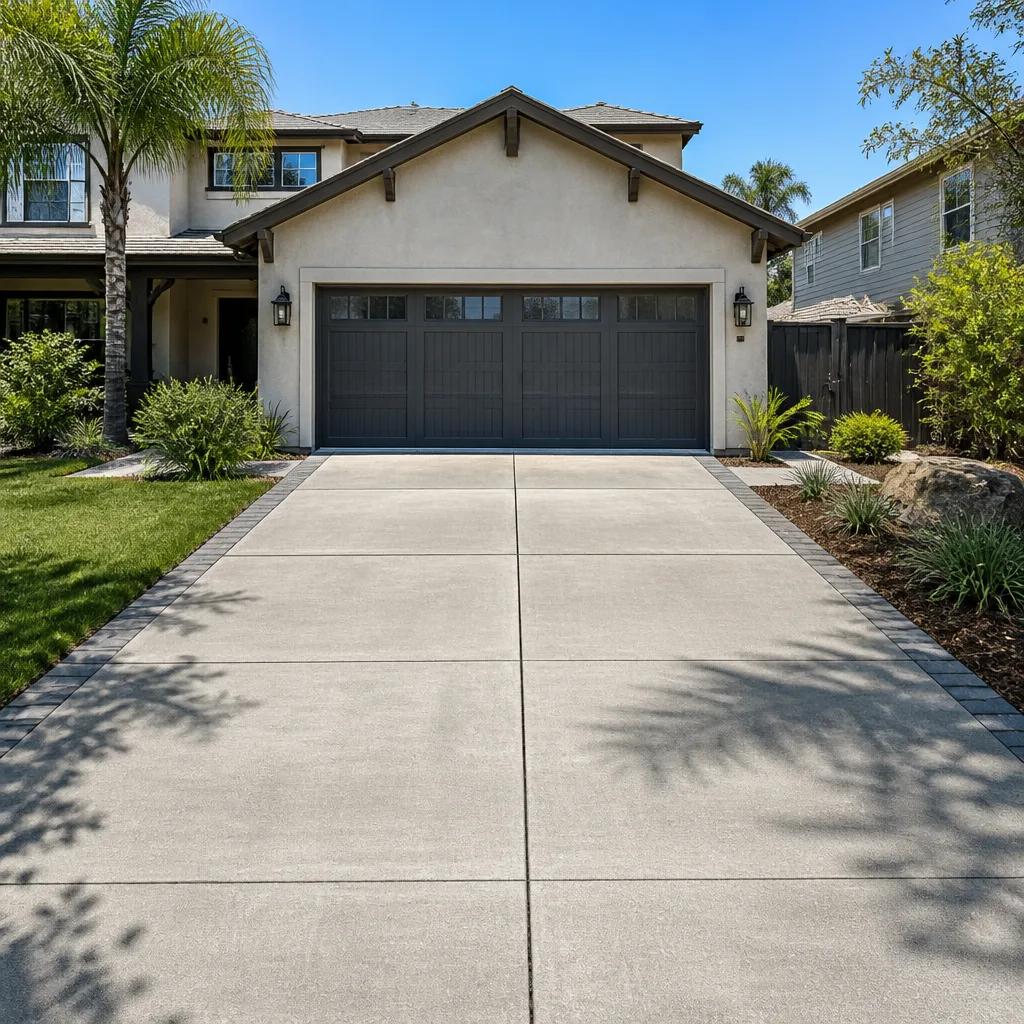
When you call a contractor about a driveway failure, the honest answer to “when can you get here” depends on which of two words they mean.
Same-day response means someone comes out to look, document, and stabilize. That’s an assessment visit, not a repair, and it’s what most driveway failures actually need on day one. Same-week mobilization means a crew arrives with materials and does the work. Realistically, a proper paver repair needs the correct paver match, bedding materials, and a place in the schedule. A crew that promises to rebuild a driveway apron the same afternoon is either cutting corners on materials or planning to do work you’ll be paying for twice.
Ask the scheduling question directly on the phone: “Can someone come out today to look and stabilize, and when would the actual repair happen?” A straight answer will separate the two timelines. A vague one is your signal to keep calling.
In our experience across Fremont, the calls that go well are the ones where the homeowner has already run the four-step checklist. The contractor walks up, sees the photos, hears the settlement depth, and can price a repair in one visit instead of three. Under Clause 1 of the Haven Standard, no work starts until there’s a written price and a written scope. That applies to a $400 paver reset the same way it applies to a full driveway replacement, because a written price before anyone picks up a tool is the whole point.
How to Temporarily Stabilize a Sunken Section Yourself
You can often maintain safe vehicle access for a few days while you wait for a proper repair. This is stabilization, not repair. It buys you time, not a fix.
- Clear the loose material. Sweep out broken paver chips, loose sand, and any gravel that’s migrated into the depression. Don’t dig.
- Fill the joints with polymeric sand. Polymeric sand binds with water and holds the pavers in the field around the failure from shifting further. It won’t fill a deep settlement, but it locks the neighbors in place.
- Bridge the depression with plywood. A sheet of 3/4-inch exterior-grade plywood laid across a sunken section spreads the load from a tire across the surrounding pavers and keeps a single wheel from dropping in and crushing the bedding sand.
- Mark the hazard. A cone, a piece of patio furniture, or a bright bucket near the failure keeps a delivery driver from putting a wheel exactly where you don’t want it.
Polymeric sand is the same material the trade uses between pavers to keep the interlock tight, and setting it correctly takes a bit of water discipline. A light mist, not a soak, until the joints are set. If the depression is more than an inch deep or the pavers on either side have shifted, plywood over the area and a call is the safer move than a fill.
One thing we’d say plainly: don’t drive on a sunken section “just to see if it’ll hold.” We pulled a set of pavers out of a garage apron near the Niles district last spring where exactly that test had been run, and the tire load had crushed the bedding sand in a zone three times the size of the original settlement. The repair took a full panel reset instead of a two-paver swap. That’s the $400-to-$4,000 jump in three minutes of driving.
Questions to Ask Before You Authorize Emergency Work
Any contractor doing repair work on your driveway should answer these before a tool comes out of the truck. If they can’t, keep looking.
- Will you provide a written scope and a flat price before demolition begins? Not an estimate on a business card. A written scope describing what’s being removed, what’s being replaced, and what the price is.
- Do you pull the permits the work requires, and whose name is on them? Driveway work that touches the public right-of-way usually needs a right-of-way permit from Fremont. Ask who’s pulling it.
- Will a change order be signed before any change proceeds? This is the discipline that keeps a repair within a few percent of the number you agreed to. If the contractor’s answer is “we’ll figure it out as we go,” that’s a red flag.
- What brand of paver are you matching? A proper repair matches the existing paver profile and color. Belgard and Techo-Bloc both publish a small collection that’s commonly available, and a contractor who names the brand they’ll use is a contractor who knows how to match the field.
- Do I get a photo record of what was found and what was done? Every visit should come with a documented photo record, not as an add-on but as standard. Ask.
- Is there a written warranty on the workmanship? A repair warranty in writing, in the scope, before work starts.
A contractor who answers all six without flinching is the one you want. A Free Second Opinion is a standard offer here: bring a competitor’s written quote and we’ll review it line by line, no charge, before you sign anything.
When a Utility Locate (Call 811) Is Legally Required
California law requires a utility locate before any excavation, regardless of job size. There’s no small-repair exemption. If the work involves digging below the paver surface, whether that’s a two-paver reset or a full panel rebuild, and whether it’s an emergency or not, the locate is a legal requirement. The call to 811 is free, and it’s the homeowner’s or contractor’s responsibility to make it before any shovel goes in the ground.
The reason is simple. Fremont has buried gas, water, electric, and fiber lines crossing under driveways, and the alignment isn’t always where the original drawings say. We’ve seen a well-intentioned repair hit a sprinkler main in a Mission San Jose driveway because the homeowner was sure the line ran the other way. Locate marks cost nothing. Hitting an undocumented line costs four figures and a long afternoon. If a contractor tells you the locate isn’t needed for a driveway repair, that’s a reason to stop and ask someone else.
When to Call a Pro
If the depression is deeper than an inch, if you can see the base material under the pavers, if the failure spans more than a few square feet, or if the damage reaches the sidewalk or curb, call. Those are base and right-of-way issues, and stabilizing them wrong is what turns a repair into a replacement. A trained crew can confirm in one visit whether the failure is a paver, the bedding sand, or the compacted base underneath, and it’s the base that determines whether the fix holds.
Our technicians have up to 19 years of experience in driveways and pavers, and they arrive background-checked and uniformed. Every visit includes a documented photo record of what was found and what was done, so you have the evidence before and after. The 365-Day Done Right Promise covers the workmanship: if it’s not done right, we make it right.
Related services in Fremont: If your triage turns up more than a driveway – a leaning fence along the property line, or a garage addition you’ve been considering once the apron is repaired – start with Driveway & Pavers in Fremont, and when the scope grows, Fence Installation in Fremont and Home Additions & ADU in Fremont cover those trades. For the whole picture, Rowan Construction Group Fremont home lists all seven trades under the Haven Standard.
The Bottom Line
When a driveway failure turns urgent in Fremont, the moves that save money are the boring ones: measure the settlement, identify the cause, photograph everything, and check whether the failure crosses into the public right-of-way. Then stabilize with polymeric sand and plywood to keep the driveway usable, and only after that start calling contractors. Ask for a written scope and a flat price before demolition, confirm who’s pulling the right-of-way permit, and make the 811 call before anyone digs.
If you’re in Fremont and need help with a driveway or paver failure, Rowan Construction Group Fremont offers free estimates. Call (866) 797-6171 to schedule one. A written price comes before any work starts, every time – if it’s not done right, the 365-Day Done Right Promise means we make it right.
Frequently Asked Questions
A single-paver reset in Fremont typically runs $300 to $600, a small panel reset of a few square feet runs $600 to $1,200, and a base-related rebuild that reaches the compacted sub-base usually lands between $1,500 and $4,000 or more depending on square footage and access. The number moves with whether the failure is in the paver itself or the base underneath, and whether the repair crosses into the public right-of-way. Call (866) 797-6171 for an exact quote – estimates are free.
Under Clause 1 of the Haven Standard, the price is written before anyone starts, and no change proceeds without a signed change order. That means the number you agree to is the number you pay, unless you approve a written change. A contractor who quotes a range on the phone and adjusts once the pavers are up isn’t quoting a price, and that’s a fair reason to walk. Call (866) 797-6171 for a written price with a written scope.
A utility locate through 811 is legally required under California law before any excavation, regardless of job size. A permit from Fremont is typically needed when the repair touches the sidewalk, curb, or right-of-way apron. If the work stays entirely on your property and doesn’t involve digging below the base, a permit is often not required, but that’s a question to answer before the work, not after. Call (866) 797-6171 and we’ll tell you which category your repair falls into.
A single-paver reset is usually a few hours. A small panel reset with base correction is typically a day. A base-related rebuild that requires removing and recompacting the sub-base usually runs two to three days depending on square footage and access. Scheduling depends on material match and the utility locate timeline, which is why the assessment visit happens before the repair is scheduled. Call (866) 797-6171 to schedule your free estimate.
Written by the team at Rowan Construction Group Fremont.
Need Construction Help?
Call Rowan Construction Group Fremont - licensed & insured, here with fast after-hours help in Fremont.
(866) 797-6171